You are currently logged-out. You can log-in or create an account to save favorites and more. more info
Transfiguration: Divine Illumination Unveiled
AI Suggested Keywords:
Transfiguration Sermon
The talk explores the theme of transfiguration as depicted in the Gospel, emphasizing its spiritual significance and the intimate relationship between Christ and the apostles. It underscores the transformation experienced during the event on the mount and highlights the deep spiritual insights about faith, purity, and contemplation. The speaker elaborates on the meaning of prayer and divine revelation through the luminous transformation of Christ and emphasizes the importance of spiritual tradition in understanding and embodying these divine mysteries.
- Gospel Narratives: Used to illustrate the intimacy and transformation experienced during the Transfiguration, highlighting the spiritual journey of the apostles.
- Mount Hermon: Historically suggested location of the Transfiguration, symbolizing spiritual elevation and purity.
- Plan of Salvation: Discussed in relation to the transfiguration and its prophetic foreshadowing of Christ’s death and resurrection.
- Mount Sinai and Mount Horeb: Referenced as sites of divine revelation to Moses and Elijah, respectively, drawing parallels to the transfiguration experience.
- St. Peter’s Confession: Analyzed to demonstrate the apostolic recognition of Jesus’ divine identity and the foundational aspect of Christian faith.
- Second Epistle of St. Peter: Discussed for its authentication of the Transfiguration event and its theological implications for understanding divine revelation and tradition.
AI Suggested Title: Transfiguration: Divine Illumination Unveiled
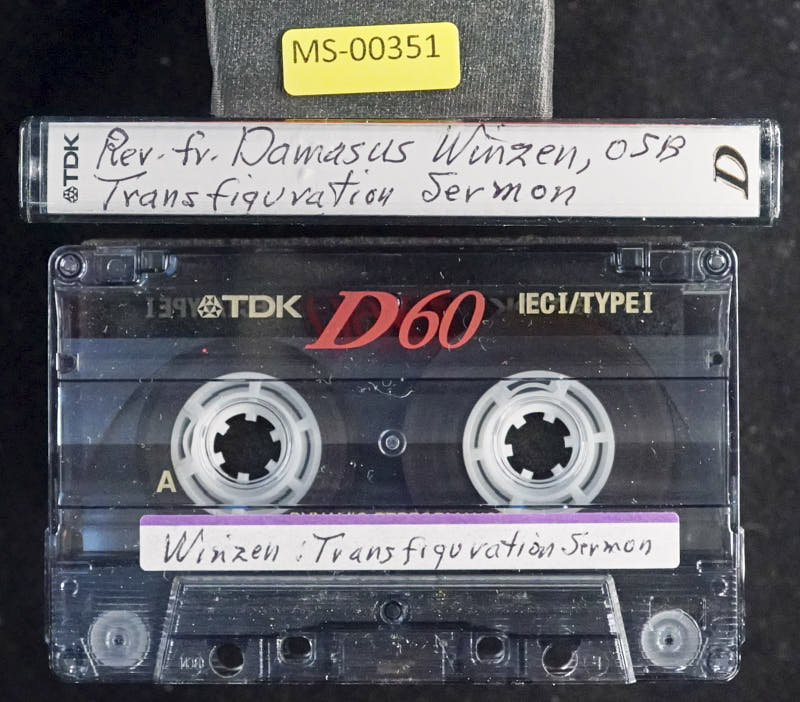
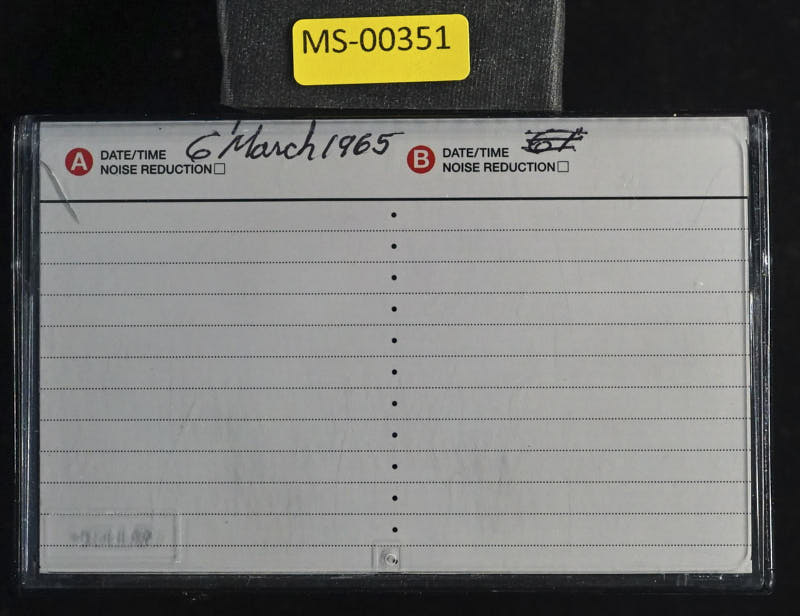
AI Vision - Possible Values from Photos:
Speaker: Rev. Fr. Damasus Winzen, OSB
Possible Title: Transfiguration Sermon
Additional text:
@AI-Vision_v002
Excuse me, I want you to be also against the customer. I feel a little closer to you, and I feel closer to the Lord. Because this is the altar, it's Mount Tabor, this is the place, this is the day, maybe redeem that beautiful events that the Gospel has just told us about. If you listen to it and you think about it and you realize that this story that we have just heard is full of the spirit of intimacy and of closing. Our Lord takes three apostles, three of his disciples with him.
[01:04]
And they are those that are closest to him. Because sadly, those whom he realized are his true friends. And he goes with them apart. And he should follow We are here apart. You are here gathered around this altar in this chapel. We have left the world. You have infiltrated the invitation of our Lord Jesus Christ. And if one thinks about it, what does it mean? We take them by the power away from their usual pressure of things. I think it involves one thing, that is, that one is free, or one's safe, or one's unusual expectation, that one is set and ready for a surprise.
[02:19]
Or what kind of surprise is, I think that is indicated in the way of what they are doing now. The Lord, as we said, in the Gospel, takes these three apostles out and it takes them up to a high mountain, an expression which is specific for this story, to a high mountain. So the taking out helps That meaning again, you know, things include other places of the God's books indicate what the meaning has happened. He says, he took them apart, took them with them, he called them to pray. Prayer that is the height to which they aspire, upon which they are taken.
[03:25]
Why it is the seeking of the faith of God, isn't it? Illuminously we are exalts. You are my light and you are my salvation. What is our light faith of God? Our faith of God shines for this eternal, absolute goodness and mercy. That's why he looks at us. The fact that he looks at us and turns not the way he is close, is the sign of his absolute mercy to us. So then is therefore the warrior seeking this, seeking that light which way from the face of the good Lord of all men, the Father of our Lord Jesus Christ.
[04:35]
And that is then what in the Pospels these three certainly see before. They see the face of Christ. And they certainly see the madness, the grace of Christ. That a change is coming over him. And again we have to see that very clearly and take it seriously and say, literally, a change is coming over him. And this change, what is it? His face is ringing like the sun. His face, that it seems to me, meaning that it is like the very estimate. of warmly, creative light. The sun is and stands here in our sky and it's least once, Lord, of all night and of all night.
[05:43]
When the sun rises, then life rises. When the sun rises, then the holy night mood of man is changed and he goes out in order to do it as per his servant. So the place of the Lord is I like this song that means in the creativity of this virus expressed in the faith in his very features And these gardens are quieter than snow. Snow, some people, as you know, think that the place, the historical place of this transfiguration, may have been not termed. Not termed whether it is snow or a year of abundance, the warm mountain.
[06:45]
They are in the reach of Galilee, the hunting borderlands, and the stylish hairstyles. Quite frankly, snow. What is the snow? The snow itself. I can observe the snow itself. But it is the reflection, the reflected light. It is that kind of light which we call purity. That purity that is proper to those, the purity of rock, it is no proper to those who see the face of God. That purity is indicated here in the governments of the Lord. The governments that are we. Therefore, if you look at his finger in this light, then you see that his face happens. The creative, the really creative power of his person.
[07:48]
His governments are those who completely clearly are open for that blessing. That is purity, the purity of God. That is what all Christians are seeking, especially what the monks are seeking. And therefore in here there is, figure as it were, the very essence of the act Contemplation is visible before. And I say that because that is real and true in the context of this end times too. Because then it will all be here that now Moses and the diocese Peter next. And he's a Christian. And bodies like they are talking to him.
[08:51]
Now, we should not forget, you know, we should constantly take that, certainly, I mean, if we only stop for a moment and think about it, it's clear that they are not just chackled about the song. They are not kind of simply, only kind of wasting their time. But when Moses and his alliance are joined to drive the Word of God made flesh, and they talk together what is mostly the very content of their conversation, now it's simply that history is a plan of salvation. That plan of salvation in which God, in his infinite mercy, he has leaded his son of justice in his life and in his walk, has decided to save man and connect through the sacrifice, the death, the selfless love of a son made man, so that the cross and the reflection would be, in reality,
[10:17]
the object of this conversation, in which Moses then recognizes that this is truly that bag of the Lord that he was allowed to see on Mount Simon, and in which Elias recognizes the still small voice that he heard when he was listening on Mount Moses and recognized that there is the presence the white people and the rest of the world. So that is certainly the topic, and I say that too, and I dare to say it, because St. Luke, the evangelist, clearly points it out, never speaking about his exodus, about his leaving this world and his passing over into the bright side of his life, through his death and his resurrection. So that is what they were talking about.
[11:19]
And that is what I want to say, contemplation. Contemplation needs to bring all things together. And there is this thing of Christ, the Republic, and Moses, and Elias, the poem of God's deepest saving desire as well, presented in the contemplation, the unanimity, the inner, bejuvenate agreement of these three. And then, of course, they would turn around to say, Peter, let me realize that he, in fact, so he sees what is going on, he does regret what is really the meaning of this money. He says, that I was very sweet enough. And that is, of course, in some ways, too true.
[12:22]
And why? Because this is certainly, and that is what St. Peter recognized, this is interesting. It is good to be here. And therefore, it should go on forever and ever. That is considered equal of a simple, loving soul. But there is one, if I may call it that way, it is in each end. We must recognize, we must realize that this story of the Transfiguration is, especially by St. Matthew, it's set in a very deep and deliberate willing. As the singer of the Israelites, you've been turning forward, the couple, the turning forward of Christ's mission, It is inserted and it comes and it follows the famous question of Caesarea Philippi, who do the people think that I, the sort of man, who I am?
[13:30]
And there he does answer, and he says, you are the Christ, you are the son of a living dog. And then, even I agree with you, that this story continues. The completion of Peter is not really, let's say, the climax of it, but the climax, yes, and so it follows. It follows because the Lord, instead of them, after you ask, what is it, said Peter, and says, blessings are you, Peter, because And then he continues and he explains, this sort of man just recognized as the sort of God as the Messiah.
[14:36]
He has to go up to Jerusalem. And then he has to be handed over into the hands of the enemies, and there will be slipped up and there will be killed. And then, you see, Peter says, never. Threat you, never after you. And then comes another answer. Not in this way, a lack of reason. Not, you are blessed, Peter. But he says, safely. behind me, behind me. And then he continues and he says, he applies then what happens in him, that he did to walk to Jerusalem, and that he there will be handed over to the hands of the enemies, and they also really receive the strength of his disciples. He reveals it and makes it absolutely perfect. The one who wants to gain this soul, we will translate.
[15:41]
The one who sets everything on gaining this life, he loses it. The one who loses his life, he will gain it. And then after this, by the presentation, this true initiation, six days out, evidently being an allusion to the six days of the past week, what And then the transpiration, to see how we are speaking today, takes place. So what it is? It's a confirmation. And what does Peter not understand? He doesn't understand that this glory, that this light that shines forth. And there is a confidence that might have been ruined. By Moses, it lies. It's the light of that God who dies for the sins of that God.
[16:48]
The manifestation of sin is not God in Christ Jesus. And therefore, instead of the love, what he says, cloud the sins. That is the Father's answer to Peter, shall we call it. foolishness, the cloud descends, that sign of the presence, that sign of the living of the grace of God will trust in the temple, that cloud Christ is the temple. And out of this cloud of energy void, this is my love and soul, in whom I take my life. in manifestation, just of this specific love, even in love, in Father and Son, which goes to the point that Father sins, His beloved Son, our appreciation for our sins.
[17:55]
He will stand here. He will stand here. Listen to him. What is the word of this cross? Why this abomination healed him? Just think he did not heal him. We see what was in that thing in the response that people gave. It was the realization that the glory of God would be covered by shame from ourselves to carry our sin. that the glory of God would manifest itself as the glory of God. That is what England did not understand. That is, therefore, what the Apostles in the sky was absolutely abolished by the Father to be in the tradition. We want, as you know, to speak today about tradition and the idea of tradition
[19:01]
And the essence of a Christian, of a Christian, is for us all of the greatest importance, especially at the time when so many things are being changed and when so many people are kind of, you can't punch through. Now, if we say about this, then in this, you see, things are so unstable. What do we have to expect next in a time like this? But this, and the idea of Western tradition, is vital. If you don't get up on the track, but as the families get stuck, identify the tradition with external usage. Wash it on the hands before these things. But then you get free, and then you will see that authentic tradition, not the traditions of heaven, but the authentic tradition.
[20:08]
And this authentic tradition you can just see before you apply. It is for you to come, declaring for you to us, this is my beloved son. That is that Jesus Christ How can he but both us and be biased by the law and the power? Or three, give testimony to the Exodus, to the death, and the resurrection of the life. And with the cloud of the Holy Spirit, how can the three, thank Jesus, meet the church? That is what the Father handed over to these bring to our apostles who are there and rejoice and have seen me. And to realize that all right at the time I have been struck down by fear.
[21:12]
Still, the second epistle of St. Peter even chose that was bliss and vain. Stuck into his mind. And when he saw, as the sun told of our salvation, So after all, it really brought the Apostles avenged after the Lord had died. Just to this recognition, he had to die in order to enter into his glory. He can step in this way. He may give us out of his glory history. That is the tradition of your friends. When we celebrate this late season, And I wish you all, in the bottom of my heart, blessed Lord, come to you in the Easter night, when you cry out like Christ. Thanks.
[22:13]
@Transcribed_UNK
@Text_v005
@Score_83.0