You are currently logged-out. You can log-in or create an account to save favorites and more. more info
Wise Fools and Monastic Wisdom
AI Suggested Keywords:
The discussion focuses on the concept of the "wise fool" across various religious traditions, exploring how figures traditionally regarded as foolish often serve as vessels of deeper truth and protest against societal norms. Additionally, monastic movements and Christian monasticism are evaluated in relation to their motifs, notably the distinction between Christian and non-Christian intentions, emphasizing personal relationships with God rather than sociological or historical influences. The narrative extends to comparing parallel elements across religions, stressing the transformation of external influences into unique Christian expressions.
Referenced Works:
- King Lear by William Shakespeare: Discussed as an example of a fool who speaks reason, highlighting the dynamic of truth-telling figures in religious and philosophical contexts.
- The Idiot by Fyodor Dostoevsky: Used to illustrate the theme of the "wise fool" in literature, connecting it to Christian philosophical ideas of humility and wisdom.
- Life of St. Josaphat: Referenced as a Christianized version of the story of the Buddha, emphasizing syncretic religious narratives and their impact on monastic traditions.
- The Gospel of St. John: Cited to draw parallels between Christian and Buddhist teachings, underscoring theological and philosophical similarities.
- Enchiridion by St. Ignatius of Loyola: Addressed within discussions on monasticism and the motif of celibacy, reflecting on influences in religious exercise.
- Catholic Monastic Groups (e.g., Carmelites, Cistercians, and Franciscans): Discussed for their historical adoptions of practices and influences from other religious traditions, showcasing the transformation within Christian contexts.
- Dostoevsky Symposium: Mentioned to highlight intellectual discourse on hope and human spirit in difficult conditions, referencing the works of Jürgen Moltmann.
- Master Eckhart's Teachings: Discussed in relation to Zen philosophy, focusing on themes of poverty, impermanence, and spiritual presence.
This talk delves into the intricate interplay between cultural, philosophical, and spiritual elements across religious traditions while addressing the core Christian monastic motifs and their ongoing transformation within historical and modern contexts.
AI Suggested Title: Wise Fools and Monastic Wisdom
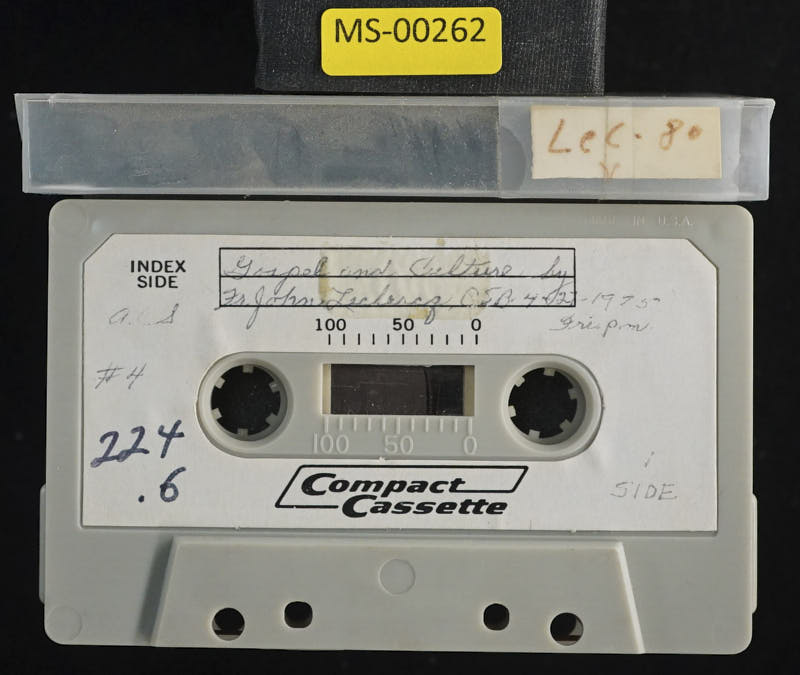
AI Vision - Possible Values from Photos:
Speaker: Fr. John Eudes Bamberger OCSO
Possible Title: Gospel and Culture
Additional text: #4 224.6 5:30 p.m. Fri. pm.
@AI-Vision_v002
You know, in Africa, I had to work for this woman before. And so before this woman goes off the, [...] off the. But, uh, you know, it's a dark thing. And, uh, they didn't want to put that there, they didn't want it more. And, uh, they locked up, uh, no, no, no, no, no, no, no, no, [...] no. And that explains, you know, that historically how monasticists appear in this extremely rich media.
[01:20]
One of the other features of the manifestation of all the monastic movements is a certain object in matter of thinking. The first way you have to refuse to the ordinary life of society is to refuse, refuse people to. So, vegetarian or whatever, and that's a procure to be aware. And sometimes we need to do it with justified by the ability of the idea of the respect of life, nonviolence, to never kill the living being. Never eat. You don't even eat, because sometimes, uh, uh, the jar will fly. To the mother, when I was in a, oops, morat bay in Bangkok, I was invited to a meal, but the meal they had in the morning, while I was on the meal. And, uh, I struck me the point is, you know, cat, dog, pet, pet, pet, pet. So I said, well, oh. I said, well, you know, Woody's not totally non-pirant.
[02:23]
So wait, there are too many cats. So, after the end, then, something I already mentioned was but which is good to return. One of the, I know that we've made manifestation of our humanity is the fact of one life. There is a lot of people in our state. They have a house, a job, they found their living in place, or with the same and the both, they are socially related, but the protesters are being free to watch. It's all everywhere, it's there, it doesn't really work. But, for example, they did.
[03:24]
He's a wonderer, you know. And then, the extreme case, the extreme manifestation of this marginality and of this purpose is to be a thing for God, you know. And we have this tradition of wise fools, you know. Currently they are fools, but in fact they are the wise people, you know. But they're everything. consider them unschooling, you never put them jacks there, and they're spying, they don't think what they want, you know. But they are full of good luck, you know. And we have that, you know, administrative. Many of these stories you make in APR, you never know whether they are serious or not, you know, because some are, of course, kind of exploiting the situation too. to beg without working at all, sir. But it's very difficult to know, you know?
[04:25]
And if you have this idea of the wise form, you know, the spiritual father particularly is considered a sort of paradoxical person, you know, who jokes with you, who doesn't answer this on a brain, you ask him a question, he answers another question. Instead of just, uh, pacifying you, we have a fucking answer. What lies you to take more? And you have this idea of the Zen master of the comic figure, you know, the tool for calling the Sufi tradition. So you have it in the Buddhist tradition in the Hindu, and you have it in the Christian tradition, and you have it in the African tradition. So when I was in Africa, I didn't see the same thing, but in which before there had been an election of a chief in a village, and then there was some... the election was... but the chief was there and he wanted to... to impose his views, the people, and uh... and then suddenly the man appeared...
[05:45]
He took an insecure, you know? Then he asked to speak, and he spoke, and he said all the truth to the truth, you know? And then he went there. And then they had to say that the public, it was only three persons, and that's all. Before you're finding all the... It opened one way. It ran out of six billion years. So do they? reasonable person, the only person who says reasonable thing is the fool, you know? And of the council of kings there is to be fool, no, that not to be fool, he's fine, he's fine, you know? And that's why, that's the meaning of those fools that were in the court who just, you know? Even in the poor, they were caught, they were just, you know, and sometimes they were reminding the right man that you are just a man, be careful, you know? You know, the fool is a person who is free enough to say the truth, you know? And to accept and accept as most of them, everything may have to be done.
[06:46]
And, uh, in the Russian Christian tradition, it's very very strong. They have quite a series of, uh, sand food. They used to canonize it. In the time of the oppression by the Great Sal, they, I want the church, all the great, all the people who are free, you know, to take, to protest, you know, against the, the emperor, also from the, the, the patriarch, where the food was. And, of course, some were killed, were martyred, but that were the vocation that carried up to the time where the 17th century, the Justin State, were so identified as the disease canonizing the food. But there were still, and if you read the, [...] of the Russian, uh, wandering, sometimes he's taken for food and put in jail, and so, and he said, you know, how Christians monastic tradition, like this, was considered as fools.
[07:48]
Even in his constitution, he said, that may happen, but nobody will not do it on purpose, but let be fools for time. And he was even very jealous that he would never, because he said, when the mental cares, you know, sometimes he would have felt for fools when this sort of death practice, who were really happy in his time, that Jesus preached, you know, protesting in the place of activity, returning his clothes to be an accurate father, accusing all of this society, if you remember, in the century, in the place of activity, and then people are there, the father is there, and the Pope Bishop does not know what to do, he just covered the detail of this street, so he was put, and There was quite a chandelion up to our day. And I remember three years ago there was an international conference on occasion of the centennial of the birth of Dostoevsky in Venice.
[08:54]
There were 15 representatives of the Soviet Union. a collection of Academy of Sciences, where all students, people, doctors, as they are, at least officially, because they would not have yet put the bill out of the West, or whatever. And we were two Christians. You know, Logan Malkman, who had to speak of hope, but he did not forget it. Well, in fact, in this call of hope, when he was a picture of war, in different traditions, it was German, or they were in the book, you see, which was kind of a lot of thought. We discovered all these theories of hope and hope started from this experience. And to me, they asked me to deal with a topic which is very convenient. For me, it was the idiot. He said, clearly, I wanted to show the idea of the pattern. He said, it's the idea of kind. And, you know, he's a man who comes out of a mental hospital and he said that if you took the Russian society of his time, you know, the abusing of power, of features of support, and then he has a sort of a pediatric kind of say, they tell him, he went to a hospital.
[10:11]
It was very timely because it was the very moment where Stolzhenitsyn was receiving, or not receiving his Nobel Prize, the President of the Academy, could not be questioned again because he could be there, but he said, you know, This is a very important affair that was there. He's a sort of pretender or fool that way. And, you know, I know the... The last example of a wandering from God who was also a holy Christ who St. Benedict's love. He's sort of wandering hermit who from Northern France to Italy, I don't know, they want to... And he told his brother was dirty next, you know. He was really a fool for Christ. He was really black. He was living in Oregon. I respected him. Except he was a little man on his way. He told me, go on, you know.
[11:16]
Eventually, he was canonized. And the last one, he was canonized. And so, he was a fool for Christ. to offer himself, to impress upon other, and he would only consider those fools already. So you see, I think, and Islam is not the tradition you have in. And I think it's good for us to remember, because the first in Christianity, you know, remember St. Paul, it's so clear, we are all fools of class. And that means that we, the values the world esteems, we despise. at the value of the world despite the rest. We prefer charity to charity. We prefer charity to power. We prefer poverty to riches, and so forth. That's exactly the opposite of what normally it should be. You know, and from one of the wonderful thing where you compare yourself to a gentleman. We're just, you know, walking with his hands and feet high and doing all sorts of critical things, you know, to be a chester, to be a clown.
[12:21]
The acrobat is still somebody who makes wonderful things that you admire. That's right. But the clown falls to make your lady... to tell you, and it's ridiculed, but people identify with this humility. It's failure of life. Most of our lives are failure. So that's the importance of clowning in the church. We need something. And in the community. So we need a little bit of people to... to organize, to administrate, but we need some clowns. Uh-huh. No. That's the fact. What you find in all the religious society, there's in all monastic books. There's all these valid expressions of marginal. And all the ways of passing from marginality to common. Keeping your identity, I feel marginal, I feel it for birth.
[13:22]
always of the handbrain, you know, and the, the... Now, if all that is a, if all that are common to kill the flight, common observancy, common manifestation, of the same fraternality, the same one could, we may ask ourselves, What is specific to Christian? Are we not reducing Christian monathesis to a sociological human phenomenon? How can we do to maintain that he thought of himself and would be sourcing Christian? And of course that can only be achieved, not at the level of this part since manifestation, but at the level of nothing. What were the intent of the Christian monk?
[14:25]
What makes the difference between the intention of the Christian monk and the non-Christian? What is in use of faith and so forth? It's the motif. Again, historically speaking is not an easy topic because many motif may have, some motif may have been the third. For example, Christian monk may have received some motif from Old Testament idea to restore the effects of God, or from great tradition to seek God and so forth. So, and then... But there is quite a series of motifs which is typically... which makes the difference. What did the first one say they wanted? They wanted... to be of service to the children, to be fishermen, to serve the children, to do something for the children.
[15:34]
They wanted to share and imitate his voluntary duty. His voluntary quality is continuous obedience to the father. They wanted to anticipate on the kingdom. to be supposed to be in a responsible relationship with a woman who died for me. And you see, one sort of motive which don't suppose a personal relationship to come. Not only the realization of a certain program, a certain way of protesting, of putting oneself outside, or even outside, we're coming in on that. for a certain particular reason, which is always a personal relationship. And that makes a difference. And probably, well, when I was younger and before, some students in Germany, pop scholars, tried doing to explain everything Christian, faith, suffering, religious life, why it's just a story called it.
[16:47]
and so the Christian apologetics and apologetics and historians were very in front of the defense and still now many of the others, they already are very in front of the defense. Everything comes from the spirit. Everything comes from the spirit through the human thinking. And now we are clear, now that we may appear in the same time, the community of all the elements, which I met from before, and the specificity of the Christian monkey, we are clear to admit that. Martity is a world phenomenon, not in itself evangelical, but it has been evangelized. It has been Christianized. The purpose of the Incarnation is not only to have or for God to act, it can take action in humanity for their lives, but to have quickly the real spiritual life, from spiritual life.
[17:57]
That's what Jesus did. And to sanctify, and to introduce in the human mind, human society, human religion, a new dimension, which is the dimension of the Christian dimension. union with union to God in the speech, through sharing the experience. And then what we admit that we may admit that therapy mainly is difficult between Christian and non-Christian. A very typical example is the famous life of St. Josephus and Paul. which we used to read, and some of that did, in the Feast of Old French, which have been, um, of the Wanda Holy Ghost. And, uh, it's a, it's a life of Buddha. And, uh, it's a life of Buddha. And, uh, it's a life of Buddha, rewritten, in Christian terms, by, uh, for Grace and John Damascene, who was a son of a Muslim, uh, uh, Czech, in Iraq, in Syria.
[19:11]
And he, It's because this text is not for Buddha, in equality, it was Christian. But all the basic teaching is typically Buddhist, you know? And in fact, the page we used to read as a lesson, this list of something in November, was the most Buddhist page in life. All compassion, violence, mercy, everything, which is okay, but could not be Christian, you know? In fact, it has been Christianite, it has been evangelite. And remember, kind of Daniel, You tell me when we celebrate the Feast of St. Josephine, I say, that's the feast of St. Buddha. And when, it's only after the Council of France that St. Josephine and Malamum, who is a spiritual advisor, I think, were introduced in the Roman archaeology, the Roman calendar. And that was equivalent to a canonization of Buddha. But it's a life of Buddha. So there are many paradigms, similarities.
[20:11]
between non-Christian and Christian faith movement. And it's time we have to see what is the proper Christian motivation and what is not. A very typical example is the motivation of celibacy. Celibacy for the building of the society in the Incas of Mexico or celibacy for the esteem in two days may have been just a it will truly be all uh... it's up for sure that you know that you didn't say what the heck you can't think we get to talk to us for me at the level of a personal life to me it opened up a personal life for christianity that make quite a difference between the teens for example a senior celibacy and uh... the christian workroom you're from the community and therefore you have you have to be a celibate otherwise all the trouble of family not only to be in... either in regular purity or to be ready, or to be ready to fight, not to have the donor family, but it became something much personal.
[21:23]
It has been interiorized. And that's why we had to notice all these parallels which may have occurred, you know. What is that in the monastic tradition when they, I mean, tradition of the school of St. Victor and many places, you have this idea of the mandala. I don't know what the mandala is. It's a sort of symbol of psychic integration for the form of a design where everything leads to it. And it's actually in the Angkor, which is destroyed, and many Buddhist temples are in the mandala. And in fact, we find mandala now, in the idea of Saint Bonaventure, you know, the Sentinel, and Saint Benedict, she wants to have a tissue, you know, which is a mandala, too, and it's so open, well, it goes up in one third grade, and so forth. So, you have that.
[22:27]
In the monastic tradition, of course, to immediate... form of similarity, and Babalat is this wandering for God, wandering hermit, which I already meant, I don't complain. But in the Franciscan tradition, there was a very interesting article a few years ago by a German Jesuit, on the Perfect Joy. And he put in a column, Babalat column, the speech of Buddha to his disciples on Paul, and the speech of some friends. And when you read that, you wonder who imitate the other, you know. It's so similar. Almost worthless, you know. I don't think there was any influence at all, but it's a similarity. And a few years ago, there was a Dean White Jr. of UCLA in Los Angeles, who published an article on medieval drawings from further Asia, where he showed that
[23:32]
In the early serving century, the time of San Francisco, Dr. Dominic, a few things were introduced in the church which never existed before. First, the fact of making this, making this. As we are seeing, monks were supposed to work. And when they did, Augustine and others told them, you are to work. I didn't mention, I must do it now, St. Mackey, you know, but St. Mackey did the same thing. It was, in fact, you know, he started with more self-negotiating cynicist. But he was the normal world, not necessarily dirty, but neglected. And when he was elected bishop by the people, there was a bishop who was in 20, you know, despite the person, he is, you know, president, he is, you know, he has, you know, all the recruits. So you find that lindicante, you know, which is a current picture in Buddhism and interview, had always been infused in the Catholic Church, Christian Church, and then suddenly prior Egypt, Spain, and Pothos entered in Christianity, the medical job.
[24:39]
And in fact, it took several generations almost to settle, to absorb this new way of life, because the monks were supposed to work, the clergy were supposed to leave out of the stipends, and that new ones were able to preach and to wander, preaching, without working and without having parishes, how to situate them in the new capital, you know? So, but it was quite a new thing. Then, second, from the earliest years, the identifying sign of the Franciscans was a noted code around the West. The world's religions are filled with cerebolic signals, but they are generally assumed only for special rights. The closest analogy of the Franciscan code is a second code won't get particularly by the Brahmins at the sign of the identity. So, at the same moment, an associate with the piety of the mannequin told her, the ancient gesture of prayer with out-stretched arms was widely replaced in Europe by a new posture, young Tismanius, with folded hands, that is identical with the namaskara, the indirect gesture of prayer and prayer.
[25:54]
In fact, when you greet somebody in Asia or in that way, you know, that way you pray, And so, it just entered in the same time, or once we had two minutes ago. Now we know that. Both shortly after the middle of the 13th century and largely propagated by the trial, the infinite habit of using a string of deeds for counting repetitions of prayer, it invites a talk to the Islam, at least as early as the 10th century, swept Europe in the form of the Paternostic, the Rosary. And in fact, the Rosary... Even rose, it's a box, it's a garland, you know what they get to when you are in Asia, you know, flower, and they root to. And you still see many swanies in New York City and everywhere, and ooh, that is rosary in the hand. Amuses me to see that some Catholic monks have, uh, get good treats from the rosary, but they have no Hindu rosary. And I think so, in Islam, in Morocco, hermit, wandering hermit.
[26:56]
always showing wisdom, repeating God, Allah is great, Allah is not full, and so forth, and counting the beat, yeah, the rosaries, which helped them to count on the 50 names of Allah. And that, who said that White was attributed to Saint Dominic and to the Christianians. So, this White said, if that thing were just, if all their strengths, individually, might be considered, it teaches to Europe, but as a cluster, the stupid stream of things begin, powerful in North Italy and London and Spain, the regions where both Dominican and Franciscan achieved their formation. So you see, that's just the similarity. And there are many others. For instance, in the African, in Franciscan, I have quite a lot of them. It's time to stop now. Now, a few examples, in the Calvary-like tradition, The Kamalai Torah has its origin in the Holy Night, and therefore, it has been questioned whether the white holy plow won by Kamalai, for prayer is not the invitation of that, nor by the Muslim.
[28:10]
And I think this. That's why, remember this white hole, which means to the Kamalai father and man, you need to be, it's a souvenir of the volume, say for them. It's a natural color, not totally white, but just sort of white, dirty, just not natural, though. And soup, soup means that. The soup is for the people who wore it. I said it, you know, who wore it this month. And so the first Germanite father in the month, Carmel in Palestine, just adopted the rest of the soup. It's not important that he's there and everywhere. It's not true. And, uh, it's obvious that their own black tail, with their own father and doctor, wore all of their faces. But, what is saying that, it's worn by, which were worn by Andalusian women in front of us, and still, it's been a Muslim country.
[29:18]
In the same way, the case which protected women in the Islamic country in the Middle East of Spain, for many centuries, had it. The case which had been imposed for the Carmelites and the Cross to them, at the deeper level. There are this idea, and simply that was pointed out between Subuki and Merton, speaking of similarities between Saint John of the Cross and the Indian religion. But also, two years ago, on location of the same period of the birth of 23rd, now this year was in control of me. She united between Turkey and then, this idea of, I think there is a particular look of something in the next, who told me, the comment of, well, not to both know it, on this idea of anti-politics actually, they tend to, and that's all, hey, it's also total policy. The centering on the birth of Saint-Grenard, this year, the plurality between her teaching and Zen, this idea of, I think there is a particular look of the master in the cover of Nazi Baltimore, under this idea of anti-winset, being anti-winset, and therefore, this total poverty, you know?
[30:41]
Nothing matters. Nothing is better than it [...] does not lie in one specific practice but exist for this in its position of the part. Now in the inspiration, tradition before, I'm not put to mention because the Jesuit power represents it, but there are many modern institutions, you know? Now, there was a German gentleman who wrote an article on Asylums of Buddha and the Spirit of Jesus, like Ignatius, who, finally, is a religious, because they are very civilized. in the use of light, with the use of light, and those who have been in Japan know, care what they are, to never to have a direct light, or this, you know, and so forth.
[31:47]
Bodily position, you know, of elements, and so forth, you know, important to experiential knowledge, what's on the brain and idea, you know, that it's called this Japanese proverb, if anyone If a man wants to know the taste of pride, let him eat. The idea of the way, you know. Typically, Buddhists, the Portuguese, that's what you are. I reject people in general that, you know, they would call some Buddhist ideas in the gospel of St. John. You know, 5% of the parents who wrote two books in this, uh, the gospel of St. John. So, that's good, you know. Without that, I think, we answered some. Ways of speaking, after all, some, uh, then it becomes a, what English is called the tradition of the heart, you know, uh, interiority. Oh, it's equivalent to the Japanese heart.
[32:48]
After all, so you have lots of, uh, self-similarity. And, uh, now recently I discovered, uh, Vietnamese practice in this country. up to my wood I can't be shy and spoke in his monetary up to him the value of this is done with a little who was protested to play with the night but now a lot I would I even I can go to put water potato but would be covered in that there's some brought out discussion culture and there and yoga and so I asked him how do you think it's over there you come past tradition he said So the westerner who told me, they are so kind of tempted by this day that I had to look at a lot of this water, and... I... I discovered, to them, that westerner, I was totally westernized, despite all that, but then I discovered, to them, that they were so clear in the valley, and now he became an expert, he's very thankful.
[33:52]
An expert in the new spiritual tradition. So you see, I think there is no need. And, uh, now it's time to stop with my dog. In fact, it's good for us to notice all this fact, you know, in order in some time to relativize subtle observance, not think that they are essentially evangelical, no? They are just human and good for the time being, as long as they work, no? But also to see what was more the specificity of what makes Christian monasticity to be Christian. total dedication to Christ, total renunciation to everything which is not the love of Christ, and total service of Christ in his church, in his community, by its main structures of democratic life, mainly higher. The real separation of another part of the world is an accordion, an accordion.
[34:53]
Take a distance. The world has been applied to children for the same time, because of the country to look new. To the extent, I think that enclosure is an easy fundamental servant of every form of condemnation, right? I said enclosure in general, I said that it's very good for, you know, all these things, maybe, uh, then abstinence, cause of consecrated celibacy of the kingdom, uh, organization, poverty, charity, radiance, food, common life, all that, has to become what was more totally evangelical, Not as the values themselves and themselves seem to do, but as means to definitely and fulfill justice and serving in the church for the world. That's why I hope it wasn't an hour of strength. Yes, yes. But it's very difficult to understand, and that you are understanding the only thing.
[35:53]
It's about to be deleted. And I'm glad you bring it to this point because it has been, you know, a constant idea, and basically the heart, you know, and the stone top in the middle floor. It's a twist, you know, and there's quite a lot of evidences in this sense, you know, in earlier, and then the basic voice, and then the floor, I shall be the top, you know. So I think it's one of the means One of the ways to be at the heart, and of course, when we say that, we are also to be careful about the sort of monopoly mentality. Monks and guns are hard enough. But it's a way to express. We are really modest. We are not too careful not to think that we are the guy who keeps the thing going, you know. But, you know, what is the meaning?
[36:54]
And one of the best, of course, expression of that and being sent in is how pleased you. When in a world of theology and technology, she said, I would like to be a martyr, to be a preacher, to be everything. I'm just a, you know, we sit down the night and then put up, but I do nothing. So she understood that right at the center, you know, in love, you know, active love, continually due to this total renunciation. she would be at the heart, and therefore united to the actual level of God. So marginality consists mainly, as I said, in many places of this phenomenon. It's a little world separation. So you can be in the city, in the city, in the city, everywhere, you know? That doesn't mean that you have to go in the south or And in fact, the first one, they go very far.
[37:57]
They go in the suburbs. They cut the side, not very far. Otherwise, it's possible to breathe. But so, it's not so much. Macularity is a certain spiritual attitude of this, the touch. Not identification with the easy life. It's because normally it's a . And it manifests to a certain forms of different. But the main problem, and that was all the, I said, all the conciliation was a historical problem. To keep this identity of marginals, of dissatisfied people, dissatisfied ...of the usual easy appearance, like, and so forth, or even even... ...you're not even complex, but the only level of life is satisfied, and... ...not for the sake of being sociable, and so forth, but for the fact of being more oriented, too.
[39:14]
God, friend. And so I think this both nationality and... ...the kind of thing that other are, are really good action. I think machinality between the time helps us to stand on the person of children's foolish. Don't you do it? I think you do. You might tell me like children who are sitting back, who are praying for a song,
[40:18]
Uh, then, for certain facilities, you have, you know, the Carmelite, it's supposed to. And at the same time, you, you are united with the church, you are concerned with the church, you are praying with the church, with the church, you are both a marginal person and a, and a person at the heart. You do it. You must not, you know, when I say that, you must not, in terms of the danger of idealizing, you know, a new sort of, uh, Clearly, actually, to be so realistic or high-strength for other people, you don't know. Realistic. Just try to watch it, to supply some historical viewpoint on the reality which you are needed, but to seek to know. And yet, if you have the impression, you don't know, to become, well, the death here would always be the type of self-complex. And the very kind of terrible, it's more, [...]
[41:42]
... [...] Apparently, Christ liked what he said. He didn't succeed. He was not successful at all. He was successful beyond failure. And so I think we have to at least to strive toward not perfection, but to be perfectly united with Christ. But knowing that we never succeed, so we are little monks and nerds, but we are not good monks and nerds, you know? I don't think they actually exist. Well, there's no more monster land that will be imperfect, you know?
[42:43]
Well, it's not the word you said for the interpretation of failure or success. Well, I wanted to add, kind of in the light of what you said, the story of the future of the mass visible, and the new species, the Poia Cove, and those of us who are the people I help with homoids, I think, in this year, who are trying to renew our oldest own within, or let the whole experience anyone from within. Do you see it as possible? Do you mention it specifically, I love your Virginia Pearson picture, and the newborns arising on the possibility of, you know, what are your thoughts? I think it's possible. It's difficult. In history, we see two examples of thought of renewing themselves. Oh, oh, from there. And you see, in the common, I don't know, when Chalila and the people wanted to be, to, to store here, to live.
[43:45]
That's why there are two, two, you know, at the, in the monastic life, there, a branch had to grow, the suspensions, and there were too much in there to find another branch with, you know, they were happy, you know. And today, some new branch were out here. So, I think, uh, And in the Franciscan it's obvious that then you have a sort of proliferation and you have the observant, you know, and then you have the, what's called the , which is sort of correlation with some, with certain aspects of them. First, you said later, then you have new transits, then where they were all, uh, uh, secularized, to a certain extent, then you have the Catholicism, you know, and so forth. It's a sort of process, you know, religious life agenda of the, uh, neo-prime. The same thing, you know, but the same thing. You're right now. I think, nevertheless, it's possible. I'm not going to postpone me, but we already can. We can already see that. Many others, all others, are the only you, you know, and the way you did, you know.
[44:50]
And so it's normal that there will be and there will be awesome new police [...] But I had something on the Center of Research. Great stuff. Anyway, you see, so, he was an example of this new, and he was in a good building with his community in retirement. So I think there are this new group, you know, and when the police, like, when the first came last time, in the end of the two weeks, then many of the group started, you know, and some didn't survive. The spirit man and the half of our world, but some great,
[45:54]
were there and they, after that it was baptized, it was a young preacher, but it was an unskeptured idea, you know. So, always, you know, at the, when the cistercians started, you know, there were many other new groups, many others of them either disappeared, both joined the cisterci or the Tertullian, both groups. So, in each time of mutation, and that's correct, well, actually, they come, you know, You know, you say, get she wet, get she, [...] you know? So, you know, to, and we have to be patient, and to, not always to, to be patient, to be do stuff, or, you know, when I write to a constitution, to be out there, no, that's the title of it. Because I think it's possible, it works for both of you.
[46:57]
There are less new states here, and I think there are less states. In fact, they are not starting out, right? So the first one, the first one just after the work, you know. And the first one, now this, I think, is something to say, oh, the most important, you know, and, you know. But then, you are pretty okay, you know? Yes, and that's a good thing. Of course, they don't know what it is. But I think it's also possible that, I mean, the fact that in all the great quarters, there has been a real renewal. But sometimes, it's more difficult because the people in charge of the organization feel responsible to too much time working system. And in order, you know how difficult that is, But now, you know, I don't think I can just come back because it's quite a new era, you know, not always. So, the problem is, you see, in your orientation, in your freedom, in your pressure, you know, from the window open.
[48:04]
So, I think it's possible. And I think it's necessary because all the great grace comes to this spiritual tradition, the program, the militant name, Dominica, Camelot, but have something specific to maintain it, to be a pity if they would disappear. But they have to keep, and I think also they have to, to share it, to convey it to this new space. The monastic government was not talking about trying to, I belong to the old world, but I mean, there's a thing in the old world, and the old world belongs to you. So I think we have to, to help the old, valued, you know, children, experience, you know, in the post, took part to the new. And I think we are, you must, you must try, I think, to it surely work, and it's already worked. So, uh, it's a lot of, both, you know, trying to do it, and trying, because
[49:08]
A society, an institute, a community that does not share it or does not disappear overnight by any individual. They are the best to learn from the workshop, but it's there. There are some people. But normally there are some individuals who act as a right, you see that? And it's normal. I didn't like to expect them to... not to introduce... like this, I said, you try to... Like that, it's so good for, for, uh, people, you know, and too obliged to be Dutch and Dutch and Johnny. Why, see, now, I'm full of books at me. It doesn't really work, but it's quick. I was waiting for you to talk to me about the future of, like, the religious life that's happening in our profession. Would you want to recognize yourself? Yes.
[50:11]
Poverty is both a power, and I tell you, and the practice has been posted to us various approaches. In the motive of poverty, there is always the main practice is just not voluntarily, not in the journey at what he needed, but he did not actually pay the interest, power, wealth, and he just based on everything. That's what the mystery of the prophet had. But he was not to be in need of the... ...to be in the box. He didn't die out of... But... To us, for God, and for very clear about that, and... ...that discussed this whole... ...why for the conscience and the convent book of prophet... ...for the use and for the pressure. Though he was God, preached at God, he... ...he became poor, poor, poor... in order to share with him the richest pocket with his divine being and his resurrection.
[51:16]
Which means that he renounced every privilege he could have had as fuck. Though he was equal, that while he could not pay any special price for it to be put to God, he unborn himself obedient unto death. That's essentially the history of God. Now, this history We are always to be distinguished by the right, [...] the right. And there is popular denunciation to leverage superiority, privilege, power. Some exist more on the circumstances of poverty, you know. The Franciscans exist more for us to exist more on the community of Putin, you know.
[52:20]
And then the Franciscans have practiced more on a certain moment of Jesus in the table, on the coast of where he was practically Putin. But before being a man who was poor, he was a poor man, at least. to share in this big world. And then, it's manifesting with the property of life. And then it worked on, you know, and Charles de Foucault insisted more or more on the life in that direction of pain, the poor life, really dealing in the poor condition of life with the people. There are values and values even at the level of life. And still look, of course, at the level of time, poverty is always... And that's why we know all the difficulty of this... Poverty is essentially non-property, non-processing. In the poor class, I mean, beautiful trauma, I promise to live in obedience and just to pay without poverty.
[53:28]
And you know the story of it. mixed the formula and said, I promise to live in the Europeans without justice. So, I don't know why I didn't say without poverty, but without poverty, you know. Cineprop was the next problem. So, you see, they are... Now, of course, in the first months, were proprietors and were only more so, that's why. When they were, they became too late, although the government went well. towards more poverty. And in fact, there's a report of the church, including the great reform, which we have been witnessing, the Republican Vatican II, as it's just a very normal reform. Return to more poverty. But now, poverty is always relative to a separate labor of the fellow. What would be poverty in America would be a luxury in New Guinea. So you have not tried to establish the Constitution, we have the expense of many pounds of the price of all, and that applies to the world.
[54:36]
No, poverty is a problem which cannot receive a solution. As usual, there is no solution. There is not one solution. It's a problem which we have to carry. And each as person and as community, I think we have. And everything is said very clearly in the chapter. We have always to check, you know, whether within, with the minimum thing, at the minimum, the value according to the development, the needs of food, [...] food. and each person cultivate the problem, you know, and ask themselves, are we still in time? Don't we introduce too much easiness of flight, too much comfort, too much food.
[55:36]
And don't I, of course, really seek things, and that's not the reason, because we have a consistent election, more accepting to share, to give to others, you know, to receive it. Practically, each community has to I think it's time to stop in this process.
[56:05]
@Transcribed_UNK
@Text_v005
@Score_50.01