You are currently logged-out. You can log-in or create an account to see more talks, save favorites, and more. more info
Unwrapping Presence Through Breath
Ordination
The talk explores the concept of mindful presence within Buddhism, emphasizing the practice of precepts as an experiential endeavor rather than a religious belief system. It discusses the significance of being fully present, likening it to unwrapping the "gift" of the moment, achieved through attention to the breath and the cultivation of an initial mindset of acceptance. The talk highlights the importance of practicing the precepts with conscious intention, proposing that acceptance, inquiry ("what is it?"), and the principle of "no harm" serve as foundational attitudes for Buddhist practice, which help transform and simplify life.
- Buddhist Precepts: Discussed as a way to consciously and communally engage in mindful presence, ethical conduct, and the principle of "no harm."
- Mindfulness of Breath: Emphasized as the primary method for bringing attention to the present moment, aiding in the practice of perceptual immediacy.
- Concept of Impermanence: Explored as a way to engage meaningfully with the present, influencing how past and future experiences are perceived and constructed.
- Acceptance in Buddhist Practice: Mentioned as a fundamental approach to encountering every new experience, allowing practitioners to avoid harm and engage in authentic inquiry.
AI Suggested Title: Unwrapping Presence Through Breath
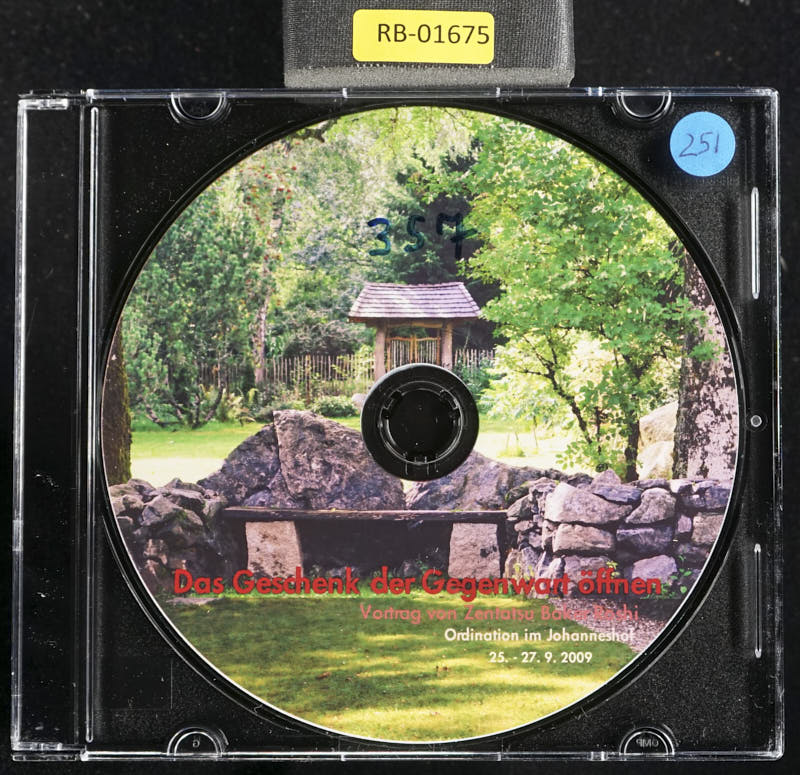
Well, thank you, all of you and each of you for being here today. And can you hear the two of us back there in the corner? Okay. It's more important to hear her. Now, I mean, I don't know quite a few of you. But I presume you're here because you know someone who practices. And maybe you wonder why they're practicing. What the heck's going on here? And believe it or not, I wonder the same thing. I'm always trying to sort of figure it out or understand it.
[01:04]
So I mean, I presume some of you would have questions like, what are the robes about and bowing and all this stuff and chanting in Japanese? And those are questions we ask ourselves. And questions I've been asking myself for 50 years or so. It hasn't made much difference, but I asked myself a question. Yes, it actually does make a difference. In any case, I'd like to answer or at least respond since I've been asking questions of myself.
[02:09]
I'd like to be able to respond, but we don't have time. And for, well, let me just say that although Buddhism isn't in any usual sense a religion, it's certainly not based on belief. Jedenfalls basiert er ganz sicher nicht, beruht ganz sicher nicht auf einem Glauben. We could say it's an experiential practice and we'd have to also say an experiential, experienceable philosophy. Now, this is an important day in
[03:14]
some of our lives who are making this decision to take the precepts. And in some ways it's not for the practitioners not so important at all. Because if you're taking the precepts today, except for Emily, she hasn't been practicing too long, but she's only, how old? Four. Four, yeah, well, she's been practicing since she was born, but, you know, it's her own special kind of practice. She may find it's her intention in the future, but right now it's been her parents intention.
[04:24]
But for the others of you who are taking the precept today and tomorrow. It's been your intention and you've been doing it quite a while or you wouldn't be taking the precepts. So in some sense you've already taken the precepts. But somehow it also makes a difference to Consciously intend them and say them with others. It's a little, you know, last, was it last weekend we met Evelyn and Peter, you got married?
[05:36]
Two weekends? Last weekend? I've been in Sweden since then, but anyway. And in some sense they were married before they were married. But somehow also the ceremony makes a difference. And we say take and hold the precepts. And we say, to take or take, and to keep them. We could say, follow as well, but that's not really the dynamic of the practice. And the precepts, basically, you'll hear them later today, they're just a kind of human...
[06:39]
wisdom or human common sense. There's no particular Buddhist content in them. The Buddhist content is that you take them you receive them and you hold them. And holding them means you hold them in the midst of your thinking and your activity. You hold them within your and cognitive activity.
[07:42]
And you hold them with an intention. And the holding of them with an intention is informed by your activity. and influences your mental and physical activity. And it is, to me, I'm always amazed that if you have a concept or language that you keep present within your activity, it shapes your activity. And words and concepts are little shapes that carry our attention and intention.
[08:58]
Yes, and we take them together. This is something wonderful, I think. Nehmen sie auch gemeinsam an. Und das, finde ich, ist was ganz Wunderbares. And because we practice together as much as possible, as a lay-sanga at least, we practice them together. And they're a little like being married to your own deepest intentions. And that's a bit so, as if you're married to how you want to be in the world and how you want the world to be.
[10:17]
The main thing for a Buddhist practitioner to understand. Yeah, this sounds extremely ordinary. But why not? Why shouldn't it be ordinary? To know that the world causally, karmically, causally exists. moment after moment. Not even, I don't know what you say in German, but not even moment after moment, but it's the present moment, the present moment, the present moment. Yeah, now that's... You know, popular culture, it's common advice.
[11:24]
Live in the present. And that's certainly good advice. Not that it means much unless you look at it awfully carefully. How can we marry to our innermost request? Is it hard to say? No, I just had to say it in a certain way somehow. Okay. How... How do we experientially unwrap the present moment?
[12:27]
Using the pun in English of the present is a gift, a present. How do we unwrap the present of the present? How do we unwrap the gift of the present? How do we unwrap the gift of the present? I mean, usually it's all wrapped up. It's wrapped up in the past, it's wrapped up in the future and you hardly know it's there. But even if you don't know it's there or you don't experience it directly.
[13:31]
Whether you like it or not, you're living in the present moment. But you might be living in the present moment wrapped up in stories of the past. And you know, you have all these old newspapers with stories about you, mostly about you, and you've wrapped the present in them. And they are all wrapped up in newspapers with stories mostly about you. That I said and then you said something else. I don't know what I said. And the Gegenwart is in the newspapers. Or it's wrapped up in stories that haven't been printed yet and the stories aren't finished. Or it's wrapped up in newspapers that haven't been printed yet and the stories aren't finished.
[14:37]
So wrapped up when you undo all these future newspapers, there's nothing in there. So how do we again unwrap the present, the gift of the present? It is a gift. It can be. And again, whether we like it or not, it's where we actually exist. And where we actually accumulate our experience. if you accumulate your experience through a world of assumed permanence, you'll end up with an entirely different past and future.
[15:56]
Then, if you live your life, assuming impermanence. And again, this is easy, this is very easy to understand. Not so easy to do. Because consciousness, the job of consciousness itself is to make the world seem permanent. More predictable than it is. So again, how do we unwrap the present from the newsprint of the past and the future?
[17:05]
I would say very simply that your attention has to be in the present and not in the stories of the past or the anticipations of the future. So somehow you've actually got to bring attention into the present. Into the present moment. And really the easiest way to do it, and it's been known for some thousands of years. The easiest way to do it is to bring attention to the breath.
[18:07]
Away from establishing self-continuity in thinking. So if you can bring attention, have an intention to bring attention to the breath. Also, wenn du die Absicht, die Intention haben kannst, dass du die Aufmerksamkeit auf den Atem richtest, dann wird der Atem so wie eine Nadel und ein Faden. Und du fängst damit an, Geist und Körper miteinander zu vernähen. Und du beginnst, Geist, Körper und die Erscheinung miteinander zu vernähen. easiest and first way to bring attention to start unwrapping the gift of the present.
[19:10]
And breath then can bring us into into our And to the world of seeing. And hearing. And smelling. And touching. And tasting. And tasting. I mean, that's all we got is these five senses plus mind. And if the present moment is going to be present, It's going to be present in hearing, smelling, tasting, teaching, tasting, seeing. And so let us say that the breath also brings us into what we could call perceptual immediacy.
[20:25]
in etwas einführt, was wir Wahrnehmungsunmittelbarkeit nennen können. Und diese Wahrnehmungsunmittelbarkeit, die lässt zu, dass der Geist erscheint. Denn die Wahrnehmungsunmittelbarkeit, die erscheint auch inmitten und durch den Geist. Und wenn du spüren kannst, dass die Welt sowohl im Geist erscheint, als auch da draußen, dann öffnet sich so etwas wie eine And within this wide mind and perceptual immediacy and spatial immediacy we've unwrapped the gift of the present.
[21:44]
Now we can start bringing teachings into it. Now we can bring the precepts into it. And let's say the most basic attitude for all Buddhist practitioners the initial mind with which we greet and meet each appearance Der anfängliche Geist, mit dem wir jede Erscheinung begrüßen und ihr begegnen, ist die Akzeptanz. Damit musst du anfangen, weil du auch keine Wahl hast. Naja, oder vielleicht hast du eine Wahl. Du kannst auch zu allem Nein sagen.
[22:46]
Und wir kennen Menschen, die zu allem Nein sagen. It's not the most attractive way to be in the world. So the better initial mind is yes or welcome or acceptance. Initial mind. Now on the second thought you might say no, no, it's not possible. But the chemistry, the dynamic of an initial mind of acceptance is extremely important. And the second basic attitude is... What is it? Consciousness isn't all how we know, isn't the limits of how we know.
[23:52]
And we don't want to only know things the way we habitually know them. So we cut through all the conditioning Also, durchtrennen wir alle Konditionierungen, oder auch Prägungen und Gewohnheiten und so weiter, mit dieser Frage, was ist das? Damit, dass du für einen Moment die Dinge außerhalb deiner Gewohnheiten siehst. Und das ist die zweite grundlegende Haltung. No harm. So I mean, in each situation, the Buddhist practitioner develops the habit.
[24:58]
As I say, a habit you inhabit. To unwrap the present moment, the gift of the present, um diesen gegenwärtigen Moment, die Gabe der Gegenwart auszupacken. Und zu akzeptieren, was auch immer da ist. Und dann zu fragen, was ist das? Und dann, was auch immer du spürst, versuchst du dann, keinen Schaden zu verursachen. Und das ist You have that feeling with each thing you meet and each person you meet. Acceptance. What is it?
[25:59]
No harm. And I think you'll be amazed if you haven't practiced this already. what trying to bring that into each appearance that also helps you notice the world as appearance appearance is the present the gift of the present the present moment is where you were born. And it's where you will die. And it's awfully good if it's also where you live. So, acceptance.
[27:05]
What is it? No harm. You hold that in your mental and physical activity. And it can both transform and simplify your life. And most of the old newspapers and newspapers And no harm is where the precepts start. So the precepts which we'll take today and tomorrow, some of us, And of course you're all invited to listen to them and say, yeah, I already feel that way, or yeah, that makes sense, or whatever it doesn't make a damn bit of sense, I don't know what it is.
[28:24]
In any case, we're doing this together, all of us. Jedenfalls machen wir das alle gemeinsam. Und dieses Annehmen, Empfang und Halten der Gelöbnisse ist ein Ausdruck dieser Wendung kein Schaden. Das ist im Grunde genommen, das ist vom Wesen her die Let's hope the whole world can start to practice this. Thank you very much for your time and so forth.
[29:22]
@Transcribed_UNK
@Text_v005
@Score_91.67