You are currently logged-out. You can log-in or create an account to save favorites and more. more info
Tales of Migration: Settlers and Legacy
History of Local Families
The talk centers on the history and genealogy of local families and settlements in a region marked by diverse ethnic and cultural backgrounds, with an emphasis on oral history narratives. It recounts stories about early settlers, including escaped slaves and families involved in early industrial developments like sawmills and hotels. Additionally, it discusses the cultural and economic contributions from various groups, and the transitions in land ownership over time.
- References to Early Settlers:
- Escaped slaves who initially settled in the area.
-
The Handy family, early settlers whose history influenced local naming conventions, such as Handy Creek.
-
Industrial Development:
- Sawmills and the lumber industry, including a mention of logs being navigated down the Chemung River to the Susquehanna.
-
The Erie Canal's impact on regional development and transportation.
-
Local Family Histories:
- The Nagels, Powells, Pickerings, Hartmans, and Dutenhavers mentioned in connection with land transactions and local businesses.
-
The Weavers' involvement in public works and infrastructure.
-
Cultural Contributions and Community Structures:
- Hoteliers and businesses run by locals, such as Polly's Hotel.
-
Economic activities like eel fishing and agriculture as key livelihoods.
-
Legacy of Internal Migration Patterns:
- Movements of families between regions like Pennsylvania and local areas, often tied to economic opportunities.
The talk can provide context for researchers studying regional history, specifically those focusing on migration, settlement patterns, and community development through personal narratives.
AI Suggested Title: Tales of Migration: Settlers and Legacy
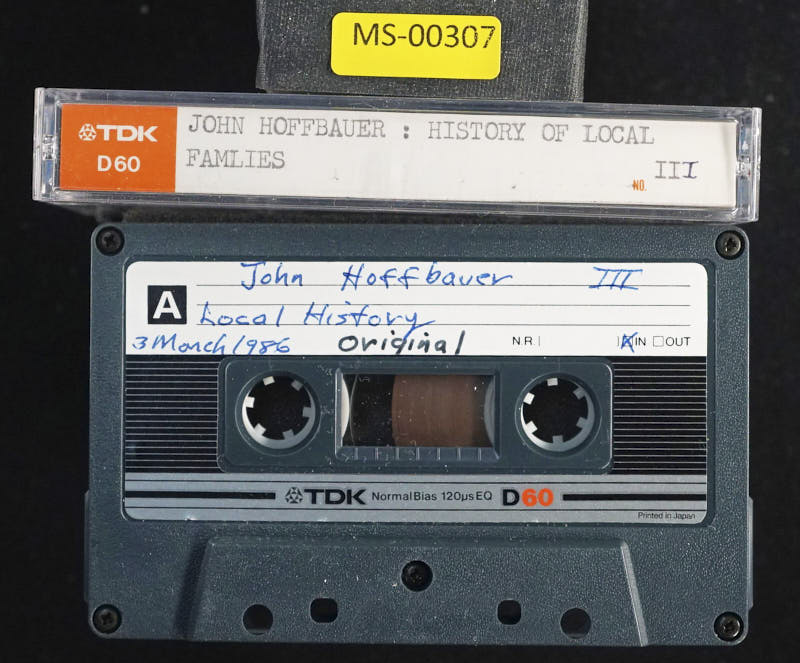
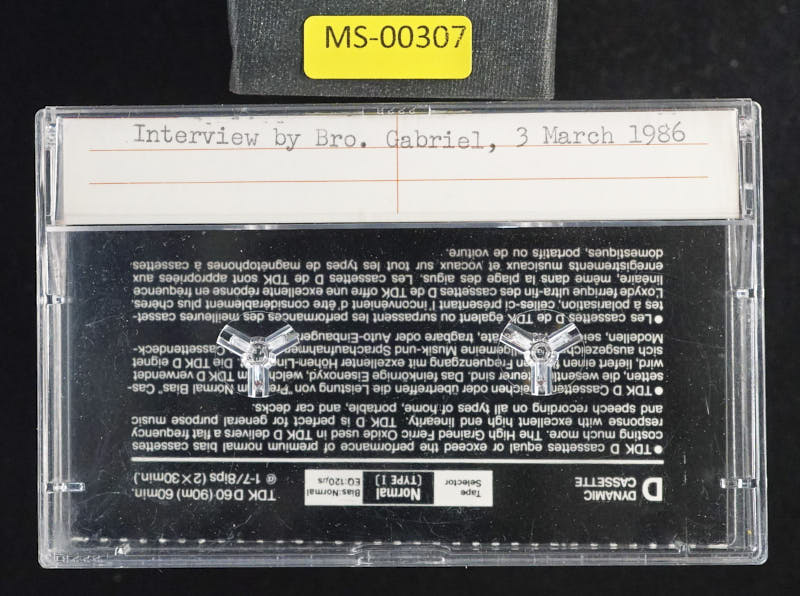
AI Vision - Possible Values from Photos:
Speaker: John Hoffbauer III
Possible Title: History of Local Families
Additional text: Interview by Bro. Gabriel, Original
@AI-Vision_v002
Do you take any sugar in your coffee? No, I don't make no sugar. Okay. I never use sugar, not much. I was wondering, on this property, where was the first house ever built? I see. Now, when you see Elizabeth down there, find out about the chemists too, will you? The chemists was related into the Nagels or the Powells. And one of the chemists got to be a motorman on that streetcar line up there. She was a motorman.
[01:02]
And Phil Kimmiss. So you kind of find out about her, what she knows about the Kimmisses. Maybe some of these pictures we saw here is the Kimmisses. I don't know. That we couldn't get no name off of, you know. Do you know the name of the people who first lived on this property before the Nagels? Nobody. Nobody. Except a slave. A Negro. The first guy who lived here on this place, he lived down there where the swamp is.
[02:04]
And he was an escaped slave from the south. And he built himself a little house down there, right along the edge of the swamp. Now, when I plowed, I'd plow up the knives and forks and stuff like that, and I went to inquire. And Charlie Darkstead up here remembers that. And he planted four little pear trees down there, and they bore fruit for years. Then they finally wore out, and I dynamited them out. And he was the first center, but he didn't own nothing. He was a squatter. Oh, I see. Uh-huh. And then he died out, or burned out, and then the Nagels came in here. And when they came in here, there wasn't even room enough to set a chair down. Nothing but woods, solid woods. And they cleared all this land, pulled all these stumps. There are two kinds of soils here.
[03:07]
When you go down the road, This is the oak soil over here. And this way is the pine soil. And the pine soil is loose and shaly, and the oak soil is black and gummy and hard to plow. Oh, I tell you, it's bullheaded. So there's two kinds of that. And the line goes right down through here, goes over the hill, past my brothers, and goes clear to the Pennsylvania line. That's a section. And that goes from here down through here, clear over to Schuyler County. Then, every so often, there's a section line. Then, one goes through down there where Bob Butler is. The schoolhouse is up here. Butler lives here. That goes through up there where I am, on the east side of the house.
[04:09]
separates me from Bauer, and farther up my brother, and that goes over the hill and goes through to the Pennsylvania line. And from there, it goes through to Scott County. Then you go some more farther west, and you find another one. And finally, you come to the Stuban County line. That starts down there and goes through up there. So it's what they call section lines every so often. That's the way they surveyed this land out. That's the way they surveyed it out. Did that slave who lived down here have any family? No, he wasn't married. No. Charlie up here remembered the Civil War, you know.
[05:13]
And Charlie, he remembered the Civil War. They were old people. Oh, when the Civil War was won, this guy down here, if he burned out, he could have went to Elmira, too, you know. I don't know what become of him. I never heard say. It could have worked down a mass. Everybody built down in here to hide so they wouldn't get a hold of them. I suppose the earliest settlers would have lived along Hendy Creek, huh? The who? The earliest settlers. They would have lived along the creek there. Well, yeah. The Hendy's come in here. The beaches made into the Handys.
[06:19]
And you know, when you go down the Handys Creek Road, Mr. Eakes had a house hit right along the creek here. You know where it is. She lived there for a while after he died. One of the Baldwin boys built that house. He bought that off of Mike Madigan, that little corner. Then comes this creek that goes down across under the road. Then over here on this corner where all these houses are, they weren't there. But just a little farther down, I remember the old Handy home where one of the brothers lived. And that's how this got to be called Handy Creek, after him. Well, that thing sat there. Germany there kept tumbling down, kept tumbling down. And then in 1921, they widened the road out.
[07:20]
And they took it out of there and destroyed it. There, Handy, was the first settler up here in Handy Creek. And the other Handy settled down below Water Street, down along the river. Those were the first Handys, yeah. Then came the Duttenhavers, and I forget some other ones. And I'll tell you who the boys were now, lived down here where Bosies lived. Sam and Tim Thompson. I knew both of those, too. And they sold out, and they went down Pennsylvania. And the boat's place down here was started by a colored man. And he had a white woman for his wife. Charlie Ull told me that.
[08:23]
And they had a girl born. And she was marked off black over here and white over here. Doesn't seem possible. And she was awful shy. She never showed herself much. And Charlie Ull, he'd seen her a few times. And she died. And across the creek, over here, was a little orchard. There were some apple trees in there. There's where she's buried, buried right in there. Oh, you see, Charlie Ull knew a pile of history around here. And he came in here young and early. And I was always a great hand to eat that stuff. I just love history. And I listened to all of it. I just loved it, you know. And their name was Thompson? No, no. I don't know what this colored man's name was. I forgot. He probably told me and I forgot. And he's married to this white woman.
[09:28]
And he sold out to the Walshers. And they found it there. And one, they had a team of young horses, a team of colts. And he hooked them up on the wagon, was going to break them, and they run down in there where that barn is there like that, and throw Jim off of the wagon, and he hit his head on a stone. He died, right to discothe. And they sold out to Tim and Sam Thompson. They lived there for years. And finally, Tim and Sam, their relatives was down in Pennsylvania, and the Hartmans came along, George Hartman and Emma, and they bought it. And the Thompson boys went down there. And I think we went down and made them a visit many, many years afterwards, and they still was all right, but they're gone now. So that black man...
[10:29]
The first black man did own the house then. He built that house there. He started it. You'd be surprised there were a lot of color that came in here. Then they left again. And if I hadn't had Charlie Rule tell me about Chief Police Weaver's grandfather... And those two buried down that bank there, nobody would know anything about it. And you know what police chief Weaver's grandfather's business was? He dug all these cellars under these houses with a slip scraper and a team of horses. He dug the cellars here for the Nagels. He dug the cellar for the Madigans down there and the Kellers. That was a Hartman farm. And that was his life worth. go from place to place, wherever they started to build, he'd take his horses and dip the cellar.
[11:33]
Boy, that must have been some job, you know. And I remember Police Chief Weaver well. I remember him well. I was back in the teens, at the early 20s. Then there was another Weaver. They were all related. He's the one that built that big hotel down there that Sammy Matthews had. You remember where the washette was down there? Yeah. That was great. He built that. Well, that big house, right, that big white house right there, that is the old Weaver Homestead. And he built that bar right there, that hotel, and that grocery store and drinking place. And I remember when that hotel was a boomerang. I mean... lost out and then there was a hotel on Handy Creek where Dutch Hill Dutch Hill comes down here and Handy Creek comes here there was a hotel in here that was Polly's Hotel there was a a kind of a a fad like everybody was building hotels and they paid the lumberman was in here so
[12:51]
The first hotel, Polly's Hotel, was down across from Fred Dickerson. You still could see the arch back in the hill, which was laid up with stone, where they kept the beer to keep it cold. It all caved in now. Then they moved up here. Then, when my father came in here in the early 12s, 13s, the thing was getting empty. Didn't pay no more. There it sat. So, empty. And right above was Wolf's sawmill, big sawmill. So, one night, before the thing was abandoned, a guy comes up, comes up with a horse and buggy. And comes up there around midnight. He ties the horse fast to the tree. And the buggy. where the horse, and he climbs up in there and takes a rope and hangs himself.
[13:54]
Gets up in the morning, they had dead men hanging in the tree. And I remember that tree, it was a wall. And Drexel and Ivor bought it. And he built that little house across there, that pretty little house, and he put a store in there. And he sold everything, hardware and horseshoes and nails and belts and radiators. He was a big businessman, that guy. And he bulldozed, had that walletry bulldozed out where that guy hung himself. You know, way back in the early 17s, they were lumbered in here already, you know. Oh, yeah. Do you remember when they found those two great big gears, wheels in the river up above Jake Rody's cabin there where the four branches are?
[15:08]
No, I didn't know about that. There was a big sawmill up there, an old monster. And the turbine lays up there, yep, unless it washed away. Oh, they saw lumber up there. Then, before they got a sawmill in here, they'd tie them together in rafts and float them down to Chemung River when the river got high and float them to the Susquehanna. Well, when they got down in the Susquehanna, it took an expert to get those things through between them rocks. There were rocks sticking up down in there, but they'd get them through. And you know where they landed them? Oh, down Chesapeake Bay. And they saw them. And they saw them up. Am I keeping you? No, no. No, I... Those great big wheels, they were made out of cast iron.
[16:09]
They found them. They're up in the big flat museum. Oh, I see. Oh, yeah, you'll see them up in Big Fast Museum. That was what they call the old gang's mill sawmill. Oh, yeah, yeah. There was a kind of island there, wasn't there? That's a kind of an island. The river goes in four channels. And they're swift. And they picked this channel over here on this side. And that was turned up. That turbine, oh, the thing was a great big turbine. And that would run the saw and we saw lumber, you know. Then we tied that together too. They kind of shaped like this and just piled in, rope it together and then let her float. There was no railroads around here or nothing like that then, you know. Then I also remember talking with men that worked on the Erie Canal. We had had the Erie Canal in here.
[17:14]
Now, you go down towards Wellsburg, and you come out of Wellsburg, all this over here on this side here is Beery Canal. You can still see the canal itself now. Then you go up here in the big flats and go above the village and up in there, and you can see all the old canals up in there yet. And then this man... that worked on the Erie Canal, he drove horses. And he also was a veterinarian. His name was Potter. And he saw his last days out over here with Lou Daly on the farm where Shirley is. Where Shirley's lived. That was the old Seymour Daly farm, as I told you. And Lou inherited it. And then Lou sold it and built a house downtown, and he took the job of being turnkey in the county jail down there.
[18:17]
County jail, yeah. And this old Pickering down here, lived down here, where this cabin that I had, the 72 flood truck out, his father was sheriff of Schemann County. And Pick was born in the county jail. Ah, yes. Because... He lived in the county jail because his father was sheriff. And he had an uncle, or a great uncle, his name was Colonel Pickering. And he was a big shot in the American Revolutionary War under George Washington. And then Frank down here had a brother in New York City. He was a jeweler. And you know there's some of these Pickerings in here yet? Mm-hmm. That liquor store over there, on bulkhead out there, those are Pickering's. They're all way back. They're related back to this old guy down here. The Pickering's was always in politics, and they were highly educated people.
[19:20]
This guy down here had a college education. It was fun to talk with him. But his sister stuck him up here. Too much of this. Couldn't handle liquor. So, in the summer, he'd farm it down there. Had a horse and a cow. He'd raised strawberries, garden stuff. And the fall of the year, he'd put an eel rack in. Cost him $25 license. He kept sometimes 200, 300 pounds of eels in one night. Oh, yeah, it was good. Everything went for booze. So, his sisters stuck him up here to get him out of town, to get him out of mischief. And then he'd go to work. He'd bowl all the windows, shut the doors, and go down to Barker, Rosen, Clinton and get a job. And he was shipping clerk. Then when spring comes, he'd come to Mr. Barker and he'd say, Mr. Barker, I heard the birdies sing this morning.
[20:31]
He says, I guess I'll go back on the farm. He'd quit. Oh, were they tickled at that to get him back again in the fall? There was very few educated people like there is now. Nowadays, everybody's got a college education put in there. Not then. And that's what them business people wanted. They wanted people with a college education. I wonder where he went to school. I don't know where he got his hobby in Elmira or someplace because his father was sheriff of Shimon County. Then up above, they told he was a rat swan. He was another one. He's the most brilliant carpenter you ever saw. Talk about talent.
[21:35]
But this stuff. His sisters, they got sick of him too and they put him up there. One of his sisters was Mr. Shrappy. And the other one was related in are married into the Keefe's insurance. And Rat Swan's father built the city hall. He's a contractor. But this guy, he's Spock Brant. So when the old man died, he gave the girls their share, but this one down here was dished out to him so much a month. We'd have walked right through it, see? And that Rat Swan was a Most brilliant man to talk to. He was well read. Good educated. But an alcoholic. Very worthless. Is that his nickname? His right name was Rastus Swan. We called him Rat. I tell you, he was quite a guy.
[22:41]
When the 46th flood was, he got washed out. Partly, he lived up here with my mother and father for a couple of weeks. My father and him, boy, could they ever get together and visit. Boy, my father would travel the world, you know. And this guy here, he's been around too. And I don't know how he could do it. He built a sleigh to pull his groceries across from the road over where the streetcar was, over to this place. And that sleigh was all put together with tenants. How he ever got those tenants made like that and got them in there so smooth and so square as more than I ever could figure out. Well, on the last end, he come down the stage with us. He got cancer. And then on the 4th of July, we took him out and took him down to St. Joe's. There was no more hope. And I took the slate and I kept it for a souvenir.
[23:42]
And my guess if the 46 rod didn't get a hold of it, it's gone. Is that hot enough, John? Is that coffee hot enough? Sure, it's hot. It's nice. It's okay. Well, I'll be more than long. I don't want to bother you anymore. Well, I appreciate your coming over. Did those swans, whatever happened to their property down there? The property, his one. Yeah. His sisters bought that. Then he had a niece. And she didn't take to it. So the county took it over. Oh, I see. It's county property. The county took it over, yeah. Then right down below, about as far as in here over the barns, was another cottage.
[24:46]
And that was Terry. And he was an umbrella repairman. And he had a shingle out downtown, Umbrella Hospital. And he fixed umbrellas. And he fixed umbrellas for my folks, too. Then when he got old, he retired down there, and he lived in that cabin there. Well, the first year of deer season in 1936, I got up in there, and I stopped in and visited with him. And he was a nice guy. He was broad-minded and bright, and he was a mechanic, and he was failing. He was getting kidney troubles. And I think that winter, towards spring, he died. So the place was empty then. So the county got that too after a while. How much acreage did they have, those people? Oh, not too many acres.
[25:51]
Swan grew peaches and asparagus and garden stuff. And after he got older, he couldn't work the land anymore, and then he dropped it. And he probably had a couple, two, three acres around there. And Kerry down below, I don't know, he might have had a couple acres down there, too. And Jake Rody down there, he had two or three acres around there. Now on the Pickering property, I think there was around 14 or 15 acres there. Okay, now my sister was coming back in February. Oh, yeah? And she says if the weather is rough up here, She's going to stay a little longer. Yeah. And the weather is pretty rough. Yeah. So she might as well stay. It's been one of the nastiest winter that I've seen in quite a while.
[26:54]
We didn't have too deep of snow. But that bitter, stinging cold. Oh, it's just awful. Yeah. And the turkeys up there and the deer and the wildlife is getting awful hungry. Yeah. And the other day, 22 turkeys come into my brother's tool shed. Really? That's how tame they are. Really? Yes, sir. And a friend of mine went by, and they scared them out, and they went up in the wall of ours, and they went up to the line fence and worked their way back down to the woods, over towards the creek over here, the kind of creek here. Yes, sir. And I tell you, it's tough. If the snow would get off a deep hit, they'd starve to death, but now it's kind of opened up a little, you know. Okay, I left my car over there. Oh, yeah? Yeah. And I'm glad I had a chance to help you out a little bit, Gabriel. Yeah. Well, I'm glad you could come over, John. I'll tell you, I gave you a good reference there on her.
[28:01]
She'll know a lot. Then something might come to me. when my sister comes home, and I'll find out what Paul's last name is. I think his last name is Paul Riesbeck. He was adopted. And he's a Catholic, and he's a very devoted Catholic. And he lives someplace here in, down here, what they call Mossy Glen, or South Cornet. And she'll remember more about him than I did. And the last time I saw him, We was going to a funeral together. And you see, I haven't seen him in years, and I've kind of forgot about him. And I'll find out through my sister, or you can find out from Elizabeth Smith. She knows him well. She's related to him. Not by blood, but by being adopted. His mother was a sister of the guardian. Oh, I see. So there is a man that can help you out a lot.
[29:04]
What about these dailies? Were they Irish? The dailies were Irish. They came from Ireland. Yeah. Well, did you know that Brother John's mother was a dailie? You know, she's, you know, Brother John. Was she any relative to these dailies? I don't know. I'm going to ask her. I don't hardly think so. Yeah. When did they come over? They come over early, you said? Yeah, these dailies come over here already around 1750, 60, somewhere in there. Oh, really? Yeah. There is a grave, if it's still left, up here on the South Corning Road where you're going to Mosset Glen. And it's right in a barnyard. It's a shame. The cow's all walking it down. There was tombstones in there from 1700 and something. And some of these old first-timers, they came in here early. They were pioneers. And the last, Elmer Daly, he's still alive.
[30:09]
He was an electrician. I went to school with him, and I went to school with Edwin. And Edwin was the great-grandson of this Daly that came in here. I told you couldn't read. And Edmund just died here a year or two ago. What was the first name of that Daly that came in? You mean the old man himself? I couldn't tell you what his first name was. If Elmer Daly would maybe know. And you'd be surprised, though, how little sometimes people know of their grandparents. Right, right. Yeah, or their great-grandparents. They don't seem to be interested. They don't seem to be interested, yeah. Well, thanks very much, John. Appreciate it. Oh, you're welcome. That's all right. I'd help you out a lot somewhere down there. Yeah, yeah. I do enough. There's a restroom. Oh, no. I don't have to use it much at all. I take pretty good care of myself.
[31:17]
@Transcribed_UNK
@Text_v005
@Score_93.06