You are currently logged-out. You can log-in or create an account to save favorites and more. more info
Suffering, Sacrifice, and the Divine
Given to Benedictine Juniorates
The talk examines the evolving theological discourse around the concepts of divine impassibility and passibility, focusing on the perspectives of several noted theologians. It evaluates how contemporary and historical theologians address the question of God's capacity to suffer in relation to humanity's suffering, emphasizing the theological implications for understanding God's nature and our response through the Eucharist.
Referenced Works:
-
"The Crucified God" by Jürgen Moltmann: This book argues that God chooses to be affected by events in the world, positing that God's love involves suffering with humanity out of choice, not weakness.
-
"The Trinity and the Kingdom" by Jürgen Moltmann: Explores the doctrine of God and asserts that God's eternal nature is defined by the self-sacrifice of love, affecting how God relates to creation.
-
"Breath of Life: A Theology of the Spirit" by Denis Edwards: Discusses the interaction between creation and God, contending that relationships are reciprocal and creation impacts God, challenging traditional views like those of Aquinas.
-
"Symbol and Sacrament: A Sacramental Reinterpretation of Christian Existence" by Louis-Marie Chauvet: Highlights the gratuitous nature of the Eucharist, emphasizing a response of thanksgiving and the interplay between liturgical and ethical living.
-
"We Have the Mind of Christ: The Holy Spirit and the Church's Revenue" by Jerome Hall: A commentary on St. Luke's theology, exploring the role of the Holy Spirit within the Church's understanding and tradition.
-
Works by Karl Rahner: Discusses the theology of death and the human tendency towards self-sufficiency, relating it to the life and death of Jesus, emphasizing a continuous transformation through divine grace.
AI Suggested Title: Suffering, Sacrifice, and the Divine
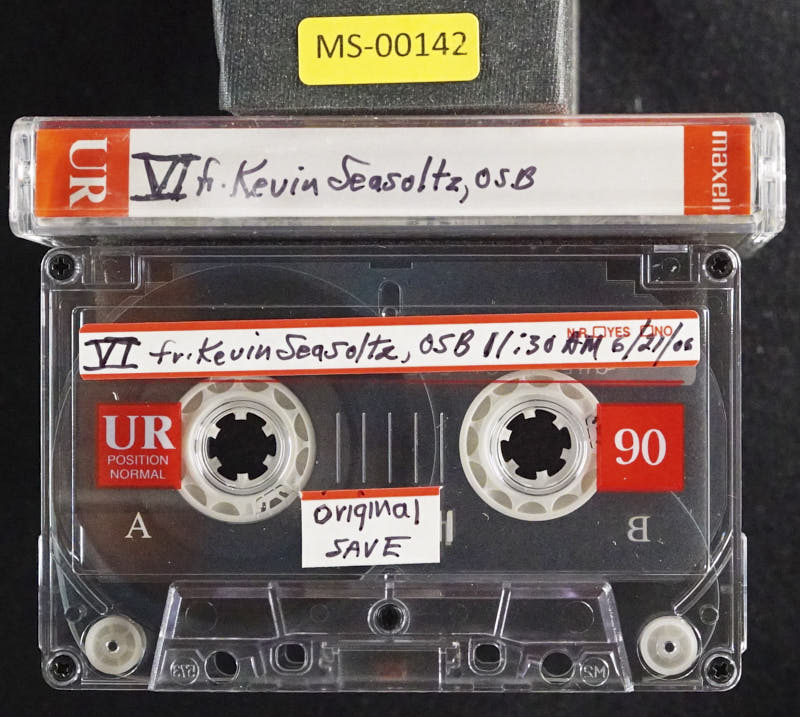
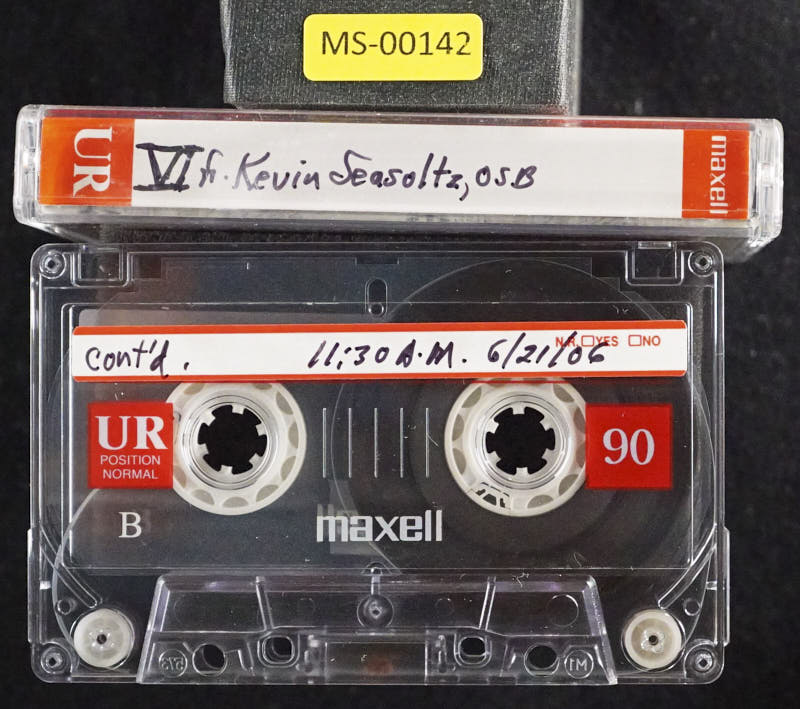

AI Vision - Possible Values from Photos:
Speaker: Fr. Kevin Seasoltz, OSB
Additional text: 11:30 AM CLASS\noriginal SAVE
@AI-Vision_v002
a very good commentary on Edith Kilmartin's work. It was a dental dissertation done at Catholic University under the director of Sister Mary Collins who came out last year as a prior in Manchester, St. Galestagos. And it was done by a Jesuit by the name of Jerome Paul. And it's called We Have the Mind of Christ, the Holy Spirit, and the Church of the Memory and the Thought. I think with Phil Martin. It's published by the Literical Press. Very clear, very illuminating. So if you wanted to pursue that, do you want to find it? No. You said it. There might be. There was some on the shelf. We have the line at Christ. That's the key part. We have the line at Christ. Literical Press, that is $1,000. Yeah, no. All right, let's talk a little bit now about how we might rethink this issue.
[01:13]
Something that comes out very regularly. I certainly don't have definite conclusions about this. I can't change my mind depending on what I read. But what I do read, if people write about this, I guess quite First question is, what can I know positive of these people? How can I feel them wrong? I just learned this from my own life. If somebody begins to express at you that I know this wrong, immediately I go into gear and say, how can I respond to that? Instead of asking the question, what can I learn from that? And I must admit, I learned this from one of my doctoral students years and years ago. The name is Christiane Brusselman. She was a Belgian woman who was a student at the Institute Cadillac in Paris in the 60s.
[02:15]
You're generally just not giving women doctorates to take the Catholic University. She was one of my students, but she had enormous influence on me. And we used to, she was very interested in liturgy, so we used to go to Trinity College in Washington DC. And Christian would get teamed together. And we would prepare as a team, celebrate with the assembly at the . But it was interesting afterwards. She said, now we need a critique. Well, we must not do it immediately. Because at the Adventist celebration, one is always conscious of what has gone wrong. I think that's very true. And when she would bring us together after we get supper together for discussion, her first question was, what did we do well tonight?
[03:17]
What did we do well? And then her second question was, what did we do wrong? What did we do that was not so well done? Very different attitude, shortly. We have much more of a positive, so that you can build much more on the positive of somehow meeting the negative economy. Anyway, let's talk about hepatitis. Certainly, from the beginning, almost in the patristic period, The Christian theological tradition held that God is, in fact, impassable. God cannot suffer. God does not experience emotional changes, and therefore, God doesn't suffer. Well then, toward the end of the 19th century, there was a major change in the tradition, so much so
[04:23]
that at present many, if not most important Christian theologians, hope that God in some way does suffer, that in some way he is passable, and undergoes emotional change. And a great variety of 20th century Catholic theologians including Maynard Pagnollamessa, who holds great theologians, the present Pope, John Gallo, Paul Swartz-Fort Balcazar, Roger Pate, Elizabeth Johnson in this country, John Sobrino, coming out of the liberation tradition. They also hold the God Suppers, though they differ considerably concerning the manner and the extent. of God's passability.
[05:24]
So there's no doubt that the 20th century theological literature made much of Capricassianism the idea of the suffering and compassion of God. Aditya Kudbacher's opinion, which was expressed in the midst of the horrors of the Second World War, was fairly determinative, he maintained that only a God who suffers can really help people in the midst of their appalling afflictions. And then people have begun to reflect on that more and more. They conclude then that somehow God must be passable, must suffer. And what they're trying to do is to take a sophisticated and yet carefully nuanced approach to the question of Christ suffering in death and try then to come to grips with how, in fact, does God relate to a world in which there is tremendous suffering caused both by our own moral culpability and also
[06:51]
caused by natural catastrophe. So you hear even very ordinary people wonder whether we are left with an amiable God who is ultimately unable or simply unwilling to help us in times of catastrophe. So what you have today is a number of theologians who are searching quite reverently, of French, and yet hope to inform the docile language, to deal with this very profound question which troubles many people today, and certainly trouble people in the past. In other words, the basic question is, why would bad things happen to good people? And so these theologians, then, are not satisfied with a God who somehow presides in the heavens, but refuses to intervene to help suffering humanity.
[08:01]
They find something incongruous about a God who is totally impassable. Consequently, what they're doing is searching for a God who freely suspends various aspects of divine omnipotence in order to relate more deeply and fully to the depths of human suffering and death. Likewise, they tend to dismiss the charge that the biblical expressions about the emotions and feelings of God are mere antipathorpic assertions. Perhaps He looks widely rare in temporary theology, which argues for a suffering God, as admitted by the German Jürgen Moltmann, N-O-L-T-M-A-N-N. His most significant work here was The Crucified God, and he also wrote an important book called The Trinity and the Kingdom, The Doctrine of God.
[09:13]
His basic argument And I think there are holes in it. But he claims that out of love, God freely chooses to be affected by what happens in the world. So that when human beings suffer, God suffers too. However, it's very good to say God does not suffer out of weakness. but rather simply out of love. In fact, Wilkins argues that God's eternal nature is really best characterized by the phrase, the self-sacrifice of love, God being a sacrificing one in the interior life of the Trinity, even before creation came into being. He argues, quite forcibly, But if God could not suffer with humanity, then, he said, God is not really love.
[10:23]
Since it's a basic characteristic of love to be affected by the one who is in fact love. From someone whom I love, who is suffering, you want to just take a detached stance. So in writing the cross, he says that God wants to save the world, which is in sin. Here I have problems with this. He freely hands over the sun to be crucified. Seems to me the next one is your child abuser. Hands over the sun to be crucified so that salvation might be accomplished. Milton Paul said, that in a mysterious way, the cross of Jesus opens the way for all the world's suffering to be taken into the very being of God, since God is so intimately united to the world through the incarnation, death, and resurrection of Jesus.
[11:46]
He sets out He's in his email. It's a bunch of pages of essays, but doesn't produce large words. He says, I'm a very different theology of the cross, Indian suffering. I try to think it's a theology which I personally find quite compelling. So rather than somehow seeing the suffering of the world as entering into the very being of God, he has tried to develop a theology much more in keeping within the lines of Catholic Thomistic theology.
[12:51]
So him, or him, above all, God is pure act. Being itself. God's very nature then is to be. God then, he says, is purely positive. Pure life. Perfect love. And as such, God desires only life and never the death of his people. But there is evil in the world which God wants to overcome. However, he stresses God does not hand over or deliver up Jesus to suffering. God is not a sadist. He emphasizes, and I think this is very important in terms of our relationship with Jewish-Christian relations. Historically, Jesus was condemned to death unjustly by the Roman and Jewish authorities.
[14:05]
He was a victim of human sinfulness as well as political hostility and we need to say a victim on the part of the Romans. and the Jewish leaders. He says, to say that God handed Jesus over to the cross is to blame God for what should be blamed on human evil, human injustice. He says, God always wills life, not death, joy, not suffering. For both his son Jesus and for all of us. He says, God enters into compassionate solidarity with Jesus, dying on the cross. He does not abandon him, but keeps vigil until human freedom.
[15:06]
We go back to that issue of human freedom again. Until human freedom has played itself up, and Jesus has been put to death. Then he says, God overcomes the evil of sin and plant injustice and persecution by raising Jesus from the dead and conquering the evil of suffering brought into existence by human sin. A very interesting point is that he insists that by itself the cross does not save humanity for it was by the cross that Jesus was put to death. Hence he says the cross is basically people. Some Protestants really get terrible. He says it is Jesus' loving fidelity along with God's power to overcome the cross in the resurrection of Jesus.
[16:13]
It really We are saved of all by the cross by the resurrection, not primarily by the cross. He sees the cross as the important entry to the resurrection. Just look up to the point that the Apostle Paul made if Christ had not raised veneration the end of David's event. There's a very strong strain in Protestantism that we are saved by the cross. And I've often been told, you Catholics, all you talk about is resurrection. It's both. It's both. See what he said. He argues that suffering does not enter into the being of God. Because he says, God could not, and I find this tendency,
[17:15]
God could not save others if God needs to be saved himself. God could not save others if God needs to be rescued and saved. And so he goes on and he says what happens both at the cross and subsequently at all other experiences of suffering in the world. is that God, who is both free from all evil and the throne of evil, enters the image of compassionate solidarity with all those who suffer. And he points out then that God's compassionate presence is mediated to those who suffered in the world through the human presence and compassion of faithful people who resist evil and injustice, and so then become sacrients of God's saving will to rescue the world.
[18:24]
It's the body of Christ, then, that mediates his compassion into the lives of those who suffer. Paragest theology, whether you may or not, preserves God's impassibility while at the same time it does not earn God's compassion, which renders God powerfully sympathetic toward the suffering of the world, but discloses God among all as the All-Living One. And so the point that he draws in conclusion then is that it makes us realize that as disciples of the Lord Jesus, We, too, then, are called to enter into solidarity, compassionate solidarity with all those who suffer. What's missing, I think, in Scilabies' argument, he has failed to confront the fact that much of the suffering in the world is not caused
[19:39]
by simple actions of human beings. But much suffering in the world is caused simply by natural disasters, such as floods, hurricanes, droughts, tornadoes, all the rest. Now, there's another figure who is key. It's a capuchin by the name of ,, W-E-R-N-A-N-D-Y. He's an American Catholic, was for a long time on the faculty at Oxford, has just been invited back to this country, and he has become the general secretary of the American Bishop's Doctrinal Committee. Well, I got his argument. He really does know himself.
[20:43]
and he certainly engages a wide variety of biblical and contemporary authors, in order to refute what he considers to be false arguments that God is passable, and somehow to articulate in a positive way a Christian understanding of God and God's relationship to humankind. So, very strongly, He denies the notion of passability, according to which God undergoes or experiences inner emotional changes of state. He holds that God is simply loving and kind, despite being impassable, but also that God is compassionate precisely Because God is impassable.
[21:48]
He can suffer with others. Because he is pure being and full of life, he himself then does not have to suffer. The linchpin for Bonanni's argument is in fact the biblical doctrine of creation. He acknowledges that the Old Testament speaks of God as though he does believe undergo emotional changes, including that of suffering. However, he maintains that such passages must be interpreted within the clear biblical revelation of who God is. He says, above all, one must discern accurately the biblical notion of God's utter transcendence. At the same time, if you try to explore God's imminence. How does God both transcendent creation and at the same time be present to it and be imminently active within creation?
[22:59]
That's disgusting. To affirm that God is the impassable is simply and yet I think profoundly important and it underscores the fact that God in fact differs from everything that is not divine. There is an infinite distance between the creator and creation. He wants to distinguish carefully God above all, human copy. Now, my reservations about this book, and he's also written a fairly long article on this issue, First Things. It needs to be balanced with a sympathetic dialogue with law and science.
[24:02]
You know, there's nowhere does he consider all the issues that we talked about last hour, Darwin's book. for the work of contemporary biologists and physicists. And he might find that a careful reading of John Hopf's work and the works of other contemporary Christian scientists who are sympathetic to theological concerns would strengthen each rather than contradict his own convictions. So you end up where you choose to cut down on this issue. I don't think we can have adequate responses. Why do bad things happen to good people? And yet, by the law that in preaching and teaching, we feel a compulsion to provide people with easy answers. One question.
[25:09]
It's just so hard it's so easy when we try to go. So then then, yeah, go. It's the spark product, which is the biggest way that some people basically make no go. Because we cannot, we cannot get it. There's no relation even go. The artist on the rally, when some people make no go. They say go. It's just so close to it. And they, who made the best five years, make the piece. What you're raising is the next question that I want to go into. What is the significant difference then between pantheism and pantheism? What is pantheism? Everything is God.
[26:12]
What is panentheism? God is in everything. Does that mean we, in fact, then become God? One has to use the term dignitization to serve strong in the Eastern tradition with a fair amount of caution, I think, in this regard. Let's talk a little bit about panentheism. Where is that today? Well, among both theologians and scientists today, there is considerable interest in panentheism and the mode of God's presence in or to a scientific world.
[27:15]
Certainly, numerous contemporary theologians identify themselves quite openly as panentheists. For example, in this country, Joseph Bracken from Ohio, Marcus Bloor, Goldman himself, Callistus Weir at Uncomfortable Yesterday, John McQuarrie. Others would be identified as pantheists that don't very clearly identify themselves. Rosemary Ruther, for example, Peter Nerger. And you go back at history. Theologians from the earlier ages would have been identified as Campantheist, Nicholas of Cusa, Meister Eckhart, Matthew of Matthew, Julian of North, even Martin Luther would fit into the category there. But one of the most carefully articulated books in this regard has been done by an Australian diocesan priest by the name of Dennis Andrew.
[28:24]
And his basic ideas are set out in a little book called Bread of Life, A Theology of the Creator Spirit, published by Mary Noble, Portis Books, 2004. Very interesting, you know, after the Council, Australians found themselves in a situation where there was no Catholic university. in Australia. And so people who were interested in theology either went to Europe or they also came in great numbers to this country. Now they are certainly circling with a vengeance and producing works which are extremely imaginative and very, very popular. And he's one of them. He's probably a man who is 50 to imagine. So just to summarize his point, he understands pantheism in such a way that somehow creation does impact upon God as well as upon creatures.
[29:43]
He argues with Aponius He agrees with Aquinas in his understanding of creation as involving a relationship between each creature and the creator who is the principle of all being. He holds against Aquinas, though, that the relationship with creation must be seen as real on the part of God as well as on the other creatures. In other words, what he's raising here is the question of the meaning of relationship. If two people are involved in a relationship, and both are open to revelation from another, what goes from one side must affect the other.
[30:47]
That's what he's getting at here. He disagrees. But Pius would say that the relationship only affects the creature. It never affects the Creator. He disagrees with that. That's challenging for me. So he holds, in his own way, that we need to be able to think of God as a capable of suffering with creatures. And this is the itch. He says, God suffers forever. in a divine way, not in a human way. And so what he's emphasizing here is the language about God is always being used analogously, metaphorically. So the transcendent God, he says, would never, never suffer as Lisa.
[31:49]
Well, the language that he uses, I've only had correspondence with one method. It was adopted at this time. He was a student of Catholicism when I taught there, but I never met the man. And I'd only get correspondence with him after he's written this book, which I found extremely helpful. Now, I didn't want to put words in his mouth. I mean, he talks about the language being used analogously. Analogously. And somehow, despite one student insist that whenever we talk about God, we're always in the realm of medical. And we cannot be making God older into our image than life.
[33:06]
When the limitations, just to be getting at the limitations of human language. Exactly. And that's what these other dealings are maintaining too. That you do not end up with an impassable God, but a passable God. And there are very distinguished people in the little list that I gave you. I mean, I was surprised that Colonel Vanessa would identify himself in this category. Well, I'll leave that question with you. And now what I'm going to do is go on and talk about the implications that all this has for you, Chris. It's the letter to the Ephesians, chapter 2, verses 4 to 10.
[34:08]
It really, I think, provides the foundation for a sound understanding of the relationship between sacrifice and the Eucharist as gift. Eucharist is gift. Sacrifice is gift. It's very interesting. To think of the way we talk about it, the communion right. Do you go to communion? Do you take communion? Or do you receive communion? If you go to communion, I'm going to the filling station now to get tanked up again. If I take communion, and up in your angle, let's use that expression.
[35:11]
Did you take communion? You take what you have a right to. If you receive communion, it is give. Robert Tapp, again, is a very provocative and devastating article on this whole question of the rights for communion. And he points out, I think quite rightly, that in the Eastern tradition, no one takes. No one takes. The deacon administers the Eucharist. Gives the Eucharist in that sense to the presider. Whereas our rubrics are very clear that the concelebrance or the presider always takes rather than receives. very provocative at Mark. So, it's gift here.
[36:12]
It's gift. That text in Ephesians, God is rich in mercy, and because it is great mountain for us, it brought us to life at Christ, but we were dead because of our sins. It is by grace, by gift, that you are saved. And He raised us up in union with Christ Jesus, and enthroned us within the heavenly realm, so that he might display in the ages to come how immense are the resources of his grace, and how great his kindness to us in Christ Jesus. It is by grace, by gift, that you are saved today. It is not your own doing. It's God's gift, not our reward for what we're done. There was nothing for anyone to boast about. It is a share then in God's own life that is offered to us in Christ Jesus in the power of the Spirit.
[37:21]
Christ Jesus is the one who offers us his very body and blood, his very life in the Eucharist. Now, Although the Eucharistic liturgy is a meal, the meal characteristic is essentially bound up with the sacrificial character of the whole celebration. Kilmartin says, Insofar as Jesus instituted the memorial of his symbolic actions at the Last Supper, the sacrificial and meal aspects are inseparable from one another. A sacrificial event is constituted in the form of a ritual meal process. The meal has to do with the modus quo, the manner in which the gift is given.
[38:22]
It's not the info of this allegation. The uterus is essentially a sacrificial gift that is given to us under the forms of bread and wine, which are to be eaten and drunk. Ready? So that whole debate won't hurt so often after the Council. You know, we're abandoning now the sacrificial character of the Eucharist and substituting meal. Well, this is a clarification, I think. When you talk about it, I think it's important to talk about the Eucharist as a sacrificial medium. The two begin. Our goal then in celebrating the Eucharist is communion with Christ in the power of the Spirit and through Christ with the Father but also communion with the body of Christ which is the church.
[39:30]
that latter communion is achieved through the power of the Holy Spirit. What we have then is what has been described as a catabatic or descending self-give of God to Christ in the power of the Spirit. But there's also necessarily a faith response, an innovative or ascending dimension. That's the reason Protestants have considerable difficulty with our response. Pray, brothers and sisters, your sacrifice and mom. Question there, you know, what are we doing here? We're only in the realm of receptivity. And so what I bring to the Empress is an availability, an openness, a receptivity. That's what Thanksgiving is all about.
[40:32]
Receiving the gift that is up. There's nothing magic that happens here. As you're talking now, it's just a question about my identity. Do we understand depressed as a phenomenon or as an object? I think it's, I think liturgy generally is a burden rather than a noun primarily. So it is an experience to describe it as an inner subjective experience of us being born. That's right. That's all right. That's good. But this leads into the interesting question then of how it came about for reservation and adoration of the evil. Well, that's what I said. I will deal with that. Is, for example, the primary goal of the Eucharist, adoration, or is the primary purpose of the Eucharist at the turn of wives, Thanksgiving.
[41:43]
In terms of order, I would move this letter. Thanksgiving to pray. The glory of God is a universe fully alive. That's the way I pray stuff. By allowing God to transform me more and more into the divine image. So I always bring to the nucleus this mysterious culmination of strength and weaknesses, acknowledging my need to be healed. Then the process said, you know, as I mentioned last evening, in this transformative process, I'm gradually changed, often in ways should I turn up again. Then thirdly, there's decision and interception.
[42:54]
Because you'll see a thanksgiving and a praise that tend to dominate and to break itself, are Eucharistic points. In a sense, then, I think we can say that salvation history is realized, may real, in the lives of those who share faithfully in the Eucharist. Now, it's a history, first of all, of the divine author of personal communion with God, extended to human beings, also involving the pre-accepting response of those saying human beings. There's nothing magic that happens here. Do I really appropriate the gift? on all levels as the body person that I am.
[44:01]
So the human response is described as an offering of self in the sense that one freely opens oneself to the gift embraces the gift so that one ultimately receives the meaning of one's life from God in Christ in the power of the Spirit. In other words, I freely choose to be open to the divine gift, which alone gives truth and final meaning to my human existence. So initially, Salvation District takes place in the special mission of the Word. What happens in Christ's own humanity in his incarnation, Light, Death, and Resurrection, Christ's event, then, is really an expression of the Father's fidelity to the covenant made in his people.
[45:08]
It's an expression of the Father as being always faithful to promises that have been made. There is, first of all, in terms of salvation this week here, the incarnation and transformative of the humanity of Jesus Christ. And what happened to this humanity through the power of the Spirit is meant to happen to our humanity as persons and communities also. Always through the power of the Spirit. Salvation history is not something combined in the Old Testament. It's something that must be worked out in our lives now. In the same way as Jesus Christ responded, The Father is love and is love. To also report to the same kind of positive response.
[46:10]
Very important that I think to remember that the Word and the Holy Spirit are at work in all the actions that God performs in the world in the very beginning. It's not that God first sends the Word and then sends the Spirit. The two missions are simultaneous and complementary. The gift that comes from the twofold mission of the Word and the Spirit is dependent always on the divine initiative. God is the giving. The gift comes from God as the gift that the divine self-sacrificing, self-giving one. And Jesus responded all life long to that gift of the Spirit in his own humanity. He died all life long to the human tendency to be independent, self-sufficient. I think one of the best things that Warner ever wrote was his little theology of death.
[47:17]
He makes the point that death, in a real sense, characterized Jesus' humanity of giving. to characterize his whole life, his whole humanity, is carried over then and given marvelous symbolic expression by his death on the cross. Same thing is meant to happen in us. So that our whole life, when we are initiated into the life of God through the sacraments of Christian initiation, that's meant to characterize our life, so that all life long for the power of the Spirit, we in turn our dying into self-centeredness, self-preoccupation, self-citizenry, acknowledging our basic dependence. In the celebration of the universe then, what we really are meant to do is to submit our own lives
[48:26]
to the Paschal rhythm of Jesus Christ's own life, and consequently the Paschal rhythms of the church as the body of Christ. We come to see then the light that we're given not as a commodity that we can control, that is mysterious here. It's the gift which invites us then To our human thanksgiving. Opening our hearts. So we receive the gift. Which allows God. To be God. In our lives. It's God's presence. In our hearts. Which transforms us. So that we in fact. Are glorified. By God's initiative. That's what we hear an instant. The glory of God. Is the human person. fully alone.
[49:34]
Louis-Marie Chauvet. B. N. Jean-Luc Perignon, whom I mentioned earlier this morning. They are probably the two most important sacramental theology writing today. Chauvet, C.J. and E.T. They're both great. Chauvet is not speaking English and so has never come to this country to lecture. His basic book, which I think you would find helpful, is called Symbol and Sacrament. sacramental reinterpretation of Christian existence. He points out that the Eucharist is always gracious, God's light, God's gift, and it's always gratuitous.
[50:46]
Not something we learn. It's gracious in the sense that we can never pontify its value It's gratuitous because it's always unmerited to give. Consequently, he says, the Eucharist always calls us for a disposition of thanksgiving, of receptivity, because without such a response, there could be no true communion between God and us. The response... certainly places us in a distinctive relationship with God, one of total dependency, but we, in a sense, offer our returning gifts not because we have merit in them, but because they are gifts in the first place. Everything we have is God's people.
[51:48]
And what he points out very effectively is that ethics the way we relate to one another, God is Christian in asking for its quality of a liturgical response to the initial gift that always comes from God. So, in one of his other little books, he talks about the word of God at the mercy of the Lord. There's nothing automatic for him. To what degree are we responding effectively to the author of divine life that comes to us? All right. I'll pick some of these points up in a similar way tomorrow.
[52:37]
@Transcribed_UNK
@Text_v005
@Score_91.33