You are currently logged-out. You can log-in or create an account to save favorites and more. more info
Sin, Holiness, and Spiritual Awakening
AI Suggested Keywords:
The talk explores the dual themes of sinfulness and divine holiness within the context of the Syrian liturgy and the broader Christian spirituality, emphasizing the necessity of acknowledging human sin to truly comprehend God's holiness and mercy. It discusses how this awareness leads to repentance, a deeper relationship with God, and an understanding of shared humanity and redemption in Christ. The discussion also touches upon the concept of original sin and self-centeredness, the importance of humility, and the process of recovering the divine image within us, all underscored by a deep sense of God's providence and the transformative power of the resurrection.
-
Assyrian Liturgy: Highlighted as a source of deep understanding of sin and holiness, with sin not merely recognized by enumerating wrongdoings but appreciated as a block to realizing God's purpose.
-
Isaiah's Vision in the Temple: Referenced as a pivotal biblical example emphasizing the awe-inspiring holiness of God and the concurrent realization of human sinfulness.
-
Original Sin: Examined in terms of deep-rooted self-centeredness and disconnectedness from God, a theme expanded upon through the insights of modern psychology's understanding of human tendencies from birth.
-
St. Gregory the Great: Quoted in context with his concept of "compunctio cordis," highlighting the interior movement toward repentance inspired by God's merciful touch.
-
St. Benedict: His teachings on humility and recognition of sin serve to illustrate the monastic journey toward spiritual enlightenment and dependency on God.
-
St. Gregory of Nyssa: Cited regarding the universal human image in God, affirming a theological foundation for understanding human unity and divine likeness in Christ.
AI Suggested Title: Sin, Holiness, and Spiritual Awakening
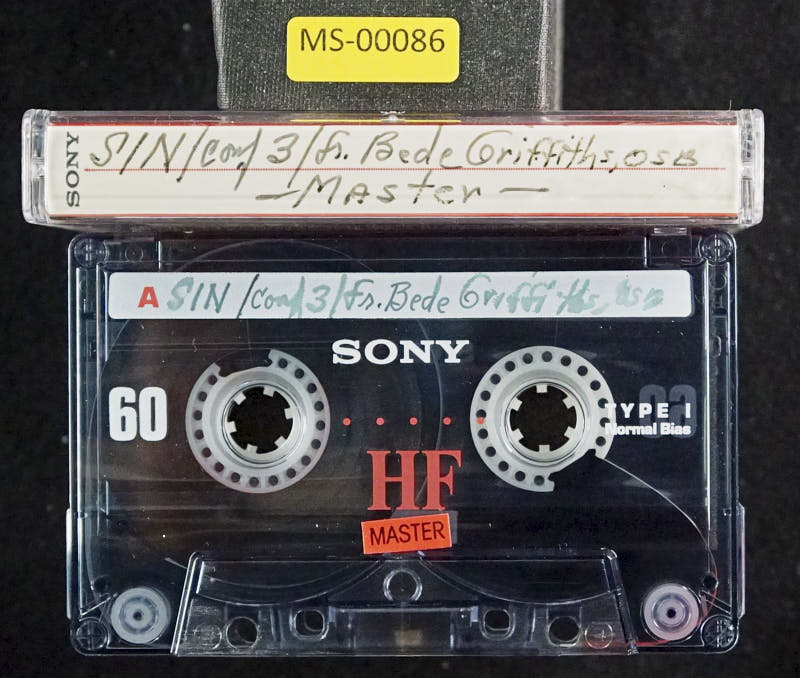
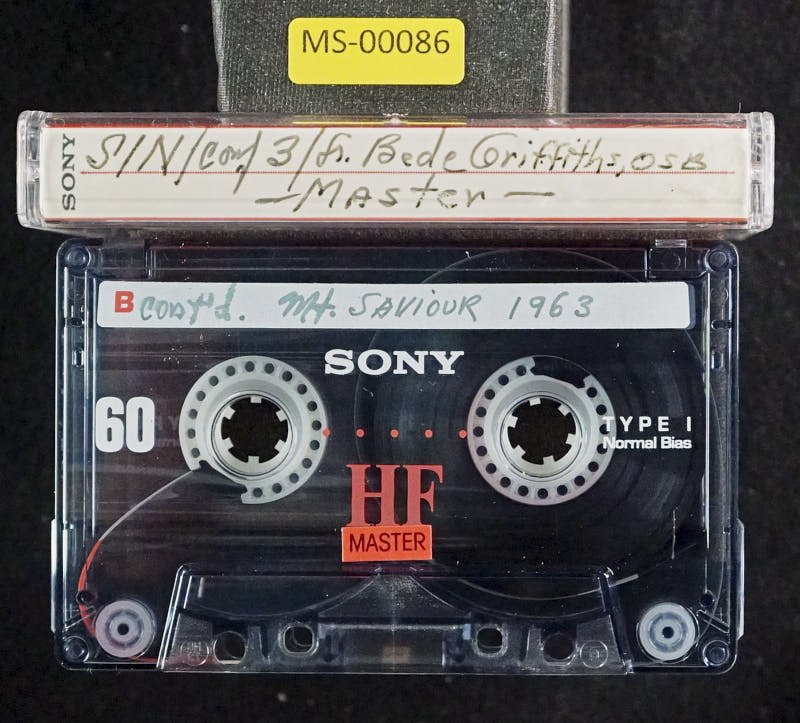

AI Vision - Possible Values from Photos:
Speaker: Fr. Bede Griffiths
Location: Mount Saviour Monastery
Possible Title: SIN
Additional text: Master
@AI-Vision_v002
We were meditating this morning on the mystery of creation, the original paradise, and what God intended our life to be. And now, I'd like to take this evening the theme of sin, the disorder which has entered into life, and prevents realizing that meaning and purpose of God in our creation. Perhaps I may be allowed to say that in recent years, and perhaps very much through the inference of the Syrian liturgy, I've come to have a much deeper realization of the reality of sin. It's one of the great themes of the Syrian liturgy, this repentance. I didn't mention it this morning, but Monday and Tuesday are, in the Syrian liturgy, days of repentance.
[01:05]
Each day of the week has its own theme. Tomorrow, as in all the Eastern churches, we celebrated the Mother of God. Thursday, the Apostles. Friday, the Cross. Saturday, the Departed with a very strong sense of the Second Coming. Then, of course, on Sunday, we come back to the theme of the Resurrection. So Monday and Tuesday are always devoted to repentance, and the same theme occurs in different offices on the other days. It's one of the major themes of the liturgy. Perhaps it was an accident that the prayer which Father Pryor read to you just now is actually one thing from the serial liturgy, and it's an example of that kind of... which is so strong, the two aspects, I think, go so closely together, the sense of the holiness of God and the sinfulness of man, that actually the whole city of liturgy is dominated by the theme of the vision of Isaiah in the temple in Jerusalem, that great vision when he sees the majesty of God and the angels crying, holy, holy, holy.
[02:25]
Every office we have begins. Holy, holy, holy, Lord God of strength. And then we have that invocation which You had to pick up on it this morning. Holy are you, O God. Holy are you, O God. Holy are you, O God. Holy are you, the strong. Holy are you, the deathless, who were crucified for us and mercy on us. There this theme of the holiness of God dominates the liturgy, and I may also add that at each At that time we say, Holy are you of God, we prostrate on both knees. We don't have a genuflection, but at the beginning and end of each office at the Kadishat, we prostrate on both knees for the forehead touching the ground, same way as the Muslims do if you've ever been into a mosque. Actually, I think the Muslim is completely from Athelian Christians.
[03:28]
It's an ancient custom, but it has a wonderful... sense of adoration, of complete surrender to God, this prostration. And you may be interested to know that in India, these kind of prostrations come very naturally. And when our novices make satisfaction in choir, they don't just kneel down, they prostrate full-length on the ground. And that is quite, it doesn't feel at all embarrassing to them. I've often seen Hindus in a temple before an image lay down straight on the ground. A tremendous act of complete self-surrender, as it were. And so this gesture of prostration comes very naturally, and often I've seen brethren in the choir, when they go in to pray alone, instead of just kneeling, they'll prostrate in that way, it seems to come naturally to them. So each office begins with this
[04:31]
prostration, this adoration of the holiness of God. And with this holiness of God, it's associated the sinfulness of man. Isaiah sees this speech, and he immediately cries out, I am a man of unclean lips. And you remember when our Lord performed a miracle of the fishes, and Peter fell at his speech and said, depart from me, for I am a... sinful man, O Lord. The holiness of God makes us realize our sinfulness. And equally, the realization of our sinfulness makes us realize the holiness of God. I think these themes of holiness and sin are very, very important for our life of prayer. And I must say that I myself have experienced this very deeply. Before, I think I regarded sin too like I mean, I tried, I suppose, to take it seriously, but yet I didn't realize how profound it is and how intimate it's related to our awareness of God.
[05:43]
And I think we'll all agree it's a matter which perhaps we all find a little difficult. In the modern world, the sets of sin, as people often say, if we're very largely lost to the pagan, it is largely missing. and we have this sense that human nature is good and fundamentally that life is good and sin is rather banished to the background and I think that affects us all those of us who come from paganism in any form and even those who have been brought up from childhood in the church they are affected particularly perhaps here in America by this current way of looking at things. So I think it probably may be helpful for us all to meditate on this mystery of sin. And I emphasize mystery because I think it's very important not to stop, as I'm afraid we're often accustomed to, simply at the enumeration of our sin.
[06:47]
It's one thing to go to confession and to acknowledge the sins of which we are conscious. But it's quite another thing, really, to have a deep awareness to a conviction of sin. And I'm afraid one can go to confession many, many times without any really deep sense of sin. In fact, the habit of confession, if one's not careful, may even tend to obliterate it. One tends to think sins are simply breaches of commandments. And we can number them, and we can find out their genus and their species, and and we have them all taped out, and then we confess them, and they're disposed of. But we have the unfortunate effect that after people have gone to confession again and again, they still remain deeply sinful and very awful. People go on going to confession, confessing the sins of their conscience, and remaining completely unaware of hidden depths of sin in their nature.
[07:51]
I mean, this fundamental pride and self-centeredness, which are quite apparent to others, which remain hidden from ourselves. And now that is what we have really to tackle in our lives. It's not enough to confess our sins. We have, as monks, to grow day by day in the sense of sin, which, as I say, can never be separated from the sense of God's holiness. Two simply are different aspects of the same thing. Because the sense of sin is essentially supernatural, to contemplate it by any natural meaning that it arises from the awareness of the holiness of God. Well now, this, I think, links up very much with what we were considering this morning, this fact of that we as human beings are so deeply immersed in nature. Because what has happened through original sin is that instead of our whole nature, rising through these different levels of being which we're considering towards God by this dynamic movement of ascent to God, which should be natural to us, we have lost that movement, that tone of movement in God, then we're thrown back on ourselves, and consequently we are now deeply involved and immersed
[09:18]
in this whole world of nature from which we come. And this happens long before we have any personal consciousness. I think we have to realize how deeply we are involved in sin before we become conscious and before we commit any personal sin. And in this respect, I think the discoveries of modern death psychology are really very relevant to us all. You know, people used to say how shocking it was that Christians would say that a dear little child, as innocent as an angel, was really sinful and had the water of God on it. They found it very dreadful. But now you get any psychologist who knows anything about your nature will tell you far more terrible things about that little child than the worst tell of existence. And I think it really is something we must face, not about other little children, but about ourselves when we were children.
[10:18]
Because it really is a simple play and definite fact that in our childhood before we were born, even when we were in our mother's womb, these fundamental tendencies towards them and when we think of sin we should think primarily of self-centeredness that these tendencies were in our nature from the beginning they were growing up in us when we were one and two years old and by the time we reached four or five and were beginning to speak and think a little for ourselves we were already simply held in the grip of these forces that I think is really one of the rather terrible things which modern psychology is revealed. As you know, a man may go on for 20, 30, 40 years, and suddenly he has a complete breakdown to his own surprise on everybody else, and then he goes to a psychoanalyst, and he finds that the roots of that breakdown started when he was a baby, or even before he was born, or at the very time of his birth.
[11:31]
that some children never separate from their mothers. We have a very, very deep tendency to want to go back to the womb, to the security, when we were just living on another being and we had no responsibilities at all. And there is an uncertainty in human nature to desire to get back to that state of complete irresponsibility when we're just fed and warmed and looked after and everybody is attending or fasting welfare, being happy there in the center of things, of this longing to be back in the womb. And mind you, this has a very much deeper sense. There is a very wonderful sense in which we can be reborn. Nicodemus said to our Lord, how can we be reborn? Can a man go back to his mother's womb and be born again? Well, of course, he can't literally, but in a profound sense spiritually, he can go back to the womb. We can be reborn. But still, this other reality is very, very true for us all.
[12:34]
We have this innate self-centeredness coming from this original experience in the womb, and then we develop in this very, very early stage of childhood the two fundamental impulses of our nature, what the fathers in the classroom rest call concupiscence, the very difficult term to define, but it's very nearly what Freud and others call the reader. It is this not simply lust, not simply sexual desire, but this fundamental desire of our nature. One might rarely call it in a very, very wide sense, simply love, but there is this root love in our nature, and through original sin, instead of our love moving spontaneously through different creatures toward God, where it finds fulfillment, it turns back from God and becomes centered on ourselves.
[13:36]
Here you have the whole tragedy of original sin, this love which should go out towards others, towards God, and find its fulfillment there, is turned back from its natural course and is feeding on itself. And this terrible even of love feeding on itself, which frustrates all our desire for right relationship with others. That is something in which we're all involved, if through the original sin. And then the other great impulse of our nature is what we would normally call pride, which you can also call the lust for power. You know, it's truly based everything on libido, so ardler, traced everything to this lust for power. And apparently those are the two basic forces in human nature. And this lust for power, this desire to dominate, to be master of our circumstances and of other people, to use people and things for our purposes, is tremendously deep in our nature.
[14:50]
So we have to face the reality of this sin in our nature. And I do honestly recommend this as a really a daily meditation. We have times, or at least in other religious congregations, I don't think the victims tend to divide things up so much. We have this examine of conscience. But really for a monk, I think it's not so much a question of any particular time when we examine our conscience to recapulate what we've done wrong. It's trying to acquire this habitual sense of sin, which goes with an habitual sense of dependence on God. Because, ultimately, of course, self-love means independence of God. The original sin of man was that instead of being surrendered to God, receiving everything from God, and giving it back to him, he would move. bizarre on this, itself, and other beings, the independent, the master of himself, and that is the basis of pride and separation from God.
[16:04]
So, this is surely something which each one of us has to face in its nature. It is no good allowing ourselves to go on and hunt Hindu for a very long time just noticing the of our particular faults as they arise and not trying to go deeper into this original sin. And when we really reach the depth of original sin, we realize that there is no sin of which we're not capable. We realize that we share a solidarity in sin with all mankind. And I think that is tremendously important. You know, the fathers again and again say that Until you're incapable of judging your neighbor, you've not begun to have real charity. And I think that is the basis of it. As long as you think that there's anybody in this world who is really worse than yourself, that there are certain things that you could not do. I mean, you can read about Getcher or Stalin or anybody you like, and you can say to yourself, well, surely I could never do that.
[17:11]
But you can really cannot say so. Hitler is simply a human being in whom These forces, which are in us all, were, through circumstances, through, we don't know how much his own consent to it, were actually brought to power and had, of course, the following power over other people. But they are simply forces in our own nature. And really, you know, those of you who were alive at the time or who were growing up at the time will know that this The outbreak of Nazism in Germany was a terrible revelation to modern men, because English people, and Americans, I think particularly, had really come to think that they'd outgrown that sort of thing, that human nature had got younger, and that we were past that. That was the sort of bestial level from which we'd risen, and now we were civilized people, and we'd done self-control and so on.
[18:12]
And this really broke through that illusion that made people realize what human nature really is. And so, as I say, I think we must face that in ourselves. You've been living back in a monastery for years and years, and you'll never commit a murder or do any really serious outbreak of crime, but you're still cherishing in yourself forces which could make you into a murderer or an adulterer or into a... a man who will betray his friend. These forces are deep in our nature and in everyone. And therefore, as I say, I think we have to try to realize the presence of these forces in us. And it is really a deliberate attempt to know ourselves. You know, Socrates, or rather the Delphic oracle, which I could use to quote, know thyself, which St.
[19:15]
Augustine took off and really made the basis of this philosophy, to know ourselves as we are. That should be, surely, its task of a novice, to take over to the part which every month has to be continually renewing. And self-knowledge is humility, is humility, is simply this awareness of our true nature. And that surely helps us to understand the degrees of humility of St. Benedict. One may be at first rather find it difficult to take in, or St. Benedict says, let the monk always, with eyes cast down, remember the burden of his sin and say, Lord, have mercy on me, a sinner. It may seem a little exaggerated, but surely we're not quite as bad as that. We needn't take it quite so seriously. But really, when you come to know yourself and realize what is in human nature, then these things are not exaggerated. Really, the saints understood this depth of sin.
[20:17]
And I've also sometimes thought, you know, that, well, I sometimes think in my own experience that when one starts a religious life, one is very little aware of sin, and one's very much aware of the goodness and the love of God. One is often in a state of, one almost might say, the unitive way. And then that one progresses in the religious life, one enters in the unitive way, and one gets to break many lights about the scriptures and about the state of mankind and so on. And I think the real culmination of our life is when we begin to enter the project. And I think it's very, very important for us all to face this
[21:19]
So, I would say that we must, as monks and as Christians, really, make it our task to know ourselves and to know the inner death. of sin in human nature, as I say, making us aware of our solidarity with all men so that we're never shocked, we're never surprised when we read of outbreaks of crime. We will have all these adolescent criminals and so on here in America and in many other parts of the world. Now, we shouldn't greet these things for the top surprise. We simply realize this is human nature. This is what I am like. In similar circumstances, I have no reason to think that I would behave differently.
[22:21]
It gives us a really profoundly charitable attitude. Probably many of you know that division of spiritual life by St. Bernard, which I find extremely helpful. Remember, he says we begin this self-knowledge which is humility, and humility leads to compassion. When you realize what you are like in your sin, then you realize that your brother is in the same state. And instead of when you don't realize your sin, you hide it, it becomes a shadow which you don't recognize, then you're extremely sensitive to the sins in other people, and you're always up against them, and you're always ready to condemn them. But when you realize it in yourself, then you realize that we're simply sharing in the same burden of sin, and you have compassion for your neighbor, and from that compassion, as St. Bernard says, purity of heart arises. So, with the knowledge of our own sin,
[23:24]
we have a deep sense of the sinfulness of human nature and therefore our solidarity with all mankind in this sin. Now the next thing is that exactly as we realize our own sinfulness, we realize the love of God. As I said, the holiness of God is known to us through our awareness of sin, and so it is with the mercy or the love of God. In actual fact, you see, really, our very awareness of sin is itself an effect of this love and mercy of God coming into our soul. I don't know if you've read St. Gregory the Great, Father Leclerc, who quotes him. that beautiful sentence he had about this compulsio, compulsio codis, which is, of course, such a very monastic virtue, monastic sense, that it is the touch of God, you see,
[24:33]
which awakens this compunction of sin in us. It isn't that we first realize we sin and then turn to God. It's actually that God himself has moved up, made us aware of our sin, in order that at the same moment we may become aware of his mercy. Now, to stand continually in awareness of our sin and in awareness of God's mercy, that is really on the way to sanctity, I think. You see, what we normally do is We have a certain consciousness of sin, and we go to confession, and then we tend to go into the background, and we recover our self-confidence. We're always really trying to recover our self-confidence. And the more we do, of course, the more God removes from us. But every time we lose that self-confidence, we realize... our own fundamental sinfulness, our weakness, our incapacity, then we simply draw God into us and we become aware then of our complete dependence on him and we're able to receive that grace into ourselves which we need at every moment.
[25:44]
That is the great difficulty to realize how much we need God at every moment. So an awareness of sin brings with it, and is in itself an effect of, this merciful love of God coming into our soul. Well now, that is really the meaning of repentance. Repentance in the true biblical sect that annoy us, this change of mind, this change of heart, is simply becoming aware of our real state, our state of sinfulness, at the same time of this merciful love of God which comes to our rescue. And therefore we should always keep this spirit of repentance. As I said in our liturgy, we renew it every Monday and Tuesday so that every week begins and we take for our gospel reading always, repent for the kingdom of God as it can. You see, it's short each week you begin again with the message of the gospel.
[26:47]
And this So the liturgy helps to keep us in this habit of repentance, and with this repentance for sin comes this deeper and deeper experience of God's grace and God's mercy. Well, now, that is the first aspect, when we really try to become aware of sin. Now, when this sense of sin has brought us to the knowledge of God's mercy, then we begin to recover our original baptismal state. And really all our life at last is trying to get back to baptism, isn't it? You know how the Father's regard monastic profession as a new baptism. It's simply a renewal of our baptism.
[27:48]
In our baptism, that in a mysterious and wonderful way, we did die for sin and this new life of God came into our hearts. We were renewed in the likeness of God. These forces of sin remain in our nature and for those of us who are safe and forces gradually take possession of us unless The baptismal grace is to give Christ continually. The forces of original sin are there always to accentuate sin. We have to give it this control. And therefore, a great part of our life is trying to get back to that original purpose, to that state of baptism, and to recover this image of God in us. Now, this I think is very important. We mustn't allow the sense of sin, of misery, of fall to hide from us this other aspect that in the inner depth of our nature we never lose this image of God.
[29:02]
It is there in God and it can always be renewed by grace. And that is the source of our real dignity. There shouldn't be any opposition between, in fact, there never can be true opposition between a real deep sense of sin and a deep sense of the dignity of the human person. In fact, as we realize our sinfulness, we realize the beauty of that nature in which God created us and all which created us. As you remember that passage I read from the liturgies this morning, it spoke of this beauty of my nature which was lost and which God is equal for me. It's when we realize our sinfulness that we realize what our true nature is. And however this other nature which we all bear with us is a kind of mask. which we imposed over our full self.
[30:04]
That, I think, is the difficulty as psychologists recognize that from a very early age, we all develop a kind of mask, a persona in the literal sense. It's a way of dealing with external affairs. We can't face the world with this inner nature, uh... so mysterious and difficult we have to have some sort of defense against the world and so we create a kind of mask by which we can conduct our life without too much uh... people we can go from person to person and from thing to thing in a more or less even way and that's an only method to a large extent but we must become aware of what we're doing we must realize what This mask is and what the given section beneath it is. And then as we become aware of the mask of the sinful nature, then we become aware of this true self which underlies it.
[31:08]
And this, of course, is Paul's old doctrine of the old man and the new man. The old man is this human nature which was fallen, which got involved in sin, in self-will, in pride, in self-love. and has been separated from God, and the new man, this new life which came to us in baptism, this image of God which we all bear, which is in us. And so, from that awareness of sin, we come to an awareness of our true self, our true nature. And you know the Hindus have this doctrine of the self. the Atman, the true self, actually is a little confusing. I think, really, the Hindu fails to understand the depth of it, but he does have a very deep sense that this gay girl, which the ordinary have, our ordinary human personality itself, is a false one.
[32:14]
It belongs to Maya. It is illusion. It's an illusion of itself. that he's always trying to find this real self, the Atman, which lies hidden beneath this. And I think that is one of the most genuine and fundamental movements in all Hindu life and spirituality, that is this constant seeking of the true self, which they know is to be found in God. They know quite well that this ego which we have not our human being, and that we should only find our true being in God, Where they make the mistake is they tend to say that when you reach the true self, you reach an identity with God. They say the Atman is the Brahman. When you realize your true self, you realize that there is no real difference between you and God. And that, for a Christian, of course, is a very difficult saying. And in fact, I think that is one of the points in which we really have to face the Hindu doctrine and to show its inadequacy.
[33:15]
But if we say... If we discover our true self not as an identity but as a relation to God, then surely we are on the right line. When we know our true self, we know our self in this living relation to God which we had in the beginning and which we lost through sin. And so to recover the image of God in us, recover this awareness of our living, constant relationship to God as a father, his continual dependence on his providence. And I don't know anything more important for our daily life than this awareness of God's providence, that as we realize our own incapacity, our dependence on him, so we realize that in reality God is looking after us in the most marvelous way from day to day. And I think we all too don't realize that. And if we can, it gets really a wonderful grace in one's life because there is no illusion about this.
[34:20]
All our Lord's teaching of the heavenly Father is most wonderfully true as one becomes aware of it. If one is not aware of it, if one simply goes on independently, then the Father of God actually becomes quite meaningless. And I think that's what happens the majority of people. They lose their faith in God, or it becomes so vague, they depend on themselves, and so the whole idea of God's providence and his fatherhood just fades away. You know, a very interesting fact we gave us Master Eliot there brought out is that among most primitive people you hide a very wonderful conception of God as the Father and Creator and of his providence. But this Father God almost invariably fades into the background, he's a little too remote for the practical needs of life. They want to get that fairy bread, and therefore they want a mother goddess, or the spirit of the corn, or the spirit of the thunder, which brings the rain.
[35:22]
So you worship some other god, which is really the powers of nature, which are nearer to you, and which apparently produce the goods, you see, the rain produces the corn. But god, well, he's up in heaven somewhere, and Whether he's affecting the call or not, you begin to doubt, you see. And so he becomes not mercy on the cause of Deus ociosus. He uses that of all these the African gods. He becomes a Deus ociosus. He's just out in heaven, but, you know, perhaps he's forgotten about us. So we have to deal with the spirits there on earth. Just as a modern man says, we've got to deal with the practical realities of life. We can't spend too much time on the Father in heaven. But when we begin to change our lives, when we begin to have repentance, when we begin to realize the effect of God's Fatherhood, of his providence, then I'm sure you can have experienced it in your life, this extraordinary fact that we realize that day by day and hour by hour we are under this watchful providence.
[36:26]
And if we could really live our lives fully in the presence of God, we should simply realize that from moment to moment, not only God's creative action, but his merciful providence, preserving us from sin and leading us to himself, is that work in our hearts. It's really a wonderful thing when one simply begins, even in a small way, to realize that we add it to God's providence. Well, now, just to conclude, we become aware of our sin, and through that we become aware of God's mercy and love, And as we cease to depend on ourselves and begin to depend on God, so we experience this grace of his providence in our lives. But just as I said, there is a solidarity in sin. We are all... of the same human stock which sinned and share the same nature. So as we recover the image of God in ourselves and realize our sonship of the follower, so we realize that this image of God is common to all mankind.
[37:40]
You know, St. Gregory of Nyssa had a beautiful phrase where he says that the image of all mankind from the first to the last man, is one image of him who is. It's a beautiful phrase that all mankind, the first to the last, is one image of God, of him who is. And of course, the one image of God is Christ. And we, in Christ, form this one image of God. And therefore, as we recover, our own personal life, our true person, we recover our true relationship with other men. We discover this wonderful unity of human nature. As there is one human nature which fell in Adam, so there is one human nature which is restored in Christ. And I think for what we were thinking of yesterday, this conception of the universality of the church,
[38:42]
There is nothing more helpful because after all, it is a problem for us that the divine revelation came so late, that there are so many hundreds of thousands of years in which people have lived without any redeemer. But once we realize that the human race is one, and you know St. Augustine and St. Thomas have the most wonderful things to say about this unity of human nature. St. Thomas says, hominaes unus homo. All men are one man, so that there is this one man who fell in Adam, and there is this one man who is restored in Christ. So that we can say quite definitely that no human being, as Gregory says, from the first to the last man, does not receive graceful Christ, then is therefore truly related to the church and to Christ, and therefore thought of this divine economy of redemption.
[39:49]
And so, as we recover the image of God in ourselves, we recover our relationship to our fellow men in Christ, and our true relationship to God as our Father. I hope that may help us to see that once the reality of sin, this extraordinary death, and how we must become more and more aware of it, then yet with that awareness of sin, the growing awareness of God's mercy, his providence, of the real unity of our own life with one another in Christ, who is, of course, the new Adam, the thin Adam. as in Adam, all died, saved Christ, shall all be made alive. And just one lost thought that always, when we look back to the paradise, to the original creation, we at the same time look forward to the resurrection and the new creation.
[40:53]
but we never can actually go back in time. What Christ has done is to restore paradise to us and actually to raise us to a state which is higher than paradise, so that we're always looking forward to the resurrection. I hope we will have time to consider more in detail the relation between the cross and the resurrection, between this state of sin and the new life. But let us take away this thought that as we become aware of sin and aware of God's mercy we are looking forward all the time to this fulfillment of our nature in Christ this restoration of that image of God which was lost in sin which will bring us into this true relationship with one another this true relationship with Christ and with God and so bring us back to that center from which we departed this year.
[41:54]
@Transcribed_UNK
@Text_v005
@Score_92.29