You are currently logged-out. You can log-in or create an account to save favorites and more. more info
Monastic Maturity Through Psychological Insight
AI Suggested Keywords:
Retreat - Abbot Leonard Vickers, of St. Anselm's Abbey, DC
The talk discusses the intersection of spiritual life in monastic communities and insights from psychology and counseling. The focus is on personal maturity, examining themes such as psychoanalytic influences, intergenerational impacts, communication, structural adaptations, and behavior within monastic life. Emphasizing the importance of these elements for spiritual growth and community cohesion, the discussion also touches upon the need for mature handling of authority and structure while addressing personal and communal motivations for continual growth.
Referenced Works and Concepts:
- Thomas Merton's "No Man is an Island": Mentioned particularly for its exploration of love and self-giving, relevant to monastic maturity and spiritual life.
- Saint Benedict's Rule: A central structural framework for monastic life, compared to psychological insights for promoting communal stability and maturity.
- Psychological and Counseling Theories: References to psychoanalytic and intergenerational themes as they pertain to spiritual maturity within monastic communities.
AI Suggested Title: Monastic Maturity Through Psychological Insight
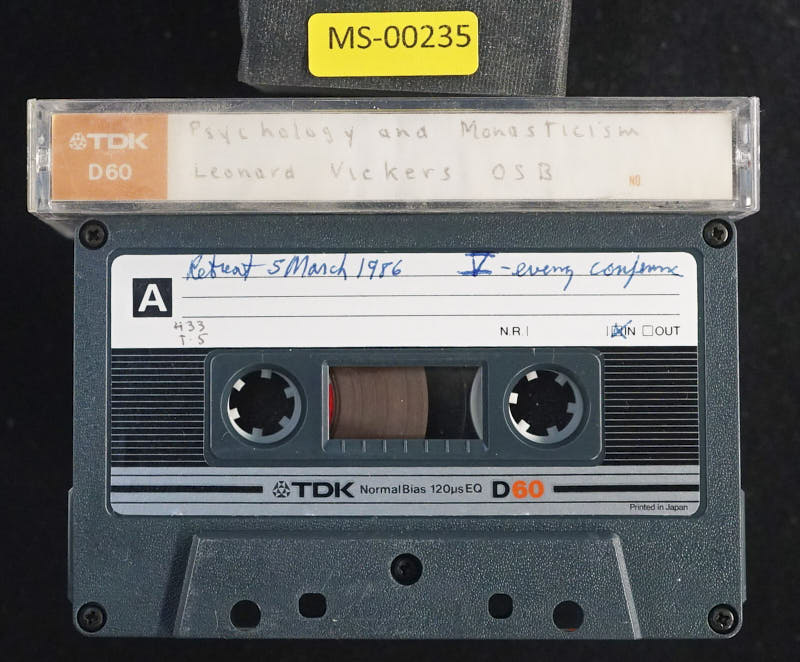
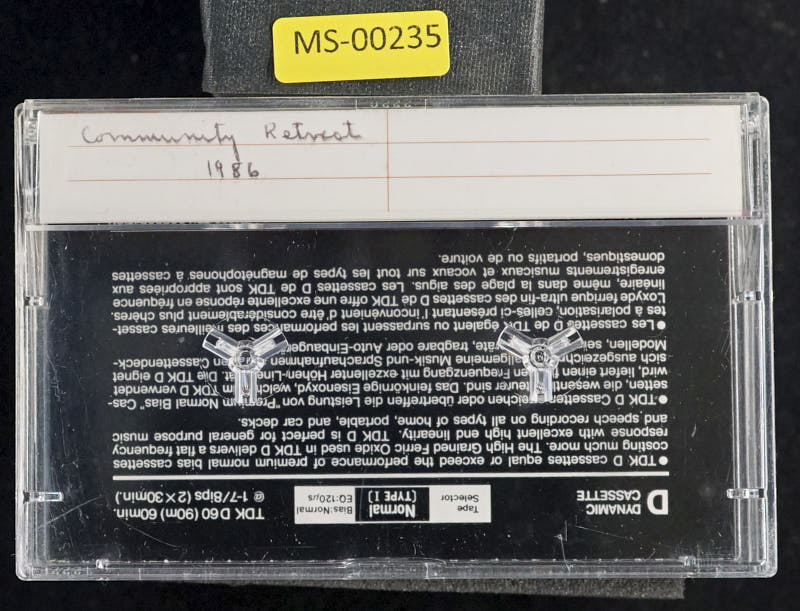
AI Vision - Possible Values from Photos:
Speaker: Leonard Vickers, OSB
Possible Title: Psychology and Monasticism
Additional text: 1 evening, Compline
Possible Title: Community Retreat
Additional text:
@AI-Vision_v002
Well, you're almost home and dry, or I'm almost half and dry, coming to the end. But what I've been trying to do these past few days in most of the talks is to present and bring out certain aspects concerning our spiritual lives as monks. This evening, what I... would like to touch on does not really concern whether we're monks or whether we're even Christians. So you might say, well, what's that got to do with you? But there has developed over this past century an enormous insight into into a comparatively new field of science, namely psychology.
[01:03]
And alongside with this, the whole field of counseling has also developed. Why this has all come about, there are almost as many answers as there are methods. But one thing is certain, many of these methods work and have proven results. The various approaches that therapists take are usually based on various schools of therapy and a variety of approaches. Yet it is a known fact that within each of us most of these levels that the therapists work at do exist.
[02:14]
And that's where we come back into the monastic plane. Very often a great deal will depend on what is termed as our personal maturity in the way that we actually face certain issues. For us as monks who have a belief in the spiritual life, who have a faith... who have a commitment. If we are in vows, or even if we're not in vows, because we are searching for a commitment, and I mention this because although I realize here in this particular community you're all in vows, simple or solemn, I think this is also important
[03:21]
but I'm talking about this evening for anyone coming to the community and thinking about joining it. We're all in the same boat. But because we're monks, because we have this commitment, I'd say that we've got a good head start. on a great many other people who are searching or trying to discover this personal maturity. But nevertheless, the various skills learnt and practised by therapists we should also realise can to some extent be ours as well. And this evening, I'd like to touch very briefly on some aspects of these themes.
[04:24]
Not so much that I'm saying we all need therapy, but because I feel that perhaps our spiritual lives can take on a deeper maturity and insight by an awareness of them. I think perhaps my own personal interest in this has grown by being at St. Anselm's in Washington, not that they all need therapy. But I think it's because since I've been there, I've had a sort of constant barrage, not so much from the community, but from people outside, of the advancement and insight that Thomas Werner Moore, our founder, learnt and taught in this particular field and the interest that he had at Catholic University in his teaching and then at the practical level next door at St.
[05:35]
Gertrude's with his work for handicapped children. And some, jokingly I hope, said, that they were convinced and actually heard TV Moore saying that this was the reason why he had founded a monastery, because he felt he could practice on his patients within the community. Well, I'm sure he never went that far. If he did, he was a bad psychiatrist. But... The areas that I want to touch on this evening are these. The first category is the psychoanalytic theme. At this time of night, that's almost enough to put you to sleep, isn't it? But in fact, the focus here is on the individual psychodynamics of the immediate family.
[06:42]
For us. that is, the community. How both unconscious wishes and fantasies influence community interpersonal relations. Also, how community interaction influences psychodynamics. How much do community conflicts reflect my attempts to come to terms with my own unconscious wishes and needs? And also, how much are changes in community relations reflecting changes in my attempts
[07:47]
to gratify personal needs and desires. That is what we mean by the psychoanalytic theme. So often, there is the danger that we, when I say we, I mean all of us, can apportion blame to others. You know, if only, if only so-and-so or if only they, whoever they might happen to be. And what I'm suggesting here is that we need from time to time to take a good hard look at ourselves as individuals and the way we of life that we are living out as an individual in the monastic life and also as a community, how we're living.
[08:59]
And to see just what sort of frictions and the reasons for those frictions, why they are there. But I hasten to say... I don't think that this is something that should happen too often. I think it is something that should happen occasionally. Another retreat, perhaps, is a good opportunity at the personal level to look at this. And what do we have to look at? We need to look at our motivation. the way that we're living here, what is it that is motivating us here and now? And compare it to the motivations that when you joined, when you first made your commitment to the religious life, the hopes that you've got and why you've got hopes, and a consideration of the hopes of others.
[10:08]
coping with changes that have taken place. You see, I'm utterly convinced that in the past, a great many people were attracted to the monastic life, say, for something like the Gregorian chant. It enhanced them. Their whole liturgical life was touched by it. And then suddenly within community life, a great many have it completely chopped off. And the adjustment or the change or the reason or, if you like, the tragedy of it as far as they're concerned, has to be reckoned with. And very often they are saddened, they become upset. They let that upset creep into their whole life and their attitude to the liturgy, what they're going to accept or what they're not going to accept. It happens in our community life when job changes take place.
[11:17]
At any level, but I think especially when we're getting elderly. It happens, as I say, not only in the liturgy that we had those expectations when we came in or the joy that when we came in, but in the liturgy that we're living out at the moment. It takes place in our acceptance of people for what they are. For instance, If there's someone in the community who has a short fuse, well, let's accept it, that he has got a short fuse, and learn how to cope with it. It doesn't mean to say that he's dastardly or a terrible person. This is part of his makeup. And then also, I think, it touches on the whole area of affirming.
[12:23]
others within the community and being affirmed by others so that is the first of the areas now the second one was one I found surprising although I expect subconsciously I had thought about it before but I'd never really confronted it with the idea that this is part of one's maturity or maturing process. And that is the intergenerational theme. You see, each one of us here brings into the community much that has influenced our lives from our own parents, our grandparents, uncles and aunts. This is a known fact in counseling and in therapy.
[13:24]
And that influence has affected our behavior in the past and it does so now and it will do in the future. My father used to say to me and he had no real knowledge of therapy or anything like that. He used to say, this was when I was courting girls aged 16, 17, and he didn't know then I was going to end up as a monk, which I only decided when I was 18. Let me give you some advice, he used to say. If you ever fall in love with a girl and want to marry her, make sure you meet her mother first. There was his insight. You see, go and look at the mother and you'll see what your wife's going to be like. And you're all familiar with the phrase, you know, he's a chip of the old block. These are all aspects of referring to this dimension that, in fact, the family does have a great influence on us.
[14:37]
But what I feel is important about this apart from accepting it in ourselves and in others, is a certain acceptance about this particular aspect. You see, if I'd gone off and got married and gone and looked at my mother-in-law-to-be, I would have looked for someone and only tied the knot, I hoped, when we both understood each other at a fairly deep level, when I really felt that we were compatible. But this is not so of monastic life. As I said in one of my earlier conferences or in the questions, in answer to the questions that came up, I didn't choose who was going to be in the monastery with me.
[15:42]
At this level, not only recognizing it, but accepting it and living it out, there has to be, for us as monks, a deeper acceptance insofar that many of the characteristics of any individual might not be to my own personal liking. And acceptance, I also feel, at this level not only takes place at the blood family level but it also takes place at the immediate family level that we now belong to. The past generation has influenced this community of Mount Saviour and the structure and the interaction of that past community still affects this community and this is something that is very important that you always remember in whatever you're doing at this level anyhow now the third level is that of communication real communication can always help
[17:11]
to promote effective problem-solving and interpersonal conflict resolution. And I think in recent years, all communities have discovered this at some level. But one has to look at both the verbal and the nonverbal. as I talked about the hidden agenda earlier on, there is a way, a verbal way of expressing ourselves in community and a non-verbal way of expressing ourselves. You know, people say, he's got such bad body language. In other words, it does not mean that he smells, but... In fact, it's his whole bearing. You can tell he's resenting you, not by what he's saying, but his whole demeanor.
[18:16]
And this is something that within community life, family living, is very, very important. The patterns of family interaction, the norms of behavior, and the expression of your own individual values as these elements are expressed by communication and then a fourth level is the structural one now I think that at this level of maturity And in community life, monastic life, this level is a very, very important one. It doesn't happen very often, but sometimes it has to happen. And by structural, I don't just mean building.
[19:20]
This is where a group has to come to a decision of changing an existing structure and face up to the fact that it is only by changing that the group is going to be helped. Sometimes it can come about in monastic life by an individual realizing that a change in structure of life has to come about, a decision maybe that is made before simple profession or final commitment to solemn profession. Sometimes a community has to make it itself in its whole apostolate of what it's doing or where it's going to live or work. So St. Joseph's community had two quick moves.
[20:20]
The first one was because they realized they had to move. The second one was because that in... a very short time, they realized they were not going to survive where they'd moved to because there was nothing to keep the community together, body and soul, in work. And now they have discovered a very satisfactory setup. That is what I mean by structural change. And I think when this does affect the community in any way or a family one must be brutally honest in facing up to why we're going to make a change and then the last area which I would touch on here that is behavioural a great many
[21:25]
of our behaviour patterns, so we're told, are governed by the fact that we are happy or unhappy. In fact, I was given a dictum the other day, unhappiness is where we realise we are at the moment, but also with the realisation of where we should be. That is unhappiness. But in fact, although this particular behavioral aspect is governed by the fact so often that we are happy or unhappy, what we have to consider is this happiness or non-happiness has to be faced up to. The why. The how.
[22:27]
How has this come about in my life? The reality. What am I going to do about it? And it is only when in this particular aspect of counseling a therapist has got an individual to face up to the reasons why certain patterns of behavior are being lived out or not being lived out that they can face up to the real meaning in their lives of what they're searching for and that is happiness. I quoted to you this morning 18 sections in No Man is an Island and I don't intend to quote any others to you this evening but I certainly recommend the first chapter of that same book where Thomas Merton gives eight aspects of love can be kept only by being given away because it all comes down to this question of happiness or unhappiness in our lives and I think with us with regard to our monastic life now
[23:50]
I'd like to sum up by saying that, generally speaking, bearing in mind that what we've been looking at this evening is an aspect of personal maturity, standing back from, if you like, the spiritual insights which we can have and live with and know. This is something that therapists would deal with people who've got no faith whatsoever. Generally speaking, I think that it is true to say that within all religious communities today, it is still taken for granted that some form of authority is indispensable. I know authority has been questioned and looked at, but I know from you know anyone really searching of what religious life or monastic life is about that it is taken for granted that it is indispensable and social groupings with a religious mission cannot fulfill that mission without some form of internal structures
[25:24]
of authority. And we can say not only as monks but the determination of all religious men and women to discern and to do God's will requires that the form of government and the authority structure be based on a response of faith. I think in a lot of the writing about vocation at the moment and monastic life, this whole area of the response of faith that is necessary if we're going to survive is coming to the fore. And I feel that this response of faith is a most important aspect of our understanding of the... authority structure but in addition to this authority structure it must promote a mature and responsible person the authority it is essential that the authority structure promotes that
[26:49]
And the exercise of authority should, if it is right, enhance internal relations and serve the common good of the community. That is what the community as a community must see it as. Now, what do I mean by mature and responsible? I see mature within the monastic concept as one who has experienced what monastic life is all about. So, for instance, the young man who comes in within a fortnight can start telling the community where it's all wrong and what it should be doing has not got the proper insight into what monastic life is about. There are structures within the monastic setup of how any criticism can be put forward in the chapter or in the council or, if the superior allows it, within a community meeting.
[28:08]
So that aspect is important. Someone has Also, I see a necessity to be mature and responsible is that a person must be a man of prayer, one who has grown to appreciate that teaching that St. Benedict gives at the end of the prologue when he establishes the school of the Lord's service. that it is necessary in the monastery, so he says, for adequate reason, for the correction of faults or the preservation of charity, some degree of restraint is laid down. And then he says, do not then and there be overcome with terror and run from the way of salvation, for its beginning must be difficult.
[29:14]
So I see part of the maturity of a person who doesn't turn tail at the slightest provocation and throw up his hands in despair. Continual practice of the monastic observance, the life of faith, keeping God's commandments and sharing in the sufferings of Christ through patience. These are how we reach God. that maturity and all perhaps areas I've already touched on. A responsible person I see as someone who can carry out the work that is given him, who can be called to account for that work without getting upset and can give an account of it. Someone who is respected, and trustworthy. These are things which I feel we need to be looking for in people who are looking at us but also things that we ought to be making sure are growing within our own lives because that is what is going to attract people
[30:39]
to stay and be with us when they find that security from a world which is very insecure and the realization that despite if you like their uncertainty which so often does creep in so quickly they can be encouraged now that is what i really feel i want to finish with tonight but bearing in mind that this personal maturity, which the world is very much aware of, and which the therapists and counsellors have got their hands full because of the lack of it outside, I think this is why one of the reasons there is so much... Martin was very much interested in psychology and psychiatry when he first came here.
[31:52]
Has he been practicing on you, Father? No, I was mastering Abbott, you know. various responsibilities. Puba. Puba. Yes. Gilbert and Sullivan character. How effective do you think monastic structures are in creating, leading to maturity? Well, I think that What I have seen, and I've seen a number of communities now, I think the structures are there. Certainly, you know, I feel very secure myself with just knowing that the rule is there, constitutions are there, and house customs are there.
[33:06]
And I think where any immaturity has come in is when a community has drifted away from those structures. You know, Saint Benedict was maybe one of the most amazing psychiatrists or psychologists that have ever existed. I mean, the test of the rule, how it's lived down the ages, shows that. His insight into the strengths and weaknesses of human nature, the democracy of a monastery, and yet the hierarchical structures. how the young should be listened to and not put down constantly, and yet how at times they need to be put down. You know, the balance is wonderful. And I think that is there. And part of it, I think, was the upheaval of the 60s. I spoke briefly down at the Abbots' Congress about a tape that...
[34:08]
Father Cyprian Davis read on evangelization in this country at a meeting in Washington when the bishops were meeting. And it gave me a wonderful insight into American sort of ecclesiastical history and how the church was struggling with so much of what was happening outside. It's a tape well worth getting and listening to. Because, I mean, it's... The mind boggles. We forget so quickly of just how much happened and so quickly, you know, the campus revolutions, the Vietnam, the pop festivals and all these things that were putting society into a turmoil and the church struggling with this. Well, as a result, the church did struggle and there were a lot of upheavals. But I'm convinced myself that in monastic life, this has settled down and the structures are there well I guess you'd say the phenomenal people leaving and all this I think and the way that the rule was in some way it's difficult to say I am convinced that personally you know but
[35:35]
There's a way of living at which really is, it seems to me, makes people sure if they don't, in some way, are really internalizing it and so forth. And it should happen, that's the opportunity, the choice of . I think that the appeals have been sent officials in that. This is the moment I'm thinking of on the state of the Middle West where so many of their people wound up at a place in Canada which was run by a very strong woman. And in fact it was called therapy. It was part of therapy. And any number of guys went up there. There were a lot of an addiction. A number of, especially if it was someone, Mahashtari. And the thing still has an overwhelmingly dependent, the people are terribly still dependent types, you know.
[36:41]
She was raised a lot of, she had a young boyfriend and got to pay for money. But it's really kind of a, got a lot of property and so on, but it was a very dependent type of thing. And it seems to me that having gone through the 60s, a lot of places are, are a whole lot healthier, there's a sister's community and things like that. But somehow before that, I don't know how well we were, and the Trappist abbot had a, I forgot, we've got it around here, something like this, Mount Rochure, I'm trying to think it was Ambrose, the author of the man before him, of the immaturity in our monastery, talking about, because they're, you know, have an in-house thing going on board, than anybody else. Anyway, he mentioned that. I think we were. I was immature. I mean, I was like a glorified sixth former, right up to almost ordination, I reckon.
[37:45]
I mean, you wouldn't believe it, but one day when the novice master went out, and I was a second-year novice then, we had a full-blown water fight. all round the monastic chicken shed and garden with hoses and buckets of water. And what we didn't realise, unfortunately, he went to the other part of the garden, a reporter had come out to write about the peace of the monastic garden. You know, it was really, we just behaved a bit like university students, you know, in a way. And... we often say they don't grow up until they go out and having to earn a living. But I find the people coming in now with much more depth. In fact, you know, I even find that with the lay community hours running at Dowie, the way they do their meditation, their spiritual reading, the things they read, I find them years ahead of what I was at 18.
[38:52]
And for that, you know, I'm... I'm blessed for. Now, that is only, shall we say, attracting a certain type of person. I'm not saying everyone is mature. And I think this is why, what I was saying earlier on, the therapists are having such a ball because they're having to help so many people. And this is because the breakdown of the maturing process is now creeping into family life. It's going right on in. So you've got very immature people giving birth sometimes of one parent family and trying to cope and just unable to cope. And there's nothing in society to support them. And this is why they fall back onto this. I'm also convinced to a certain extent on this whole area of maturity that the lack of it...
[39:54]
outside is because of the lack of the spiritual dimension you see I feel that the sacramental life of the church supplements a lot of our immaturity confession having a spiritual director was our therapist in the old days for far more people and now the There has been a turning away. I think the church is incurring a turning back now and spiritual direction is something that's very much on the up and up because people are beginning to believe in it again. But I really do, I don't know if I'm right or wrong, but I've felt that for a long time that part of the immaturity that crept in was that people moved away from that. You know, it was sort of frowned on. You don't need to have a spiritual director.
[40:55]
And then we watered down confession until it was almost a thing that didn't really matter. In particular, I was thinking about... I really agree with most of what you said. I think the life is essentially, I don't think one, otherwise I wouldn't be in it. But with regards to all forms of religious life, I've heard one thing over and over again with regards to people leaving. At first I used to just accept it at face value. I've become profoundly suspicious of it, which is whenever anybody leaves their religious life, you almost always hear, oh well, you should never have been in the first place. And this is always, nobody's ever unfaithful to them. these days, but they just should never have been in it in the first place. And what constantly is being invoked, it seems to me, is that there are certain things in people's backgrounds that invalidate their vocation and that they or the community weren't able to figure this out until much too late.
[42:09]
But once it's figured out, well, you have to accept reality and go ahead and get out. I think what you're saying is true I mean I find I say that myself and you know he wasn't cut out for it or maybe it is true in a way I don't know if it's been fair but I think that it's much better than the other aspect in the old days where if a person left he crept out in the middle of the night he never came back and If he happened to be a priest, he normally ended up in the gutter because he was an outcast of the whole of the Catholic Church and society. And many a priest has been found like that in the 20s and 30s in a hospital, and when someone's gone to anoint a pauper, and they have put their hands like that, which is a sign that they're a priest.
[43:14]
And they've just been a reject. And I think we're being more mature now in facing up to it. And I think, to be quite honest, I don't know when it will come about, if it will ever come about. I think that because of society today, we are eventually going to have to move in to an area of part-time commitment to the religious life. In fact, there was a religious order founded at the turn of the century which did bring that in, one of the nuns' orders, where they renewed... They were only in promises, I think. They renewed their promises every year, but they were free to go at the end of each year. Now, I don't think that's going to come about for all monastic life or all religious life, but I think it's going to be a dimension of... religious commitment, rather like, you know, American young people go off and work in the Peace Corps, whatever it is.
[44:21]
Young people will, for some reason, will not commit themselves so easily, blindly, nowadays, as they did in the past. And this, you know, is coming into marriage, which is a disastrous effect in a way. But it's there. We've got to face up to it. It's happening. Now, the church is trying to take steps both at the spiritual level in religious life, you know, in getting psychological assessments and medical history and parents' background and all these sort of things. It's trying to do it at the marital level by the pre-cana instruction, by... making young couples go for six instructions that aren't just in and out of the priest and filling in forms, that are really depth look at what they're committing themselves to.
[45:24]
But even that's not working. But the church at least is aware of it and trying to make it work. And I think this is all, again, a look at let's try and get maturity into this process. Now, a lot of young men and a lot of young couples would tell you, but we are being mature. This is the difficult thing to face up to. You see, I'm being mature by saying I don't belong in this community and I'm going, or I'm not just going to live with this girl or this boy because we're hurting each other. We're incompatible. So let's break in friendship with no... agro thrown around and one of the answers that's coming is this is maturity now I'm not convinced about that but this is what the world is beginning to say this is something we're going to have to cope with but it washes off on the whole aspect of commitment of anyone yes
[46:41]
I think it's his quote that the, anyway, I've used it as far as modification, but anyway, religious life in general and monastic life particular presents an overly perentural image. And I think a lot of people are drawn towards that reparentural thing. And again, it's got two aspects, like Lamouni's whole thrust is that you didn't have perfect parents, and that's the reason you got your problems. All you needed was perfect parents, and you'd be all right, and mom, mom, we're going to have perfect parents. Christ is a great guy, he wasn't married, so he didn't have perfect parents, so on and so forth. It's a real diabolical thing in a marvelous way. But I think there is a sense in, I mean, there is a, there is, I think we have to go through that. It's almost going back into the, ooh, we've got to come back out. which can be a healthy thing, almost necessary in a good sense.
[47:45]
But I do think that the religious life has presented, and probably still presents, an overly parental image. I think people are drawn to it because of the security of the idealization of what their family life would like. In most cases, it wasn't. It's a market crash in the desert. I think it's a number, but anyway. and everything was marvelous. When they really got with a therapist or something, they began to realize that they couldn't stand their foremother or both or something like that. But they would be an idealization of a childhood that never existed that got them in. But anyway, there is that element. And I think that it's necessary for us, the workplace, to accept it, which I kind of didn't for a while. I mean, people have a right to be dependent when they first come to the monastery for a while while they're getting a re-independent tactic. And in that sense, it can be very helpful.
[48:47]
And I think a lot of people who came through here really were very mature when they entered and got matured here, because they put my simple responsibilities and so on. And it decided that's what they wanted once they had reached a mature choice. And we've talked a number of times about you almost ask yourself, are you going to visit to make people mature? That's what we should be doing. Are we in the business to have a monastery? People always opted to have the monastery, but boy, the other one is pretty there. So many people just seem to be so immature when they come, and I put myself in a lot, so immature when they come, and then in the course of time, some things, it can really happen that they, but it seems again, I agree with which is the first thing, it's life. state life. The monastic thing didn't make them mature. I mean, it was lights that made them mature. The monastic thing helped them to do that, you know, but they get hooked on the monastic thing in the wrong sort of way again.
[49:54]
And if they don't, the life that the monastic light makes us lead or helps us lead, it gets very mature. But anyway, it's been a difficult thing for For me, as I said, we've talked about it here in some degree, that some of the people who do apply, you think there's something there, but it's hidden underneath, so it's incredibly much immaturity and self-awareness, narcissism, all kinds of other things. And then when you finally get it out, and they can take a good look at things. This is what I'd say. It works. I also think within community, one needs to be careful that we don't emphasize it too much that we are mature and they're immature. That's why I was talking about our own growing immaturity. And I was thinking of Father Placid here telling me when he first came here, Eric Graham, you see, thought he was flying his kite.
[51:00]
And he thought that Mount Saviour was doomed from the start. So he wouldn't let... Father Placid changed his commitment to here for a number of years. See, now that's the ball on the other foot, you know, someone not recognizing that here was something that someone who was serious about doing something and needed this change to come here. So it can work on both ways. I'm sorry, I didn't bother you because I didn't catch what you were... When you were telling me that Eric Graham stopped you making your commitment here for a long period of time, five years, because he was sure it was doomed from the start. You see, a judgment was made, a misjudgment, and that did happen in monastic life. I think the way that we used to hustle people away, you know, as if they were sinful almost because they were leaving the monastery.
[52:06]
this is where we can be more open. There's an aspect I have the feeling after 25 years hearing about being in two monasteries and visiting some that it seems that all this nice virtual thing that we have charity and all that That doesn't help. You know, people can get away with a lot of things easily in monastery. Because I have the feeling that my brothers and sister, they just couldn't get away with it. Or they wouldn't let their husband get away with this sort of thing that we'd get, you know, that we'd let go of it. You know, sometimes these little things are convenient. lunch.
[53:08]
If the husband doesn't show up for lunch, she would tell me that he would have to shake up. Now you see, that's where I think in community, that's your intergenerational bringing into the community. But there'll be other monks here whose brothers will be... be off at football matches every weekend and won't be back at lunch. The whole behavioral background, without saying it's right or wrong, will have been different. And there's partly an acceptance of that. There's partly the acceptance that St. Benedict spells out that we're not all equal in the monastery. Some are going to need more because of weakness. Now, What can happen very often, we can start saying, oh, he's weak. I think Benedict's not selling us to point the finger and saying he's weak.
[54:10]
What the internal thing is, is the acceptance that that person needs that. But my problem is, is it a real need or a preference or an avoidance or a just, you know, not faith? Yeah. Yeah. You see, it is delicate, and that's where I think, again, going back to Nathan's question, I think that's where the rule has the structure there for us. This is something that the superior is answerable not only to the community, but to God for. And this is where we put our trust in our elected superior. We have to. Because, you know, I've... In fact... One of the papers that I extracted some of this from, in fact, was one I wouldn't give here, but it's the thing at St. Anselm's that the novices want to know everything. And if a young man applies and he's turned down, they want to know why he's been turned down.
[55:17]
Well, you know, if you've had a psychological assessment of someone, you can't divulge it. And this need to know all aspect that has crept into this sort of rather democratic aspect of community life more. You know, councillors in the old days made decisions which the rest of the community never heard about. The abbots often did things that no one ever knew about. But now we have become more democratic and, you know, we bring novices, rightly or wrongly, into community discussions. I mean, we're just weighing up whether they ought to be present when we're sort of pre-discussing the election for 1987. There's a bit of me that says, no, if they're not in vows, don't let them be there. In case, you know, agro starts flying around, which I don't think is... If they're not mature and don't understand it, they can be misled. But there is this aspect, which is part of society today...
[56:19]
And I think that we need to revert back to the fact that let's put our trust, first of all, in each other, secondly, in the acceptance of the weakness within all of us, but thirdly, in the direction and authority of the superior. And he's got enough. I mean, he's governed by certain rules and regulations. I mean... Any individual can go and talk to him at any time and say, I'm worried, as the spiritual father of the house. Or if you can't approach the superior, you've got counsellors who you can go to and say, I'd like you to bring this up in council, as happened in one case, you know, that I was actually brought up. In fact, I was aware of it, but it came, I wasn't going to tell people I was aware of it. but in fact it was brought to the council by a councillor from a member of the community. What is happening over this issue? And I was able to say, well, Father so-and-so and I are aware of it and we're dealing with it.
[57:27]
You're talking about darwishes making a judgment about a newcomer and showing how they feel about him. Oh, the fact, it's mainly, Father, when... A newcomer has not been accepted. And they want to know why. A novice. Yes. Why the abbot and the council have not accepted him. They act like a jury. Yes. Yes. Well, I had... it till I got here to be honest and then they said oh but Americans are very democratic it's democracy is very much part of the American scene now I don't know if I'm right or wrong on that but you are far more democratic in a way than we are in Europe I mean your government is called to account publicly I mean this space disaster
[58:35]
I mean, to have a public people brought in and every word they're saying publicly recorded and the same night given out, that would never happen in England in an inquiry. A report would be published. But we're all judging as it comes out. We're coming to decisions. And I think this seems to be part of society over here, which I'm not utterly convinced about. Not that I'm condemning Americans, I like Americans. I knew a case of a rather gifted person, and the two people who applied who were, you might say, were not terribly attractive or either intellectually or so on, and he was dead on the cold shoulder. He made them feel that they were not, they shouldn't be, shouldn't try to join the youth. Yes, that can happen as well.
[59:37]
Bad temper, you know, sort of disagreements. I'm terrible on these jargon things, aren't I? It's aggravation, I expect, really, you see. You have to judge him by his academic standards, too. What contribution you'll make to the school? Not altogether, but they seemed to require academic standards, but it seemed to me degrees. I've never really followed James, but most of them that have come since I've been there have been academically qualified, have had a university degree already.
[60:47]
We wouldn't expect that in England. We'd expect them to be able to go on to university if necessary. I think that's where we differ from the I was saying, I don't know, to someone today, that I would like to see all Benedictines stand back from this academic qualification aspect of degree, degree, degree. Because I'm beginning to become, especially with Catholic University, that they're caught up in the rat race of the whole pressure to get this degree, to get grades. And I think it... It corrodes their monastic observance.
[61:50]
I don't know if you've felt that to a certain extent. Yeah, just eats at you. And it seems to be, to me, it's a monastic. I mean, we should all be men of learning by the way we carry on with our lexion. It doesn't matter if we're a BA or a DD. You know, what does that do to us? We can become that without... Now, I might be a heretic here saying this, but I'm feeling more and more. And it's funny that there was a young priest at Dowie who's got two degrees as a matter of fact, but he suddenly swept in and said he thought that all the degrees should be abolished from the yearbook because we were monks. And the abbot sort of shook his head and said... Yeah, you've got a point there. So the next year they all vanished. We put them in a school magazine because parents obviously want to know who's teaching.
[62:57]
But if you look in the yearbook, it looks like we haven't got a degreed person at Dowie. Whereas Downside and Ampleforth, you know, have lines...
[63:06]
@Transcribed_UNK
@Text_v005
@Score_92.57