You are currently logged-out. You can log-in or create an account to save favorites and more. more info
Monastic Influence in Feudal Society
AI Suggested Keywords:
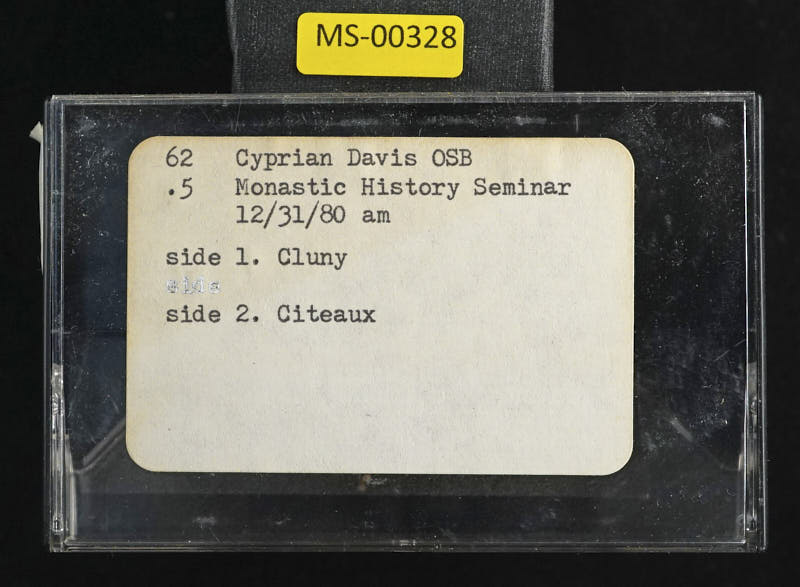
Monastic History Seminar
This talk explores the complex evolution of monasticism, particularly focusing on the Benedictine and Cistercian orders, and their interaction with feudal society and the church. The discussion covers the historical significance of monastic influence on societal structures, the theological reforms associated with figures like Saint Bernard, and the social dynamics within monasteries that mirrored broader feudal systems. The speaker examines how feudal responsibilities and monastic life interplayed, influencing both spiritual practice and medieval social hierarchies.
Referenced Works and Individuals:
- Rule of Saint Benedict: A central text in monastic life, the Rule provides guidelines for communal living and individual spiritual pursuit within monasteries.
- Saint Bernard of Clairvaux: A prominent figure in the medieval church, Bernard was instrumental in the growth of the Cistercian order and advocated for purity in monastic and clerical life.
- Charlemagne and Carolingian Reforms: Charlemagne's consolidation of power influenced the church's role in governance and the spread of monasticism.
- The Cluniac Reforms: Initiated within the Benedictine tradition, these reforms emphasized church centrality and spiritual renewal, impacting monastic discipline.
- Cistercian Order: Known for its austere practices and adherence to the principles of Saint Benedict, the Cistercians sought simplicity and purity in contrast to perceived ecclesiastical excesses.
These references highlight the ongoing tension between monastic ideals and the socio-political realities of medieval Europe, encapsulating the broader narrative of spiritual authority versus temporal power.
AI Suggested Title: Monastic Influence in Feudal Society
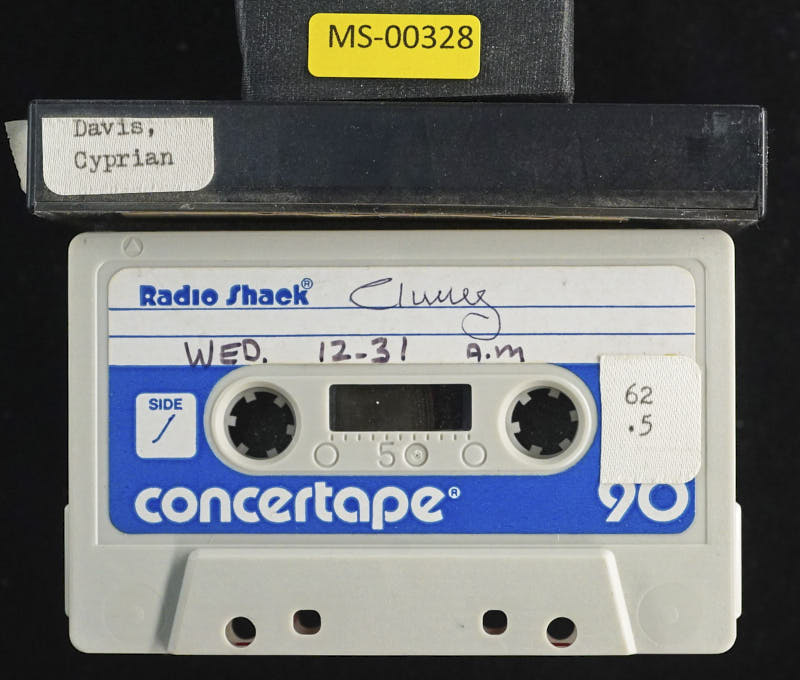
AI Vision - Possible Values from Photos:
Speaker: Cyprian Davis OSB
Possible Title: Monastic History Seminar
Additional text: Cluny
Side: A
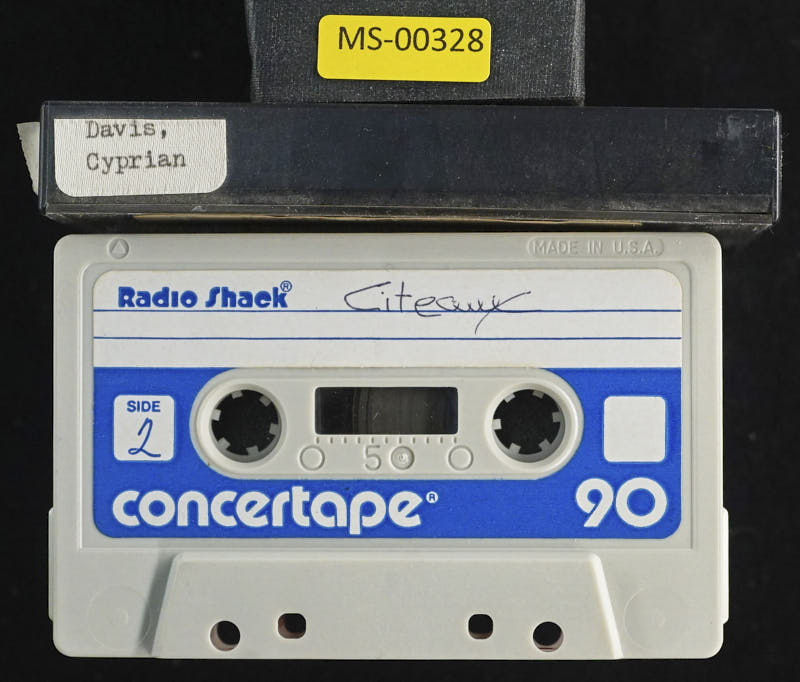
Speaker: Cyprian Davis OSB
Possible Title: Monastic History Seminar
Additional text: Citeaux
Side: B
@AI-Vision_v002
The word benediction encompasses more than what is connected with the word benediction. In fact, we might say that the word benediction encompasses many things that would seem almost to do in direct opposition, or at least certainly far removed. from what we might find as such. And we will forget. And what? One of it is this. It's cute. It's pie, art. And one thing I ask, it's a reason. Pie, art. And one of the things that it is. And if it's more important, but it would be rather true or not true to, uh, he left it in hiding the valley, kind of like that. When there are times when they want to sleep and cook, all the questions.
[01:07]
They object to all of them of it at all times. But the question is for the government's inheritance. And not in any way that we would or deny, but we have the freedom, the need of the freedom. The need of the freedom, the freedom of freedom, the freedom of freedom. No more time, and one is to be fine with that. We're going to be fine with it. We've got any parts like this. And we're going to be fine with it. I'm going to be fine with it. I'm going to be fine with it. We're going to be fine with it. We're going to be fine with it. We're going to be fine with it. Certainly, there are two musical parts. But as they look at them, they talk about medieval reasons to equality.
[02:07]
And these two languages were often enough at least, believed a mile in the stretch. And they are found by what will not be, or rather mediated in that space. They are not really cleaners and people. As they precisely help the idea of cleaners, the same form, I have three problems. I will not be able to get six problems. And the two things that I'm going to do, I will be on three consequences now. H. E. J. Caldwell. But Oxford was written several of those in the human race studies. I'm feeling it. I'm feeling it. I'm feeling it. I just to say, in his work, 16 years, Mr. Lorna's poem, he says that in the time of Abbot Youth to God in the year 1109, the Abbot to me was, in many ways, the spiritual chapter of Europe.
[03:16]
That almost seems like an exaggeration. A mere, I think, to untrue defend that treatment very well. To me, in a way, embodied not only what was a monastic ideal, a monastic ideal that was perhaps enunciated first in the Carolingian period, but to me to stand forth as the finest example of the Carolingian monastic ideal, but to me also, I think, embodied what has been the Christian ideal, the spiritual ideal of the High Middle Ages of the 9th, 10th, 11th century. I know I don't understand what we mean when we say that to me, founded in the year 909 or 910, you know, you're called the
[04:27]
It started in the year, in the first decade of the 10th century, and we're finding it in the last part of the 11th century and the first part of the 4th century. The last thing that you did all the way from the French Revolution. You knew... was in a certain sense of what was to be considered as the role of monasticism within society. He carried it out, as well as being a great spiritual force, because he was part of his job,
[05:28]
development becomes a reform movement. It doesn't try out a reform movement, it becomes a reform movement. And it enunciates, not so much in the rightness, as it would be the question before, but in terms of its actual living out, in terms of its practice, it enunciates a kind of monastic theology, monastic theater, monastic spiritualism. But this cannot be understood. It really cannot be understood until one understands the society with which he put it first, and with which he took his inspiration, and upon which he had it put on in front. And that society is the world of Cholomain. Apparently it's a society. as this would be developed with government. And there are, you might say, I think there are two major factors to look at when we talk about community as being the resilience of the influence of Solomon and being the media
[06:53]
that made this embodiment of the period of it. He thought of the Kalmanian here was the benefits of idolatry. Kalmanian took the social complex that we called idolatry and incorporated the church into its business. This has a profound effect on the church as institutions and on the church as an idea of religious or spirituality. The idea of feudalism is not all the principles of feudal racism A relationship is a system of relationship within the aristocracy.
[08:03]
It is always the ambit-spirit in terms of inability. And it's the relationship of one man to another man, of a man we call a vascular, to a man who thinks that it is Lord. A relationship with the weaker petition and receive the protection of the stronger and as a result of receiving the assurance of the protection and the stronger be assured by commendation that he will come to the aid also of the stronger and be at his service. Although retiring, however, there will be a kind of a stretch of support, usually, with the giving of life.
[09:06]
In other words, a system of interlocking with those people, for all the things you need to be able to be stronger, as strong as you need to be able to be weaker, and worse by The library world, or the system of the weaker, is assured by a group of the stronger, not of an outright profit, as one holds as one government, but as one holds in a covenant way. But nevertheless, as a thief, in other words, as a benefit, as a pledge of one service to the other. So it is both social and social media. Whether the church comes into all this, church officials, and for our purposes, mainly the others, would be at the one and the same time, pastors, the church, as many of them, [...] as many of them.
[10:19]
And it is a system that's telling me to involve members of a hierarchy under it. I want to understand, because the system of feudalism that exists in New York, similar to what we might call feudalism, by way of analogy, that would exist in medieval Japan, or maybe even in Africa, as well as in the other countries, when you get down to the very few people, because it's found on a continent, or on staying in proportion of countries, or in Russia. Nevertheless, they're all based upon the reality that society is, first of all, in chaos. That there is disturbance. That there is modification. and practically based upon the reality of a warrior task.
[11:24]
And that is exactly what the nobility we are. The nobility are always a warrior task. The task is a powerful. Now, based upon that kind of reality, how is the truth going to provide? I'm like, to me, we're able to be positive, we're able to receive the benefits of the protection of the mighty men, or certainly have the security that comes from one, being under three, and I don't know what the question is about it. All these were thoughts, of what you see from me. My marriage decision, I thought, was incorporated on the basis of the individual I read into the system, whereby the abyss becomes that by the average becomes a student yard. Now it's only an opportunity.
[12:27]
But this whole system is, and it's natural, this whole system is transnuted into the traditional understanding. Well, very difficult if I want to take my back on what Christian is opposite, what Christian, Germanic, Tavia, and Argentine, And in this Christianity litigated, the act of commendation would not only the full name of one's hand or another, but also it was revealed, not only with the kids, was to be fuller to the kicker's feet, and would be found again as a young monk. He could kneel at the job, kneeling before, and then kissing him, not only on the home, but on the feet.
[13:35]
The way any bachelor should greet his lord, but also it would be in terms of kissing the holding the sacramentary, kissing the sacramentary praying by the Catholic Church. In other words, it becomes a christianity in a moment, but in a christian way, in a christian way. So that then we, whatever we have, the explanation, someone like Abdu'l al-Taradi, explaining the beauty and the abdic issues of the Catholic Church, because that's a part of our law's theology in a way. But that is the figure that we have to assume. We assume the figure that we are in the Lord. And the obedience that a Bible says in the Lord, which is not at all the same as an obedience to that same language we understand. But that becomes our understanding of obedience.
[14:35]
It's natural. The obedience of it, how the parents speak to his disciples. It becomes measured. It is not only that that what Shalemane incorporates for many monasteries is various modalities. He also does it for the protection of the dead. [...]
[15:36]
He also does it for the protection of the dead. He does it for the protection of the dead. The giving of power, jurisdiction to the abbot, the creation of the feudal immunity, that the immunity, which is a certain area of land, should be withdrawn from the power of the local council or youth, and made in itself a sort of sovereign state underneath the emperor, whereby the ruler of that territory is now immune from the jurisdiction of the local count or the local chief, whereby the ruler of that territory must often be responsible for justice, they have justice, or the collecting of the property, and the other duties that have normally resolved upon the count.
[16:38]
You don't want to go on to the next step, because it would be very, very, much more complicated than that. But just to face specificity, there are many monasteries when you come immediately, as well as time to make the land of the city, become immediately. Please do ask you immediately. Whereby the author assumes the power and the transgression of the country. In fact, it will be later on, much later on, at the title of Prince Bishop and Prince Apostles Worthy Dinner. But what does it mean, Tyler? That this man who is supposed to, in the rule of Benedict, is supposed to be the one who is now a lord. Is he a lord? A warrior? A member of the warrior caste? the responsibilities of a governor.
[17:39]
And though the habit was not to stick, was not to give what we were to be termed as an article, which is plainly the right to condemn someone's address with the Capitol [...] and then people were trapped in heavy gallows, they're required for monoclonism. So when I were wearing jeans, the question of government in society and the question of the church as a society, I don't know. It's funny. It's really difficult for me. He has as much a print As he is a, uh, who are going to help it, really much help from it. And, uh, when they're very youthful, I don't think we're just going to work.
[18:49]
Again, if they think we're working to bear on, but the others, we're talking to each other, and we're going to do it very nice, because all, if they want to, if they don't have your own mouth, and we're going to do it very nice, I'll miss you. He had to be there when the King William, to give advice to be president of his council, to be president of the United Way. I had to watch him to come around. I had to go to the people and speak to the Lord, and literally I had to speak to them.
[19:56]
People always coronated as a ruler and as a country for legislating. So it's not at all. It's quite understandable that If the rule of Benedict prevails in the rest of the U.S., it's not because of the U.S., so we might like to think of it was so wise and so prudent and so important and so, well, but it survived and it prevails most of these becomes quality.
[21:02]
God said it was good, except in monasteries and there. It was also all Romans. You have to be encosed in London's land, and the Christian's law, and the Roman's [...] law, It was true. It was only logical. It was very logical then. But we were told that he was Roman monastic ruling. My son is not only on God, but in the United States. Because he's like to say, there's no small one on my own. I was like, you know, to be here, to be here, to be here, to be here. And therefore, he's an understanding of why a man, like, well, it would be out there, but a man who knew it would be a grown-up of a solid cause.
[22:10]
If he didn't got to count, if he did that, or later on, after the conversion, after finding the reward, oh, hold on, but he's sitting in Miami, and decided that he wanted to be a month after all. And so he goes back to his father, and his father says, and his father says, but I love, and take the name of Benedict, And really imagine that the 2nd Benedict probably leaves in a greater impression upon this organization, and God being a person, if you know more about the 2nd Benedict. Take the name of Benedict to match a terrible attempt toward the earth, as very signs of the master's life, finding it upon the side of Dr. Lula Benedict, with thanks to him that we have a copy of the Lula of Master, by the way. This 2nd Benedict, taking the name from his property in his house of Noah, I'm John Benedict. He merges as a sort of super monastic overture, what the end was. Particularly for traveling in front of the party.
[23:19]
And it would be the worst surprise. He would come and go into the corridor often, set up a marble monastery at Indian or Cornelian Street. It's all later on. Alan put, and added me, and the whole program, the whole program of both Charlemagne and the son Lewis to find his autobiography. Ordering this empire of this poor people. And just put off my feet. And also the insurer. The insurer's model is a good order, but also a good moral. Because Charlemagne never had his own moral problems, but he insisted upon moral art. Why? Why? They're already taught teaching. They're in 15 years, every young year when surprised they made a father in a cradle, but they didn't. That's why it's true because it's subject to punishment. But they don't do it. They say, what's the only thing to do? Wow, you don't have it. You say, the whole way started to do it.
[24:21]
What's we looking at him now? Military defense, I'm sure. I'm ready to be a father. And so it's understandable that they're trying to show me the things that they struggled up a month, you know. But when I was around Capituary, around the great Capituary, when I was one of them, it was really very down, it was positive. And I said, there's one in Kailan, when they were in the empire, they talked to the truth. We were living in And for that reason, many scholars propose something not to make sure that there is a reform, among the Kweji, both monastic, as well as the Fortuner, they are the U.S.
[25:30]
Department of Justice. It's only reason for the entrance to God, isn't it? When the entrance to the entrance to the entrance, we hear the help of the French. The entrance to the [...] entrance to when 816 and 817 drop a period of particular value of 7, or 620 and 520. And so, in a way, it's a quick official adaptation of the real planet. One of them, the results from them, and what actually happened, is they were in positional reform of planet Earth. I've been listed on the one who replaced these, who used to buy it from an Aspergerada.
[26:36]
But all you know, you can probably do anything. You actually don't know if you want to do anything. So it was natural. Out of the way to society. One of the important things, but the most important, is that you are dealing with monks who no longer have the responsibility of long hours of money to labor. the dream of property with the feudal society, ultimately they were incorporated in the whole manorial system. A manorial system whereby the power of the Lord in governing the state would have the work, the house on the work of those sound to the land, and he saw that. Philip, for one time or another, you know, he tried to find it on the 1280s of 156. So they learned that we had controlled, uh, un-certainized it. Well, the comediatric lord would have done the thing in economic, uh, a system, and they would say, wait, [...] wait.
[27:59]
I found their purposes. How did they acquire their wife? Therefore, being taught now, being adored to the manna, as well as, you don't know, [...] you don't know. Unfortunately, it was on its way. They had released the colonies. But by the time it's telling me, it is an eight-hour vast situation. Why? Because the monks have a new role. There's an entirely new role. This is the role of the... The first plank of society, a warrior has an ability to reach standing in the pool, at a moment, I thought that was, to stand the weak.
[29:09]
There was a role on the clergy to pray for those who defended the wicked for the weak. There was a role on those who were the weak to work, to find the food. For those, you know, the hieratic structure of society, the ordinary, there are various divisions of the ordinary, you know, like when I run the business. But the notion of coalition society is a very Paralympian nation. Right. Hierarchy. And everyone in this place, each one is working in the internet, and it's the ordinary way. So if you will die an issue with right in your mouth, you'll not know. I exemplify that particularly, of course, in the inoculable of these countries. But it has no power. At least from the American security. Now, they do have, then, the order of those who are to pray for those who fight and those who work. Most particularly, the monks can buy them. They have interdisciplinary power.
[30:14]
That was their chief. They have interdisciplinary power. And there was no problem with giving them land, fingers against food, well-closed, and couldn't bear on. A lot of great churches around by the church. It's one of the critical part of the contemporary prayer. And the church in terms of the church of culture. The very question of life was in terms of the church of Paramount. I told them that the Manan society whereby the monks occupy the place of interception. That's why we didn't say that they should have their woe and retirees as vassals and as roars. That's why they had their power.
[31:14]
And so, and also because now they have no longer any need to work, you certainly can't do them quite, let them be idle. And the one that I'm just trying now is to try out a lot of men coming around doing nothing, you could say it's a moniker. They made my attention to the moniker, I don't have to do anything. Because therefore, what must they do? It's been great in two years. Like Jewish men, we come out and know what we're doing now. And take a look back. But there was no way to do one. We, we, [...] and, like, uh, um, the visits of the very volunteers.
[32:21]
But the only thing we could do is to start the engagement of a man who doesn't do it. And the notion of men are the offering, like what's forage and things like the offering of his man. But all of this is something that takes place within the context of the entire Canadian country. And it's very normal, in a way it's very logical. But by one thing I understand, to me, I don't want to understand what's in his time. Not to me understand who he was going to do with on behalf of what he understands. But he was precisely in many others. Charlemagne made a profound impact on the Benedictine concept of monasticism. We made another level. And Mr. Pippert, he didn't get put on the arms.
[33:26]
Well, Clini, we have Clini. It's not an advocate for talking to me by Charlotte. Clini is founded, and it's founded, however, in Italian, in Europe. It is, in fact, founded by St. Fernando, and just William the Pirate of Aquatic. William the Pirate, who all had not been pilots already, was, like so many men at this time, worried about the problem of these things. Now, what do you do when you worry about the problem of these things? We get into trouble with them. We get into trouble with them. You get into trouble with them. as a kind of a permanent, a permanent state for your, uh, protection in this life, but most especially we're after.
[34:26]
Uh, it gives me an opportunity to try that I was there. One of those girls, they lived up in Rockville, in South West, in South East, in South East, in South West, where we already kind of, uh, London Rye, in Crookville. We have some of them, say I know, who is out there that's bullying and understanding of your marketing, and which had, in my opinion, there had been found inside a community that followed the U.S. and [...] U.S. It was quite a common occurrence when you go about that.
[35:43]
That's the principle now. Now, we found that in a strong community, and really it's when one looked at the, it was quite, quite a poor community. I mean, they made a poor community for some time. It took time for us to get down to the extended, and multiple cars, and I'll say it there. It had very, well, it was very fruitful for you. And they, there were various reasons why it was right away or resolved, not the least of the reasons. and also by ecclesiastical or bishop or metropolitan. They said that they would be perpetually independent at any time on earth.
[36:49]
And it would come time to ensure it's independent. Put it directly onto the holy seat under the sacred seat. Whereby, in a certain term, they would have to pay attention. It would be an offering to the holy to defend to it. thereby marking it as in the peculiar possession of the imputal turner. The peculiar possession of the papacy, and that the papacy is therefore responsible for ensuring the protection against any problems, to treat the aspects of our perpetrator. And it was to be always free so that they could intercede for him and his family, as well as the ones for mankind, and ensure track, you know. The new places were found that also are places for arms which are distributed to the poor, and thereby the ones who put the money straight up would be able to benefit the participants in this practice choice.
[38:05]
But the active chair is to need part of the practical amounts of not only the intercessors, but due to the poor of the chair. And that way, we were back with K.E. was directed by the next act. This was not that unusual. The men who were out of the time now that were smart enough to exploit the exemption causes are fully as possible and alone. But this thing we describe in the nazi era of it was the period under the point of it. The period when the folks around there, many of them were destroyed. Many of them were destroyed when the national folks were not living, they didn't go long at all, but they were everything. In town, the folks were going to find them.
[39:05]
It was a horrible period, and yet in the period of other chaos and wrong. I would say the temper and truth. There were hope to also tomorrow not to know that it would be a good idea to support. Remember, monastic exemption benefited both parties. It benefited the case of three, and it benefited the most. And both were very happy for us. At one point, we didn't know what to go to look up to you. And I was hoping that we were even in court. Why don't we keep this in front of them, but how? Thank you, Ricardo. With precisely, he was precisely about, like, the papacy we get in mind, how the poor side in that procedure to have a powerful monastery would be one way of increasing its own authority. Because the, and this is something you do.
[40:08]
And it certainly was what was our power. Our wealth are the increasing of its own authority. But Christ was in terms of our bishop who would be dealing with the problem. And for that reason, then Trinidad would be amplified. It wasn't just the Dalmatian charter of Woodward William of Aquitaine, but it was also the privileges of a bunch given by subsequent folks that did nothing but increase that ample authority of one from the Trinidad These are all kinds of authority but especially to be a lot of pushing of that form. We always try to pop them so many times as we want to find the way you can see [...] congregation, although I've got a minor order, the anachronism could be, I tell you, between their calendars, become a powerful, independent bloc, enjoying the macro-reception from A.P.P.F.
[41:21]
from the F.A.A., and enjoying the pressure protection down the executive level of the B.P.P.P.P.P.P.P.P.P.P.P.P.P.P.P.P.P.P.P.P.P.P.P.P.P.P.P.P.P.P.P.P.P.P.P.P.P.P.P.P.P.P.P.P.P.P.P.P.P.P.P.P.P.P.P.P.P.P.P.P.P.P.P.P.P.P.P.P.P.P.P.P.P.P.P.P.P And I was wondering why we needed a strong force. And why we were able to become a frontier, we co-op, which is not expected to be done. One of the interesting things about turning the government into a larger and having dependent housing, The part was that gradually, in Philadelphia, the early average, first of all, was a tenodal. A tenodal was very non-experient.
[42:22]
It was a wonderful life of tenodal, even by John. And you go over the bank. At the light of... At any rate, what you described him on his travel. You look like you close the plate, you look like you're not to ride, you look like you're still there. Doing good, wonderful night. And you get it at the... This is reformed work. Generally it was to try to introduce some kind of order into the house and then leave it on and so on. It was more like the work of a secretary. I'm not, I was out there only for a short time, but when I lived, then the treaty was in my year. And in fact, over low.
[43:26]
would reform the monastery, but maintain it from projection to reality, from a grand view we have, and there are not between that kind of view. Its relationship to the very power of a relatively foreign was very realistic in the sense that it was not in order to do it, it would somehow do it. The monastery, you know my nature to me, would have only a problem. Or it would reform the monastery, and the monastery would remain an abbey and have an abbot, but the abbot would be subject to the abbot of clinging. And the election would be probably to the confirmation of the abbot of clinging. And you have examples like this talk. Ah, a place of bone shafts around the monastery would fall under it, you know.
[44:31]
And you have other places. Ah, it would be a plant of cat, or it would be a question of a monastery more or less adopting occult consumption and managing to remain free. and an intent with it. Because one of the interesting things about me, the way in a certain sense to me, managed to extend it from the U.S. was customary. It's his way of an active life. They are all fine customary. To me, they're very important. Customary was mainly with theories of liturgical prescriptions, as well as polyparamonial prescriptions, describing the day-to-day treatment of the Mount Berry, as well as laying out the constitutional order in the Mount.
[45:38]
These customaries, the early ones of the 10th century, are very unique, but when you get to the more elaborate customaries of Bernet, including the In this lifetime of the 11th century, you have very, very lively prescriptions on holidays, and at the time of the very life. You'll get there in however the whole party date, with the church electrified very well, and being quite an hour and an hour, including the sermon. American group, and we meet them, and face to face the breaking of it. All dressed in the mouth, all carrying out with a liturgical act.
[46:40]
In fact, so much of life that she needed would be a liturgical act, even the shaping of the mouth. At stated times during the year, because you want to shave, you can shave every day, or every week. At stated times, during the pandemic of people, you're sure. Isn't that for the pain? No, no, for the pain. During the whole problem, well, not for a period. Well, obviously, there was some time to go, because we got shaved every six weeks. Everything was done according to the liturgy, according to the Church of the Quang. But these things, the Cluniac customary, throughout, is just part of Karel and Chin's society. Everything was done.
[47:42]
Right? So it's in this sense that we have to understand. Now, what is the reformer we're considering is it consists of the adoption of the Cluniac liturgy and the Cluniac custom. And that can be, and in a way, so much of what is our benedict and monastic literature property comes from, or, you could say, a lot of transition, but comes from, you need impact on the literature development of a whole world, of the order, of what it is put on. It's very good part. It can stop you. I have an expression of a medieval monastic spirituality might be characterized as expressing the hieratic notion of society.
[48:45]
Because to me, to me, the whole, the whole of the community was very, very well. It was a liturgy that was centered on emotional adoration and interception, and the architecture, the use of interceptions, the possessions, the wearing of vestments, all of this highlighted the esteem of the glorious ceremony taking place before the presence of the High. In an article, I would call it like the original one of the two. Yeah, I was talking about it. He said that to me in a way embody the midst gate of Pentecost. And I think that's a very good description. The church of the heavenly Jerusalem. The church in its final combination.
[49:50]
The church as she had arrived. And in a certain sense, this year... very much to the bottom of the true spiritual ideal in a hypothetical present here. The clinic is very, very important to you. The clinic is a refuge for a simple. I find that as a constant thing, as we read through the clinic of writing, it's embodied in the story that he found a life of St. Hugh. Mainly that St. Hugh the Great would One of them became a monk.
[50:53]
and in the morning we were going to retire from the rock north. And we were going to retire from the rock north. The other one flipped the monastery. But it was the notion that everyone had to be well committed to it. No one was to be trying to do it. Everyone, it would be a filing for all. But anyone who sought then to live in the monastic life should be a receipt. It was, it was in that sense, it was knowing they needed food to eat it from the right. But it was not, it was not, it was, It was a notion that all should be able to come, because we are the last best young people in this world. But I think that's true. Don't get me wrong, the monster to me, we definitely are the noble high. We definitely are, and they're lifestyle. You never want to remember that we could never live the life, but anyway, you know, not too hard for us. But their lifestyle, nonetheless, was more or less comparable to the gift of it was, heart of it was, was not the lifestyle they felt.
[52:02]
For a few months, what they looked at was. But, it is definitely non-nobles were included in medieval community. Remember that the church becomes more and more aristocratic as you move in the modern world. You move in the modern world. The Great Lady 7th was probably not a normal life. We had the opportunity to work, and we met, I talked to everyone on the mark, saying, here's the great Welshman, the great Welshman, like St. Bernard. But we naturally had to add it. How are you going to have any kind of defense between the Great Lady and the Great Lady 7th? But... Another result is that Tunis became a kind of a place of spiritual power. And this is to be shown in the fact that Baudelot Institute also played.
[53:09]
Part of it was sort of the pulling together of what had been a constant attack for the Tuniac monk, as Interceptor, especially Interceptor Baudelaire, So we'll have one day full of time when all our liturgical force will be generated through the interception of our world. Because when the culture were there, the development of the culture were there, it's already been monitored by our opportunity, particularly. A motion of having to wait for you to wait for the liturals to turn into the world. And Cunni is an expression of monastic culture, not because of many, many, because we were extremely wound out intellectually, but in the building, the Third Church of Cunni, or the largest church in Christendom, until the building of St. Peter in the ground in the region of the 16th century.
[54:11]
The building of Cunni is the idea of a probably the Pilgrimish Center on the Pilgrimish ...in other words, it's a kind of a nurse subject for the whole society. It's a myth that we embody them in our culture because is the art and architecture help influence the various places. And being a place where some of the people's train to develop a pipe where it's confusing, it's odd enough to end it with the work of our place. So in this sense, you need to let this kind of a center of various times you need to know. And it's that kind of influence, that I'm excited. That kind of influence.
[55:14]
It's really kind of extremely wealthy. Unlike all places where he's from, he's been in New York, but he's got the same here. But he kept the pathology. But these are the benefits of the United States. To me, what it was worth for. They didn't have the money. The cash flow was my turn. This is kind of an end. You may receive the net amount of gold from the kingdoms of Spain. And I can't believe in Spain, but the kingdoms of Spain, they can give their money to gold and power and be assured that it is not so important. And the goal was to rebuild a new church and rebuild a new church.
[56:26]
And once that started, all that out there was right out there. And that was probably not anything. And that's the fight moment. that he needs to be created together. Trito, the founding of Saint Manier. But Trito is the culmination of a reform movement. It's not the beginning of a reform movement. Trito is a culmination of a reform movement. It is the end of a reform movement that had begun earlier, then already on the 11th century. A very poor movement is precisely there, namely to call into question from all the basic problems about calling the monarchy from the faith, and therefore knows the music.
[57:29]
And what is that? What is that? Because the question is very important that people today call the question, is the kind of culture we live through. Is it possible or is it right for those to claim to follow the gospel of the world? Is it possible for them to come to terms with the world? Is it possible for them to come to terms with it? Is it possible for them to come to terms with it? but also to live comfortably there. Is it possible then, by all the way, to settle in? And become, well, you just become simply a thing, but become comfortable. For must we not, if we are calling in to an ideal, must we not always be, as I do, must we not be confident?
[58:39]
We always have someone to use them to account. Always thinking that the temple doesn't need a thing. You can have all the temple what you want, but it doesn't need a thing, you can't count on it. And that's a point of problem. How do you come in terms with power structure? Charlemagne? I can't blame Charlemagne. But Charlemagne had a defense of the church. They imposed Christianity on other Catholic inspections. But they were happy about it later. They were happy they were forced to tell Chris T.T.T. And the monks at 8 a.m., the monks pulled around, a missionary, and they were doing a choice between the poor and the raptor.
[59:46]
Chalamet knew the monks, who were able to do perfect the Pope, put the Pope to go for Lombard, and used the Pope. The church finished the Bible, and he went to his fourth of mine. And it's only reasonable that some people could afford to get back to life for them. And so, they're using my brain. And so, I mean, it's only a German bird. It's only very sweet. [...] But, uh, you pay a price and you pay a good price. And you become, you owe something. All the other things, of course, is that you cannot verify.
[60:51]
You cannot buy a good amount, or you cannot get caught on the court. But they were a monk. it would begin to call the question of the whole notion of the art of clear society. And we'd like to call the question of whether we should, whether we should not, in the Buddha, we want to get them combined. The commodity in the 11th century, St. Romuald, among the first of this new movement, which is a new idea, was the first of this new movement. It begins to hang out with the medical life. Now, how much does it continue? Well, we're not going to organize our medical life. We're not going to be adopting our most tingling us from the public, or for filling out of the economic, social system that was in the area, or whatever. That, we find, first, you know, the medical life.
[61:56]
It's been a lot more. We find it again in the early part of the 12th country. In the early part, the other area, with St. Grand Balbrick and the Galamborgia. Right from the part in the 11th century. Where again, Galamborgia, the one, where we're going to make fun to break the economic border. and I think they must be found. And also, for Garand-Wogler, works with a determination of father's insignia, which is a part of the problem, trying to hold a relationship between our respectively and large and the invariants of colon. Then Bruno, found in the Carfusin, Then in the last part of the 11th century, 24th, these two are going to tend to move out of the large historic monotheque, part of an organization, and a retirement, but more than ever, a retirement from the arena of the political social world, but more or less relative to probably around any community.
[63:21]
We all took this increasing amount of time to take this time to look at the country. Men with other homes, they remember they were a boy, but they took the contact. And they were very nice folks to the ordinary folks. Many of the homeless people, many of the women were certainly not to be at aristocracy. Some of them were members of the land folks, people sort of radical and radical. with the alternative features for a while, and we'll go back there, let me do it. And from then, it's getting a great deal of criticism of the devil's daughter, a children named Chick, one of them. Great stress on poverty. The movement of poverty, now there's part and parcel of the movement. And the movement of poverty is not under the path for the right thing. That movement of power they go around and the country puts a part of it. It doesn't start with practice.
[64:27]
These are in terms of movements in opposition to the status quo. And the movements don't hold up. And the movements of thought and make it coming to one another. And in other words, it is a movement and rebellion against the government should be brought up things. from a special motivation. Monks should not be part of a word that they are called upon the judge. So that when a handful of monks move out of the monastery at Moreland, it came many years. Also in Burgundy, it's where Queen Ewa, When they moved out of the ambivalent language to that very old concept of the fact that it formed, my friend. When they moved out and decided to go to a place where it was very good, they grew up with the intention of shaking off all of what they thought would be shattering of feudalism and of feudal society, of economic preoccupation.
[65:46]
of having spirits, collecting pie, of being the recipients of gifts, you would all want obligation to take it with them. They were going to get away from all of that, and live poor. Following the gospel, literally, and following the will of Benedictine, then that to a common spung and all of the people. Can't get out to the eye, kneel, or the dead of poverty, but nation, well, don't we say, well, we're not with them. Well, part and parcel of this new movement, an operation of the federal court, going back to the federal government. So you can see it's a popular movement, but it is a popular rejection of the social economic order. And for that reason, there's a certain net that created about the horrible decadence could be on your own mouth.
[66:48]
The people who are unvalued or white. Horrible decadence or horrible lies or they were terrible. Well, then you actually look at the problem of keeping on the break of terrible poverty. It's a state to fully manage. Monterey, he didn't. Brad made a party of a duck, he saw a duck, and they got a wine locker. But, uh, and my lamb. But what, what we don't show, uh, we could, as if one were to move out of our own society and say we no longer want to be part in partial politics, a country which is committed to this kind of political movement, or this country, the country of the Morocco, decide to move away from out of it.
[67:53]
Exactly what the situation is. And we say, well, we're not going to be part of it. We'll change things and make failure, and we see the views of the government we live there. But we can bring part of our own, their connection with Britain. They're willing to sign. It was there that the local Lord could become what the Lord was waiting for. What there was the end of his life, having given sort of escape to the monastery, reassuring that when he was ready to die, He could be carried on a litter to the monastery. He would be making vows. And he would have a pivotal moment. And he would wake up in that morning. When the angel Gabriel came, there he would be with the elect, with the thing.
[68:58]
Now of course if he got better, You know, and that kind of, that kind of, that kind of, uh, I was going to go on, even with Dr. Leo, Dr. is the second, who was, with Andrew Carson, kind of a quote, became a knockout triple remnant in a subscription manual for a job. That was, but how do you keep yourself apart among the guys that you have, with all those in Parliament? Do what the Cistercians do. But you also reject those who are part of it, and I need the black nuns. And the embodiment of it is part of me. And that's part of the reason for the conflict. The reason for the conflict. And so when Muslims exaggerate the evil on the part of the black nuns, it's what they represented.
[70:01]
It's what they were. in certain times. And what you've seen yourself as being. The problem with Citeaux, as far as historians, they complained that the early situations were very good in terms of wild. They created their own myth, by the way. They wrote their own myth. The Xordian Palin and the Xordian Monument and the Copacallic Rocky by documents, but now it's, I mean, it makes me a story, and this is what I'm going to look at, but these documents were from the New Zealand, or, uh, you know, they were able to talk about it. One of them, I thought, I like to go on that list. There was an official version of that history, which, the early advent, very from a brand new one, said, oh, how could all happen? And they know that they had a female. ...and he was a traitor. And he was a traitor.
[71:04]
There are other things, there are little things that were, as the first generation passed, they really wrote it. And the official from the creation, they were to say, this is how it was established. And these were names of the founding fathers, and they said, oh, [...] oh Bob, where's the important one of the cards, he said, these early technologies coming in, the parts that they re-rotated to it, is that they had a very good concept from the beginning of themselves being a new reality.
[72:10]
They wanted, they knew they had a program. They had a new idea. and how they are the end of an idea. Remember, another of them always often make a mistake of it, and it's fair to treat the world, and very much defined as, well, very much defined as a good person, and by a long shot. And this area to start Schneider and St. Bernard are two distinct things. But you don't go to the Bernard, you become a monk at the toe. You're an English speaker, you have to speak to it. In, uh, 11-12, or 11-15, when he comes again, he, uh, doesn't come and go die quite, sorry to call it, sorry, he comes with a place of a poor need, but we're developing, but he does come in, and one of you comes out, and he does that, I was very sure, he made it a great foundation, you know, I'll say, to me it's true, and it was, um,
[73:22]
and there is a question of the character and temperament. Which is very interesting question. You like things very interesting. If you don't like anything, you don't know. And at last, I think there's a report on the theory. You know, I knew what I would think, and that you know what I'm going to do quickly, right? So it would be a highly controversial theory and a highly controversial theory. It is highly controversial. Here is everything. But the result of it, the Cistercians represent in a way what was already a growing movement. Namely, the growing movement within the culture of doubt of the rejection of lay control, of the rejection of the interior of its partnership with the Empire, known as the growing reform movement, even in 1049, with the election for St.
[74:39]
Louisville. The growing reform movement will figure out the condelection brought from Leo in 1929 until the time of Concordia in 1922. But that movement was a movement that also had its own evolution, and its own dynamism in it. It was strongly quite different than what it was in the first picture of St. Leland and I, in particular, what it became under some great greatest settlement, and what it finally had to settle for and accompanied with 11.2. But, it was a movement in which a definite theological movement was theological movement, you know, very well, A concept of church. A concept of church we're trying now to improve upon. A concept of church and a concept of right order in the world. Right order in the world is that God comes first, or else comes second, therefore priests come first, and they will come second.
[75:42]
Therefore priests will go home, and they will go home. There's no way in which anything, merely leaving the input. can control, or influence, or interfere in the running of the church which is wrong. A very limited fact, very long time period, and that almost between these powerful lay people who tend not to know anything about purity, but preach something pure and sell them. They pre-assimilate a church that is pure, a church that is heavenward, a church which has to bring all around the others, but must never, never, never let be led to run through any one ever again, take over and control and interfere in the direction of the church. But the regular reform was necessary.
[76:45]
It was necessary. It swung the pendulum in a whole different way. The rejection of the tarot is an idea. There was a total rejection of the tarot in general world order. We said, Chalamet should never have been evicted. Chalamet should never have been evicted. The emperor should never, the pope should determine that the emperor should be the pope, should be the gentleman, the emperor, and the pope should be able to get more of the emperor. Now in terms of monasticism in the beginning, it feeds right into what was going on in its separation from this world, this rejection of the involvement in this world, involvement with the lay society. So that in a way, the situation is also embodied, monastically speaking, You've met the principles of the Lord and the Lord for me.
[77:48]
But it must not be mine. Because, man, this is a clear cut of all my wishes. The early St. Leo the Ninth has with him, working with him, many months. Gregory VII would never have wanted to meet him. But Gregory VII would have wanted to meet him. But Gregory VII would have wanted to meet him at the monastery, which followed the tree at custom. He would have wanted to meet him. And we did know St. Jude. But St. Jude the Great. to show the kind of the ambivalent tradition of Tunis, then you're the greatest person that can know stuff. When the emperor, I don't know if it's over here, and they just stand outside the street, at the end of Germany, where they feed me, and I don't know if that. I don't know if it's over there. Then, where they saw them through a volume, so we can get ahead of it, yeah. I'm going to pick up the point against the novel originally. But the... But the people inside, the Countess Nechirida, Aposteney and some of the other women, and both, and the remodeling.
[78:53]
And he's pulling on the end of the fourth behalf against St. Bergoglio, when he caught his attack from the state of the United States. But by and large, she'd be friendly with the emperors, friendly with the powers, Always ready for reform. But you have a kind of an affidavit conviction. Well, you have to think about that. Well, the Fristertians, they're all idealists. They are the world, are applying entanglement, or in all their entanglement, and the idea that as the more monastic the world becomes, etc., I forget it. A rejection of lay involvement in the church, a drawing away from the lay, a rejection of the appearance of power, a rejection of external wealth, a design of the appearance, a rejection of the splendor of the liturgy, a rejection of the whole Carolingian ecclesiology, which is quite different from the ecclesiasticality. I'll count you, I'll read why we point you.
[79:56]
A return of the early civil monastic sorcerers, and a... And the resurgence, really, because the resurgence grew in terms of spirituality, the resurgence called Boyaiton could be called really the first, in the West, the first school of spirituality. I would like to say, and I was saying, it was like a monk. And the spirituality really invited the spirituality of churches up in the heart. And you might almost say it's determinants. the spirituality of the church in the Middle Ages and the spirituality of the church. In other words, there was a movement back and forth between the body and spirituality where the typical black monk monastery embodied in its parallel, and that was the laity of
[81:00]
And the clergy took on because of their relationships. They took religious and so forth. Cito, which really develops the first real religious order, the first real religious order, with a dilemma and a central parallel, develops also a tune like the katechaitate sort of all of them. Namely, an out-of-the-cognitive in the writing of the saints, I can bring another, who embodied a teaching and a tradition that it developed, and it can be called a Cistercian spirituality, a Cistercian spirituality. And not only that, but the Cistercians are part and parcel of the new age of the 12th century, at an age which was which is a certain, or a certain flowering of a culture, and its own inner dynamism.
[82:05]
And the Cistercian, there's a new order, vital, online, and growing. And they too much received, and his share of the love, and so forth. No one can't escape economics. Ah, this is the issue of the crusades. It is not at all. Even though they have withdrawn from futile entanglements, it's kind of ironic. St. Bernard does not hesitate to write a rule for any dogma, namely a miracle. He'd like to hear a whole night talk, but I'd like to look to me for either of that. You did not see any problem there, they are taking the sword with God. St. Bernard had no problem without preaching the Second Crusade.
[83:10]
In fact, this history is going to be much more crusade, it's more turning at clever with me. So in a way, they come out of the protection of the king much more closely than either of them. They are the new ones. They are the new leaders. And with them, they're soon the new responsibility. And perhaps we might say they'll share a problem with the new students. They only pay account of them. the situation every morning in order to ensure that quality and maintain that economic, they already turned on the growth because she couldn't.
[84:11]
They didn't need to cut them off the line, they didn't end up there, they didn't need to lock the line. Well, there was a problem in prison, and he told his three bodies went in two parts an hour, I think, treated like a metal wall, and I've had a few years. We died in 11.57 and St. Bernard died in 11.53. These two men, when they're writing back and forth and they're writing on the lower levels, it's quite a documentation. But these two men are where they embody the difference, I suppose.
[85:12]
All going into detail in their strengths and their weaknesses. But they embody sort of a difference from an older kind of ascension and a new, young, violent kind of spiritual. But the Charlemagne Carnivation, in the time of Preg. Barbarossa, the anti-pope that he had named, in order to plead Preg. Barbarossa, he makes the Charlemagne Carnivation. But there would be good reasons, in terms of our tradition, mainly the Carnivation of kings, which is a very typical thing there in the early days of the Canaanite. And that Charlemagne would be venerated as part of the unknown, because it was already a legend. This kind of legend came from here in the 10 hundreds.
[86:13]
The legend of Charlemagne had already preached to the whole series of epics of Charlemagne, so he was a legendary figure back then. And also remember that here is a man who ensured so much for the church. may respect why they, in my work, are allude. He had sort of mistress suits, more than whites, more than... I mean, at a different time. The marital entanglement had never been straightened out. But, he was a German, he would have certain rights, don't they? With women, she... In the Basque Country then there's a great deal, and that was the first time I'd ever heard of it. Did you say you had a literature all day? Well, it was the end of January. They had the, I'm sure they put it here, but the diocese of Paris, the diocese of Akram, and several other places.
[87:25]
Yeah, it's a nice way. In other words, it's kind of immemorial. No, it's like some other songs that we have. I wouldn't plan to go anywhere. There are such words, man, in the 17th century. What? Oh, well... The reason why it was quite event was because of the whole, uh, the mass citizen in general had fallen on a white kind of African Revolution. I'll give it to the American Revolution, excuse me. One of the main reasons for the very slow decline of the mass citizen after the 12th century is, uh, I know that the change in economics, the change, as you move from a rural society to an urban society, you move almost to a capitalist society, possibly from the capital of capitalism.
[88:33]
And also the rise of the empire, which is written over in the economy. Also is the increase of the compensatory effort, namely the private mainly by the power of Clinton at this time, but mainly the name of man who was not known. There was no intention of living in the non-spirit, and we were nearly a kind of parasite receiving the revenues and continuing their life. Now, everyone in particular isn't reading papers through, and the paper through was one of the worst offenders. But we tried to be a basial author, And I gradually fell to this topic. It wouldn't happen very well, hold on. To me at his first commensatory, I think it was nearly on the 14th century. But you see that ultimately it meant a slow one.
[89:36]
It was a slow thing, like having a typical one. We don't, you lose energy slowly. Because, and it's a question of morality, you leave morality straight away. But prior, I put my superior, they haven't lived elsewhere, and maybe never even visit the place. We've got the money, that was even more important. But the, but the man responsible now is a prior, but you still had this individual who often didn't call it what we were together with the real life. But this is like a real thing, it has to get them from that time. Like, one time ago, they came to me, it was, uh, [...] um, it was, uh, it was, uh, [...] it was, uh, uh, it was, uh, [...] uh.
[90:41]
Because it was a new reform plan that we did during that time. So I was telling you, I come to an episode, he told me, I mean, we told you we were going to go under suspicions. They played what sort of play, and the author was only doing it. The author was not allowed. He thought I allowed me to put in it there, and he said, no, [...] because of why none of the houses were real-time users. And no idea when they listened. And it was going to be nice to see them. One of the greatest of the new users, very much new users, very natural, they are all high. They are all over the years. So we got hired by some people, just for that, just for new school, all that. And it was a long-term experience, a little bit of fun. We want more time for that.
[91:44]
We want more time for that. We want more time. [...] with the new Trump, in the spring. They're not only living there, but anyone who was in the court, for me, I was like, if they were in the performance. How much what he was a dancemith, now he, is another question. But he, I, you know, rigorously wouldn't put him in the church. And he thought, well, let's see what sort of a performance. ... [...]
[92:47]
@Transcribed_UNK
@Text_v005
@Score_29.84