You are currently logged-out. You can log-in or create an account to save favorites and more. more info
Exploring Sexuality: Intimacy's True Essence
Sexuality
The talk primarily examines the complexities of human sexuality, specifically focusing on masturbation. It delves into various motivations behind the practice across different age groups and addresses the moral, psychological, and emotional implications linked to it. The discussion includes perspectives on how masturbation relates to self-discovery, anxiety management, and potential risks of compulsivity. The latter part of the talk shifts to exploring the concept of intimacy, highlighting the importance of mutuality and balanced power dynamics, especially in helping relationships, distinguishing between genuine intimacy and pseudo-intimacy.
Referenced Works:
-
The Grand Option by Beatrice Bruteau: Discussed in relation to the challenge of connecting across differences, emphasizing mutual respect and valuing diversity.
-
Erickson’s Work on Intimacy: Utilized to describe intimacy as flexible strength and maintaining self while being connected to others.
-
A New Book for Clinicians on Sex and the Internet: A reference for discussing the individualized approach to sexuality, particularly masturbation viewed from a detached, non-relational stance.
Concepts and Discussions:
- Sexuality and Masturbation:
- Exploration of motivations such as self-pleasure, relaxation, curiosity, and stress relief.
-
Consideration of compulsive behaviors and their psychological impact.
-
Intimacy:
- Defined beyond physical aspects, encompassing emotional, intellectual, and spiritual forms.
- Evaluates the importance of mutuality, power balance, and self-awareness.
- Discussed how explicit role boundaries affect the depth of intimacy in therapeutic settings.
Key Themes:
- Moral Perspectives: Discussed various moral views on masturbation, from its consideration as a sin to being seen as a neutral act.
- Intimacy vs. Pseudo-Intimacy: Differentiation between genuine intimacy requiring equal power dynamics and empathetic engagement, versus pseudo-intimacy prevalent in certain professional relationships.
This synopsis aids those interested in the nuanced intersections of human sexuality and the spiritual philosophy governing discussions of intimacy.
AI Suggested Title: Exploring Sexuality: Intimacy's True Essence
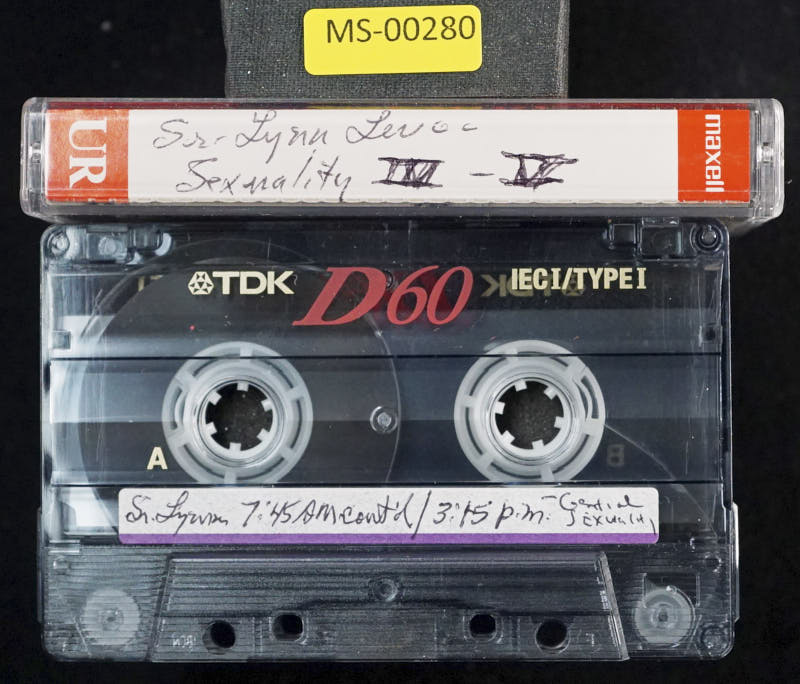
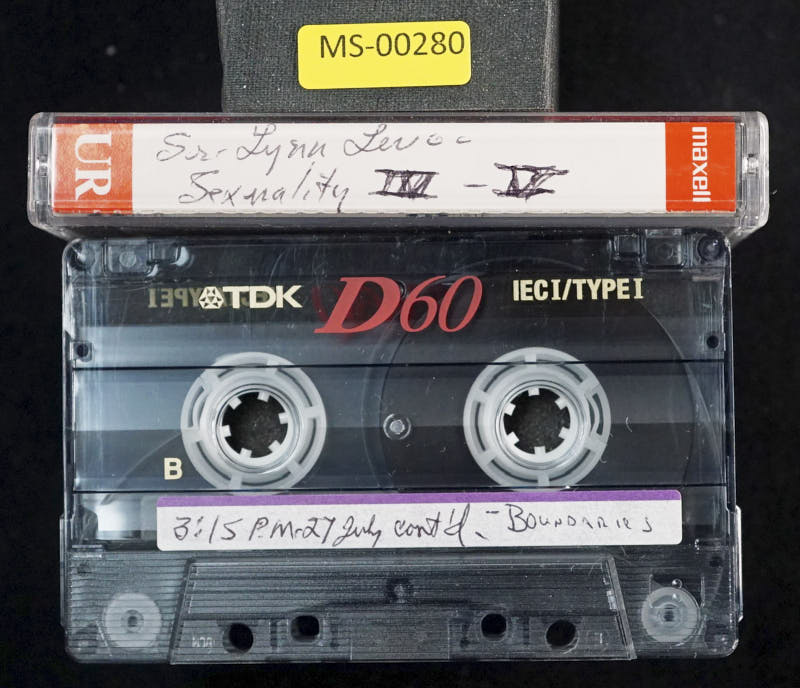
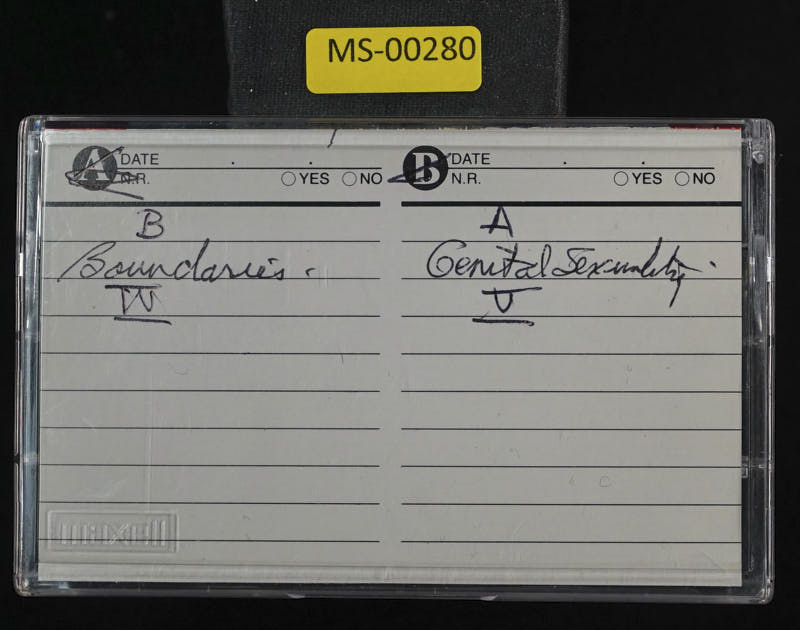
AI Vision - Possible Values from Photos:
Speaker: Sr. Lynn Levo
Possible Title: Sexuality - IV
Additional text:
Speaker: Sr. Lynn Levo
Possible Title: Boundaries - IV
Additional text: 3:15 p.m
Speaker: Sr. Lynn Levo
Possible Title: Sexuality - V
Additional text: 7:45 A.M.
@AI-Vision_v002
Masturbation, I don't take anything for granted. It comes from the word manas intrabatio, you know, and it usually means to agitate with the hand. You know, that's what the words mean, you know. And it really is a way of self-pleasuring. Now, we know that, and I certainly know that people use all kinds of things to do this, but, you know, and there's all kinds of sex tools, et cetera, and vibrators and all that kind of stuff, but basically the meaning is to touch yourself in the genituary in such a way. to agitate in such a way to bring yourself to some peak of tension and then the relaxation that comes. And that is a sense of relaxation. And you can't be tensed and relaxed at the same time. So some people, when they feel sexual tension, feel sexual energy, masturbate is a way of relaxing. Some people use it as a way to go to sleep, if they're dealing with tensions and they don't know what else to do. So we're going to talk about I'd like to talk about what masturbates, when people masturbate, and why people masturbate, and then we'll talk a little bit about the morality, though I'm not a moral theologian, but we'll talk about the four places that people are, how people talk about it from a general perspective.
[01:10]
You're probably dealing with a priest here, probably dealing with reconciliation. But the first thing he said is, well, you know, who masturbate? We know that infants masturbate. Now, that isn't a conscious choice, but in fact, as young as six months, the little boy can find his penis, and when he touches it, et cetera, it will feel pleasurable, and it will erect as early as six months. So we know infants masturbate. We also know children masturbate. It's just pretty typical that they'll find they're either in the washing, you know, their mom's washing them, they're touching the body, the body gets stimulated, so children will masturbate. And you'll find them, you'll see little kids, and of course their parents are mortified. They have their hands in their pants, you know what I mean? They're touching themselves. Why? It is pleasurable, and they will get a response, you know. So we know children masturbate, and often parents go ballistic, and we tell them to relax. It's a normal part of life. Now, they want to distract the child, you know, you don't want the child, the little boy, holding his penis while he's walking down the street, you know. But in fact, it's pretty normal stuff that children masturbate.
[02:12]
And also, we know adults, or excuse me, adolescents, and that's usually the time when most kids will discover the fact that their body's pleasurable, that they remember. And that is in adolescence. And so again, you'll find adolescence who come and feel shameful about it, and they think they're the only one. But masturbating during adolescence, some point when the body is changing rapidly, is pretty prominent. And that's a lot of times when people first masturbate, that they remember, is during adolescence, with the big sexual changes. The hormones are raging, and you're trying to figure out what to do with the sexual energy that you have. But, of course, adults masturbate. And we have different... We want to talk about different things that happen with adults. Right now, we have adults... It's interesting about masturbation. A lot of people right now, especially young people, they figure, what's the big deal? I mean, they'll say, what's the big deal? You feel some sexual concern. You don't have a sexual partner. You masturbate. What's the big deal? They feel no. They don't think it's a psychological issue. They certainly don't need the spiritual issue.
[03:14]
Now, I think we have to look at that because I think to be so blasé about it, I think could be problematic, especially if they get into a habit of masturbating which separates them from others. But that's how some people see it. No big deal, you Catholics are hung up. What's the big deal? Another group of people do think it's a big deal, but because of circumstances, they'll find themselves masturbating, they're feeling okay about it. Or at least trying to justify it, if you want to put it that way. And those are, for example, widows or widowers. These are people who have been used to genital expression with another person. And all of a sudden, they don't have a partner. What do you do with the sexual tension and the energy? And it's also related to loneliness and yearning. So sometimes you'll find that they will masturbate. And they'll come talk, they'll feel shameful about it. But they'll do that as a part of way, even of grieving and of coping. Sometimes you see people in hospitals, if you ever do any hospital visiting, you know, if you've ever done any event, who are so disconnected and they're anxious and nervous about surgery or cancer.
[04:14]
They'll sometimes masturbate. Why? It's a way of relaxing, of soothing. It's not about sex, but it's a way of using their body to relax or soothe, you know, again, which is not the most appropriate way. but understandable given what they're trying to cope with. So we're saying, these are the things that happen in adults. And then we have the compulsive masturbators, people from whom it is a serious issue. I had one young man I dealt with, he was 23, that's when I was at the med school. 23, came in to see me, and he spent three and four hours a day with photographic material masturbating. I mean, you almost couldn't believe him, but he was so hooked into this and really had no life. He had no relational life. And he wasn't working. I mean, it was really a disaster that this young man. But I'm extraordinarily good looking. And not a dope, you know, this was a fairly great guy, you know, but somehow got into this system of self-pleasuring and abusing pornographic material, and he was lost in this world of fantasy, and he didn't have a good, healthy life.
[05:17]
So again, that's a compulsive thing where a person's not free. This person's not, we have an addictive or cult compulsive thing going on. Not free at all. It needs some real psychological help to deal with that. So let me say, why do people masturbate? I think I have a little fly here. You say, why do people masturbate? The first two are ones that are usually related to children and adolescents, but adults can be there, too. And it's about discovering their bodies, touching their bodies, figuring out where things are, how things work, etc. And in that process, wind up masturbating. And then they might go do it again, because, again, we're talking about pleasure here. The second one is to satisfy sexual curiosity. Again, it's not uncommon that children and adolescents are quite curious about their bodies. Pretty normal stuff. You don't want to make this a big deal. It's normal, and hopefully they pass through that once they've discovered their bodies, etc. But it's pretty good. Now, adults can also be curious, especially adults who've had a lot of repression in their early life.
[06:20]
Sometimes, by the way, a person who's been sexually abused Part of the treatment is reconnecting with their body. So a therapist, for example, is not encouraging them to masturbate, but does encourage them to look at their body, touch their body in a loving way. And in doing that, they may masturbate. So it's not a question of teaching people to masturbate, but teaching people to love and touch their body in a loving way. The third one is the gratification or relief. So that's the one we talked about. I feel tension, I'm just going to give myself a little release. Or I don't want to be bothered with the relationship. Let me read you a little... I hope I brought it in here. This is from a new book for clinicians on sex and the Internet. And listen to this. This is a young man. Listen to how he describes how masturbation fits in his life. And you're going to hear a disintegrated point of view. This is not healthy, but listen to what he says.
[07:21]
He says, Relationships are emotionally demanding, and they are. That is not true. Then he says, if I masturbate, I can start when I like, come when I like, and stop when I like. I needn't bother with foreplay or romantic lighting or tender nothings murmured in her ear. I don't have to guess what she might like or discuss afterwards how it was. I can go to sleep when I feel like it. Let's talk about self-centered. Let's talk about using your sexual energy for your own self. It's not about connection here at all. And this is not atypical for some young folks, or any one of us could be in this place. What a disastrous place to be in, when the energy is always about connection. And this is a real misuse of the energy. To affirm oneself.
[08:23]
They say to affirm oneself. Right. People sometimes feel they don't feel good about themselves. They don't be feeling lonely. They're feeling disconnected. So they'll soothe. They'll take care of themselves. They'll affirm themselves by touching themselves in this fashion. What a poor way to affirm oneself. You know, there's got to be other ways to feel good about oneself than to use your energy in this fashion. To manage anxiety, a big one. We have a lot of anxiety. This is a very anxious time. And I'm sure you're seeing that in people who come. They're anxious about life. They're anxious about their decision. Very anxious time. So what do we have people doing? We have people who don't know how to deal with, manage their anxiety, so they masturbate. This is a really, what I would call, an adolescent choice about dealing with anxiety. If you're anxious, anyone is saying, we need to learn how to deal with our anxiety in a healthy adult way. This is a less mature way to deal with anxiety. Oh, I'll just get rid of it. Why? When you stop masturbating or when you wake up after the nap or whatever, what you're anxious about still exists.
[09:25]
You haven't changed a thing. So it's a temporary fix that's very immature, but people need to be challenged to look at it that way. To avoid distressing aspects of sexuality, this is a person who maybe has a same-sex orientation, for example, doesn't want to deal with that, and so takes care of their sexual energy. A person who's sexually abused, for example, may find their sexuality very distressing. It's not uncommon they have sexual issues after being sexually abused. So again, if they need to deal with the sexual abuse, they need to deal with their orientation up front, deal with it in a better way rather than to just masturbate to do a temporary soothing. Maintain isolation, that's a pretty dangerous one. There's a book even out called Sex for One, How to Take Care of Yourself. I mean, let's talk about individualistic, narcissistic. We're meant to be connected to each other. What do you mean take care of yourself? We're supposed to be in relationship with each other, not disconnected. And then the last one, to punish. Now that one is a pretty severe thing, but I've seen some of the pictures where people literally mutilate themselves, hurt themselves in the genital area.
[10:32]
Why? something happened in a long way. And so they masturbate in very violent, forceful ways and hurt themselves physically as well as emotionally. That's serious business. Any one of these could be serious, but that clearly is a sign that something's not right here. So let's do the four options and then we'll talk about this. Maybe we'll come back and continue the first. And really say, what's the traditional understanding morally? Well, the traditional understanding that's still in our church is that it's a serious sin. That's the traditional understanding. It's a serious sin. Most people are struggling with that. I know a lot of people struggle with that. That's the moral sin, serious sin. The second one is called the diminished freedom notion, which is a Catholic position. We can hold this. That what happens with the diminished freedom is we're talking about there are some mitigating circumstances. So for example, where or where, you know what I'm saying.
[11:32]
So that's another position, that it's not, it's still simple, but it's not, it's not, there's something to make sure we're going on. A third option is, what they talk about is the fundamental option, which some of you could probably explain better than I can, you know, about the fundamental option when we talk about that, which I basically understand is The person's in progress. They're in the developmental stage, and they need to keep working at this. This is not the best choice, but it's part of their growth and development. And then the fourth stance, which is one that we probably at the church would not hold. The other three people in good standing in the church sort of move between those first three. The fourth one is it's absolutely neutral. There's nothing moral here at all. It's just a human thing. What's the big deal? That would not be a position that I think the official church would kind of hope any kind of would hope that division so those are I think the moral issue is you know we might have to come back and we might be happy to talk I'm not wrong but morality does come in here here's my stance as a psychologist to say that it's totally neutral and nothing happens here morally I don't believe because if you masturbate if masturbation becomes a way of disconnecting
[12:56]
and living an unhealthy life, then it is a want issue. Because it's about the energy that's supposed to take us to connection. When it doesn't take us to connection, we have to raise the issue. We have to raise the issue of the misuse of the energy. And I like to look at it that way. And a lot of it, for me, is about lack of development, lack of integration, rather than necessarily calling it a sin. But we do it. It's not so simple to say, what's the big deal? Because it can be a big deal. People can live as an unintegrated life. It helps people realize that it's an avoidance of the problem. They just wait for a minute. What is going on? That's right. But to avoid it, I mean, that's the truth. That's the truth. But the church is focused so much on. First Thomas had got this thing about if you start anything, you really tend to hold it. Well, if that was the case, that would be true. Like just this? No. That's absolutely right. And that's the point to do this. And I just keep saying to people, what's the point of the energy?
[14:00]
And how are we dealing with that, what the energy is meant to be for? And if we're not, I think we're in serious trouble, you know, so we need to go on, you know, to get ready to work too. But we're going to come back for our conversation after 1, 2, 3, 3, 15, after, you know. I think they're helpful sometimes to start with a story, and this is a true story that happened to me, and I can say it publicly because the information is public information. In one of my lives in the past, I was the major superior of my congregation, and as the major superior, I came from the New York province, and there were four other people working with me, and the leadership team, and we came from all different provinces. We're still fairly large, we're still about 2,000, And then we were even a little bit larger, you know, about 10 years ago. And when we came together, we didn't know each other. And then one of the things I learned very quickly after we were together for about a month and a half, two months, is that one of the women on the team was in trouble with alcohol.
[15:10]
And it was kind of shocking. You know, you'd kind of think that doesn't happen to us, you know, or it doesn't happen to the leadership team. And so we had to do an intervention. And I took her to treatment and I took her to the intervention center because it was important that we get her some help and so we did that. Now what's interesting is this is the story that happens to me on the way back from doing this intervention and you can imagine what it's like. I was pretty tattered, pretty emotionally exhausted by the time I get to the plane and it was very tense for several weeks beforehand because we were doing all kinds of things to get this treatment to happen. So anyway, I come back and I get on the plane And I come walking and really running to the plane because I'm late. And I'm in the back of the plane. And I don't know if I fly a lot. I fly all the time. You know, three or four times a month sometimes. And the back of the plane is not a good place for me. It bounces around back there, you know. And I can still get air sick. So I'm thinking, oh, this is going to be great. And it was about a two-hour flight. So I'm in the back of the plane. And I'm also in the middle seat. And I don't know about you, but the middle seat has got to be close to hell, I think.
[16:14]
There you are in the middle seat. So finally, I said, let me get in there. So the guy gets up and lets me in. And then on the inside seat right here is this seven-year-old black American child with a big yellow bow and up hair. And I don't even get in there. And she says, are you sitting here? And I said, yes. And she said, oh, good. I won't be alone. And I said, no, you won't. I'm right here. So I sit in and buckle up. And she says, and what's your name? And I said, well, my name is Lenny. And I said, and what's your name? And she said, My name is Jordan, and I figured, you know, named after Michael Jordan, you know, and then I knew I was in for it, because she said, well, what do you do? I mean, this, it was like, the latest thing I needed to do was to have a running conversation with the Southern world, and it was curious, and I said, well, then she said to me, what are you doing? I said, well, that's a good question. How do you explain, you know, most black Catholic, or not Catholic, so I said, do I do the nun thing, or do I do the strength thing? So I said, well, I try to listen to people and help people. And then she said, really just as quickly as up, she said, are you the boss?
[17:17]
I said, well, I don't know if I'd say that, but you know, we try to help people. And then I said to her, well, what are you doing here? You know, just kind of all by yourself. And you could see her kind of take a little breath, you know, but she was a spunky kid. And I said, oh. I wonder what's going to happen here. And she said, I just visited my dad, and I'm going home. I live with my mom and my grandma. And I said, oh, okay. And then, you know, I think the counselor in me never goes away. I said to her, you seem a little sad. And again, she kind of took a little breath, and she said, yeah. My mom and dad had a big fight this morning before I left, and my dad said, if my mom keeps it up, if she keeps nagging at him, then I won't see him again. So we had a seven-year-old put on a plane with this kind of heavy heart, you know. So I said to her, well, I hope that that doesn't happen. I hope your mom and dad will work it out so you can, I'm sure you'll love them both.
[18:22]
And she said, yeah, I do. You know, I said, well, I'm sure you do. So hopefully that will work out. And then she went, I mean, she just keeps talking, you know. She's got her doll and she's telling me about the doll and the doll's name and the whole works, you know. And I'm thinking, I ain't going to die. Because, you know, it just... It was the first time I could let down in weeks. You know what that's like? You're emotionally exhausted. So finally I said, a little light dog, and you know how you have to ask for what you're wanting me? And I said to her, Jordan, I have to make a deal with you. He said, I am really tired. Really, really tired. I said, if I took a nap for 10 minutes, if I just rested for 10 minutes, would that be all right with you? And then I'll talk all the way home. What do you think? And she said, no kidding. She said, It's okay, I'm tired too. But I said, okay, we're going to just close our eyes, then we're going to nap for a few minutes, and then I'll come back and talk all the way home. Okay, she said, okay with me. So I closed my eyes, and about 30 seconds later, I feel something right here.
[19:25]
And I look down, and there she is with her eyes closed, and with her head leaning into my upper arm with her eyes closed, just a sweet escapade, and I said, This is good, you know, I just kind of closed my eyes again. And then, almost shockingly, about 30 seconds later, I feel something in my hand. I was sitting there with my hands on my left. And I opened my eyes and I looked down, and she had reached over, and she's holding my hand. So there she is, with her head leaning into my shoulder, holding my hand. I'm just way off, you know. Really, I don't know who's in that point. And I really, and the first thought I had, because he didn't make the safety issues, and I'm thinking, oh my goodness, they know I'm not this. She had a big sign, by the way, you am unaccompanied minor, the big red tags that they wear. So, clearly, I'm not her mother. First of all, I mean, tell by grace here, you know, I'm not her mother. So I'm thinking, oh my God, what are they going to think?
[20:26]
And I said, oh, forget it, Lynn. Just hold her hand. If anybody says anything, You'll deal with it. You know, you'll just tell them what happened. So they held hands, the two of us, and just kind of rested for probably ten minutes. I don't know how long it was, really. And then I really did get a second wind. And I was really so touched by this little kid, you know. So I kind of opened my eyes, and she just withdrew her hand. And we never talked about the touching. We never talked about that. And then we just talked all the way, literally, comments. all the way back to... I was living in St. Louis, where I generally... So there I was, talking to the kid all the way back. And then, the last piece, the plane lands, and just before the plane lands, the flight attendant says, now you sit right here, to her. Frequently, they take them off last, and they literally take them by the hand and put them in the hand of the parent who's receiving them, because it's a safety issue. So they escort them. And of course, when the plane lands, I do what I ordinarily do. I get in, I get my... First, because I didn't have any luggage, I had just gone in for the day, and I'm halfway out of the plane, and I turn around, and there she sits.
[21:30]
No tears, this kid was really spunky. There she sits, looking at me with these big eyes, and I realize, what was I in all such an awkward hurry about? You know, we get in our habits, the plane lands, you get up and leave, you know? And I said, what's that about? And it really took me aback that I just kind of got up and was on my way out the door, and there she sat. So that's the story. Now the question is, it's not a relationship. How could it be? It was only a very couple of hours. So the question is that, would you call that an encounter, an intimate encounter? Because that's the word we're talking about here, intimacy. Would you call it an intimate encounter? Or would you not? How do you think it is intimate? Why would you say that? What makes it, what makes it, what happened between us that we might want to use the word intimate? Trust. Trust. Okay, and how did the trust, how did you know, I mean, what's trusting? What's that mean that would make you say trust? The revelation of her parents, the talk, the self-disclosure, right?
[22:34]
Anything else about trust? To reach out. Okay, so the touching part. And by the way, you know, kids have good radar until we mess them up. And so if she was not, if I didn't feel safe to her, She would be in the window. She would not have come near me. So you're absolutely right. Trust happened, both in touch and in conversation. What else happened that would make you think intimate? I mean, there's that, it was on a deeper level. Wasn't it something that happened? It wasn't just, you know, peripheral stuff, but we were able to talk a little bit about, although I didn't disclose much, you know, but I did tell her I was really tired, and that was really true. I couldn't have told her much of it that was more true than that. So there was something else that happened, something that had been minded. What else? A bonding? Mm-hmm. And there was a bonding that happened between us. What else would make you say intimate? Anything else? Acceptance. Acceptance. Acceptance. Really. Isn't this sweet?
[23:35]
This little seven-year-old could accept this adult thing. Look, honey, I'm really tired. Can you just be quiet for a little bit? And she said, not only does she say okay, but I loved her joining with me. Okay, I'm tired too. And I know she wasn't about it, but I thought, how terrific. So acceptance was there. Mutuality. Mutuality. Okay, there's that give and take between us. Now, we're going to talk about mutuality in a minute because it's somewhat mutual. But there is some mutuality, that give and take. Anything else? Maybe you think about it. Well, no, openness is another thing. Being willing to talk about, being willing to say where you're at, openness. So if you look at the handout... Some of you may have peaked at that, you know, for a manager. But we'll take a look at this. I noticed. You're being good, though. But here we are. Trust is clearly there. There's no doubt about it. And by the way, if we're going to talk about trusting, then we're going to talk, we have to talk about self-disclosure.
[24:38]
If you want to build trust in your own community here, have the trust increase. It is about... Self-disclosure. Are we missing a piece? That's okay. Everybody got him? Remember now, this is being taped for posterity. Here we go. So trust here, we're talking about trust, and in particular we're talking about fundamentally underlying trust is self-disclosure. So we're going to do a lot of self-disclosure. Safety and a lack of fear, clearly there was safety and lack of fear. There's no doubt about it, and you could see it in her as she relaxed with me, and I certainly wasn't fearful of her. Acceptance, no doubt about it. I mean, think about little seven-year-old saying, it's okay with me. Here you are being tired, and it's okay, you know? openness clearly, availability, that we were available to each other.
[25:44]
And when I felt so stretched out of my mind that I just said, I need to rest a little bit so I could be available with her again. So notice that we're going back to a boundary issue here. I need some space. Can you cut me some space? And then we can come back and be available again. I just can't be available all this time. I knew I couldn't. I was too emotionally drained. And that, the vulnerability, me saying to her, you know, I'm really, I'm tired. Now, it wasn't, that isn't the most vulnerable thing I could have said to her. But I had to speak, you're talking seven, so you had to speak to a 70-year-old. So I tell her, I'm tired. And then she tells me about being fearful or being, you know, sad about her mom and dad. So the vulnerability is there. Now, those are all clearly there to a fairly decent degree. On the other side, we've got three other things that are there, and these are the things that make me talk about this question, the whole notion of intimacy in this particular story. The one is when we talk about mutuality, because although it's mutual, there is a give and take.
[26:45]
It's clearly a lot of reserve on my part. I am saying hardly anything about what I'm really experiencing. Why? What would a child of seven understand? Even if it was my niece... What would they understand of what I was going through? You pitch it to the Childhood Center. If it was an adult there, I would be saying probably, maybe I wouldn't say anything to an adult. She ended up helping you. She did. Oh, there's no doubt on it. You didn't get sick. You didn't get in the back of the plane. [...] That's true. That is true. I mean, we kind of got engrossed in each other. That's true. But it isn't mutual in the sense of what we shared, you know, in particular the kinds of things we shared. There's some mutuality, but not the kind you'd have with an adult. Or if one of the other team members was with me. Suppose the two of us had gone. We would have had a different conversation, although we may have been circumspect being in a public place. Empathy. That's the capacity to walk in another person's shoes. So critical, the capacity to feel what it's like for another person.
[27:47]
Now, when I said to her, I'm tired, she understood tired, and she did empathize with me. If I said to her, I'm emotionally exhausted, I'm not sure she would have gotten that. Really, you know, if I had said some other things. So here she is meeting me exactly with what I needed and helping me, and that's true, but she's at that particular level. She is a child. And here's the last piece, the balance of power. There is no balance of power with an adult and a child. So therefore, that in particular is one which is going to make me say, although this is a precious kind of interaction, I'm going to probably not withhold the word intimacy because intimacy requires that the balance of power be there. And that brings us right back to the boundary conversation we had last night. That's why it's very hard to talk about having an intimate relationship with someone who is coming to us for any kind of help. Why? There's always an imbalance of power. So we can kid ourselves and think this is intimate when somebody's coming to us for help.
[28:49]
But it isn't intimate. It has a lot of the qualities of intimacy. But because of the imbalance of power, we can't talk about that as an intimate relationship. And it's clearly not a place to get your intimacy needs met. You need to meet your intimacy needs with your peers, with people with whom you have equal power. not somebody who's in an imbalance who's coming to you for help. So for me, for example, it would never be possible for me to have an intimate relationship with my clients. Now, what happens there has a lot of these qualities, but it's one-sided. Why? Because they're there for my help. I'm not there dealing with my stuff with them. And if I am, I'm crossing boundaries. So that's why the balance of power is a critical issue here. If there's an imbalance of power, you're in any kind of a helping relationship, you can't talk about intimacy there. You can't, because it's not going to be mutual. It's going to be one-sided, and it's going to have a lot of these qualities, but it's not going to have the final couple of theses, which is the balance of power and the mutuality in particular.
[29:53]
So that's why you have to be very careful here. People feel like, and one of the things with helpers, that's very interesting is we often get engaged in intimate kinds of things, and we do not have intimacy in our own life. Because why? Because we're always dabbling with intimacy with others, but we never do the part which puts us in the picture, and therefore you can live a non-intimate life and yet be very in a relationship with people that has a flavor of intimacy. It's going to have a lot of what's on the left-hand side, but it's not going to have neutrality, balance of power. And so we can live a pseudo-intimate life, and that's the critical piece for helpers. Pseudo-intimacy, false intimacy. Or we can cross boundaries and do intimate kinds of things, which is a violation of trust and a boundary violation. So therefore, intimacy needs need to be met with peers, with people who are like you, not people who you're serving. And that becomes really... Now, what's challenging about that is when we said, remember we talked about dual relationships last night?
[30:54]
And we talked about a pastor, maybe, who was really good friends with a couple in his parish? Well then, some of his intimacy needs are going to be met with them, but he's got a second hand on them. And that's the dual relationship piece, which is very complex to keep it all straight. Do you have a question? Yeah. So you're saying in this particular case, it meant everything with this balance of power. In real mutuality. It's got some flavored mutuality, but there's really a lot of withholding on my part. All right. Let's throw in mutuality. Okay. Native mutuality. So balance of power. And you're saying balance of power because your adultness is a child. Right. So you're saying a parent doesn't have an intimate relationship with their child. That's exactly what I'm saying. I'm not saying it isn't special. It's privileged. It's got all kinds. You can use another name. I want to reserve the word. That's what I'm asking you to think about. You may not agree, but I'm asking you to think about it. I want to reserve the word. All right. When you say, where does intimacy occur? And a couple of these that you do on this slide says it refers to the many ways that we have an opportunity to be up close to people.
[32:00]
A lot of people want it, when I say they have an intimate relationship, if you hear that in our current society, they have an intimate relationship, what does it usually mean when we use those words? They're getting sex. We've equated intimacy with genital behavior. We've also equated intimacy with the last two things, friendship and romance. What I'm suggesting to you is that intimacy can happen in many different ways. It happens when we're in cooperative relationships. It can happen, even in a competitive relationship, it can happen that we have these intimate kinds of connecting. It happens when we collaborate, when we plan, when we make decisions. It even happens in conflict, especially if we deal with the conflict well, we'll be closer to one another than if we never had the conflict. It'll be a different kind of relationship. Our problem is we don't deal with conflict well. We get mired in the conflict and we wind up killing each other instead of being closer to each other. And it will also happen in friendship and romance. So notice, we're saying intimacy is bigger than a friendship.
[33:03]
It's bigger than a romantic relationship. Therefore, we can talk about intimacy in community. because we can say it's something that can happen among us. We don't even have to be friends for it to happen. It's a way of being in relationship that asks us to be in relationship with each other in a unique way. So what are we talking about here? Oh, this just says it's not about the beginning stages. It's not about intensity. And by the way, if you're counseling or walking with people... especially people who follow along, they have this real intense thing going on and they think that's intimacy. No, it's often about intensity, this intense thing going on. It may not be intimate at all when you eventually look at the relationship. And it's not related to friendships, romantic relationships, or marriage. That's a different concept than we're used to thinking about. If you look at this, oops, this next slide, you say, well, what is it? This is the three, I know the print's a little small, you might need a little magnified. Intimacy means that we can be who we are for a relationship and allow the other person to be who they are.
[34:05]
Be who you are and allow the other person to be who they are. So we don't have to put a mask here. We don't cover up. We don't hide. We be who we are authentically. Let me give some examples. Talking openly about things important to you. Taking a clear position. These are some of the more verbal ways of being intimate. clarifying the limits there we're talking about boundaries what's acceptable what isn't that all of that happens in an intimate relationship we're talking about open openness clarity stating where you're at and that you also get boundaries and all of those are negotiated in an intimate relationship now if you notice it says and it's true for you it has to be true for the other person and then this last sentence on this slide is really important notice what it says If it's going to be intimate, we stay emotionally connected to each other in the tough and anxious times. In other words, when it gets difficult, when we don't agree, when somebody disappoints us, when we're frustrated with somebody who doesn't show up and do what they said they were going to do, whatever the issues are that happen, and they happen in the community almost daily.
[35:14]
We hang in there. We stay connected. We don't rule the other person out. We don't throw them away. We stay connected. Now, staying connected may need going and talking to them about what happened. It probably does, dealing with whatever it is. But you stay connected to the other person in the tough and anxious time. You don't leave. You don't leave. It's tempting to leave, to say, oh, I'm not going to deal with it. I'm not going to deal with it. I'm just going to go on my own dirty way. It's tempting to do that. And the more intimate stands, you hang in there. Now, it doesn't mean you always hang in forever. That's where sometimes relationships end. Do you notice what it says here? It says, an intimate relationship is when neither party silences, sacrifices, or betrays. And I think if I put a little logic of it, they're authentic self. So you don't silence, you don't keep quiet. I say, what do you think you're going to tell me? You don't sacrifice your real self. I say to you, would you do this? And it's something you really don't feel as good to do, or you don't want to do it, and you say you do it anyway.
[36:17]
So you see this kind of acting contrary to who you are authentically. That doesn't mean we don't stretch, and we don't say yes sometimes when we'd like to say no, but I'm talking about contrary to who you are. You're doing things that don't fit with who you are. And then notice... Or you betray your own self. So none of that happens in intimacy. So you're being yourself. And each person can be strong and vulnerable, weak and confident. So in other words, there's a whole person here. None of us has it all together. None of us is strong all the time. Or sometimes we're going to be weak. We're going to need to ask for help. And by the way, one of the, in the article, if you're on offense, vulnerability, one of the big issues about men and intimacy is your inability to be vulnerable with one another. The real fear and real not knowing how to be vulnerable, to say to somebody, I don't know, or I need some help. And it's not just physical help, you know what I mean?
[37:17]
I just, you know, maybe, we don't share as much as we need to, and men in particular don't. So it's a big negative about being vulnerable, about being intimate. And notice the second part it says, genuine intimacy demands. And here's the big A word again. Awareness. And if you haven't heard one word from me throughout these days, it's the word awareness. Who are you? What are you thinking and feeling? What's happening in your life? And how do you share that with other people? That's what this says. That you're aware of yourself, your strengths, your limitations. You don't have to hide them. And you'll say, I don't know how to do that. Like somebody will ask me something, I say, no, really, I don't know anything about that. You know, I'd be happy to help you find somebody who does, but I'm not the one who knows it, you know. You can say, I don't know. I mean, that's a really adult thing to do, you know, you can say you don't know. And then it also says that we risk engaging with one another without games. And then you might want to change this slide. I need to change this slide.
[38:18]
You see where it says, you might want to cross out the word probable. Because to be truthful, if we engage each other without gains, we will change and grow. Why? We're going to help each other. We're going to see each other differently. We're going to be looking at the world in a different way. It's not going to be just stuck in my own world. So I will change and grow if I'm in an intimate relationship with you. And so will... You've changed with me if that's happening. If we're having this kind of relationship, we're not going to stay the same. This isn't about being stuck. This is about growth. Now, I was doing this thing for a group of men, formators. One congregation had 20 formators from all over the U.S. and Canada, and I was working with them. And one of the guys said to me, we can't talk about this. And I said, pardon me? And he said, we can't. He said, this is women's talk. I said... Really? Do you think that? And he said, yeah. And I said, well, why don't you think this is about women, this stuff called intimacy?
[39:21]
And he said, because it's kind of mushy. You know what I mean? I thought, it's kind of interesting trying to describe to me why it was women stuff. And I said, well, what do you mean by mushy? And she says, well, you know, it's not about, you know, men are supposed to be strong. And I said, well, okay. Well, take a look at this next slide, which is Erickson's work. And listen to how Erickson describes intimacy. And then let's talk about it being not about strength or about weakness. Look at what Aaronson says. She says it's the flexible strength. Notice we're going right back to that word flexible that came out of the boundaries conversation last night. It takes a flexible person, a strong person, to be close to another person. And look at that next sentence. It expresses the ability to be close but maintain a lively sense of yourself. You never lose yourself, but you put that self in relationship and you grow and become a better person. Interestingly enough, the word communion, and we said, I said yesterday, the Holy Father called priests to be men of communion.
[40:28]
Real understanding of communion is to be one with, without ever losing yourself. It's almost the same thing. That's what real communion is, to be one with. So there's a unity, but each of the persons remains their separate self. And that's what this is, exactly what this is saying. So we talk about communion, and we talk about intimacy. It's a very similar thing. And then notice the second thing. It's a capacity to commit yourself to concrete affiliations. That means real people. You know, not I like everybody in general, or I like everybody. You know, that stuff is crazy to say those things. We don't like everybody, you know. But we're in the relationship, and to devote the strength, notice the ethical strength, to abide by our commitments, even though they call for sacrifice and compromise. So one of the things that happens in community can be this experience of intimacy where we abide by our commitments with one another, even though they call for sacrifice and sometimes compromise on our product. So intimacy is much bigger than a romantic, friendship kind of notion, and it has to do with being authentically yourself.
[41:36]
and placing man's self in relationship with other people. Being willing to be more open, more vulnerable, more self... Now, skip over a couple pages, if you would. And you're gonna find this slide. It's one big page. If you may like this, make sure, because I check the note. And these are some... opportunities for intimacy that shows us how we can experience intimacy with one another in community or with other people. It isn't just in community. You can experience this with friends that you have or sometimes with family members, depending. When I'm working with the younger members, I say to them, look, 11 out of 12 isn't there. You know, because if you look at the first one, which is genital intimacy, that's the one that we don't participate in because it doesn't fit with who we say we are. So I say to them, you know, think about it. We have 11 other opportunities to experience intimacy with one another and in community. It is in vain then to think about 11 out of 12.
[42:37]
Nobody has at all. You know, so here are some ways of experiencing intimacy or opportunities for intimacy. Do you notice the first one that says the emotional intimacy right away? That goes right back to this conversation right now. It's right here. That we talk about interpersonal expressions when we talk about where we are emotionally. Now, a lot of people struggle with that. Even women struggle with that. But men seem to struggle even more with the ability to, first of all, to know what you're feeling and then to share them at some level. So if you're feeling sad, first of all, do you know you're sad? And a lot of times, you don't know how to put the name on the feeling. And then, in addition to God, what do you talk to about it? Do you say it to someone, you know, for whatever reason? Whether it's sad, or frustration, or happy about something, or pleased, or excited, or, you know, it doesn't have to be negative stuff, you know?
[43:41]
Or angry, or disappointed. Who do we say those things to? If we don't express those as part of our sexual energy, where do you think that energy is going? It's being stuffed. There's a great sentence I like to use. The opposite of expression is depression. So if you tend to get a little flat, tend to get a little depressed, you may want to look at how you don't express what you need to be expressing. whether it's a thought or idea, or clearly some of our feelings. If we express them, we won't depress them. And this is a critical thing. And by the way, we're dealing with a lot of what we call low-grade depression. And part of the reason why we have so much low-grade depression or deciding it is because we are not as expressive as we need to be. We never learned to be expressive. So if you tend to get a little flat, and by the way, most of us do. That isn't the worst thing in the world, that we tend to flatten out a little bit.
[44:42]
But the point is, we don't have to get depressed, but you need to get it out. So emotional expression is going to be very important. With whom can you do that in this room? With whom can you do that outside of this room? It needs to be a part of our life, emotional expression, how do you do that? The second one, of course, about intellectual intimacy, when we talk about the world of ideas, Again, it could be a good book you're reading and you share it with somebody and somebody said, oh yeah, I read that. You share some article that you find important with somebody else who might be interested in something. It's a great way to do it. We have a great intellectual tradition in the Catholic Church. We have a great intellectual tradition. We don't want to let it go by the bot. We don't have to limit our heads for sure. But to share ideas, to read something that's really good and share it with somebody else and say, what do you think? That can be a real way of connecting. We're not saying it equals anything. We're simply saying it's a way of connecting that thing to know. The aesthetic in the same way of sheer experiences of beauty. I can just give you one quick example of when I was, several years ago, we were on our way to a congregational chapter.
[45:51]
Two friends, three friends and I drove across country. We drove 10,000 miles in 30 days. And it was... One of the best trips we have ever had in my life. And the four was in this car, you know what I mean? And one of the things we did is we went to the Grand Canyon. And one of the people I travel with is a high SJ in the Myers-Briggs, real ordered and structured. She managed to get us there at sunset. Don't ask me how she did it, but we wound up at the Grand Canyon on the south rim just as the sun was setting. The most unbelievable experience, you know, with the changing of colors. So was the sunrise. Yes, we did get up for sunrise. But here she managed to get us there. This great thing, and we still talk about it. We still remember the day when we got there. Nobody talked. You get out of the car and all you could hear was the click of the doors and the shutters of cameras and 200 people on the South Rim watching this incredible sunset. Nobody speaking.
[46:52]
It was a religious experience, that kind of thing. So we're talking about these times when we walk by things. We walk by sunsets. We don't pay attention. We don't share them with other people. Anytime we can, it's another way of being close, another way of having an experience of intimacy. that create intimacy when you do things together. I don't know how creative or how intimate it felt, but I've been intrigued by listening to the building of the, you know, all the plans around your own, the monastery here, as we listen to it at lunch, you know, the coming together of ideas, the hashing it out, and how profound, it's really profound to listen to the planning of it, that it has a lot more meaning than just this, you know, They decided to build it there. There's a lot of thought went into that. But coming together on that and having it mean something can be a way of connecting and being intimate. And for those of you who were there, if you were, I'm sure it was. Recreational intimacy, where we have fun and play.
[47:54]
Most of the time we don't play. Men in particular are terrible about the word play because if there's any winning and losing, it's not play. Play has no winners and no losers. It's a way of being together in an easier way than somebody's winning and somebody's losing. A quick example, when I taught the novices in Albany, every Wednesday night we would play volleyball. Anybody who won the cup would play volleyball and the novices would be there. And we're talking about male and female novices from several congregations. And I was one of the teachers and some of the novice directors. And one night we were there. And really, everybody came to play. And I mean literally to play. This was not a serious game. And one day, one of the novices, the male novices, brought with him a friend who was not in religious life. And he didn't know. So he gets there. He's spiking the ball. He's pounding the ball. People are thinking, what's going on here? And this guy wants to win. So his friend says to him, what are you doing? In kind of a nice way.
[48:56]
And he says, what do you mean what you're doing? We're on a window. And he said, This isn't about winning and losing. We just come here and fool around. And we did play, and it was some mild scorekeeping, but this kid was just totally out of the picture, trying to beat the ball. People are back in the walk, and they're saying, Because it wasn't about winning and losing. It was simply about having fun. And by the way, it was very healthy for them. And it was also a way for touch to happen. Because why? You know, you're diving for the ball in front of the ball. There's touch, there's grabbing. And it was all healthy fun, really, where you could touch one another, male and female. And it was a real healthy way of them expressing some of their sexual energy in a game. And it was a lot of fun. And we had to teach this young man how we had fun. Work intimacy, when you share common tasks. Sometimes when you share common tasks, it can be a little challenging. You know what I mean? It can be some conflict there. But if we can share, we work together, make something happen. I'm sure you'd like to have an opportunity to bring in the hay.
[49:58]
I mean, sitting out there getting wet. So that kind of thing. When you can work together and help. Crisis intimacy, when you cope with problems and pain. Truly, I think 9-11 is a perfect example of that. When we experienced 9-11, we were a kinder, gentler people. We were together. The whole country was, the world pulled together with us to kind of learn and breathe and to try to help us. I had the opportunity. I volunteered and went to New York to help and was there for several days working with people who got out with help. It was money-boggling to be there and to listen to their story, to try to accompany them, you know. And I just felt compelled to go. And I was one of hundreds of volunteers, psychologists and things, who went just to offer some relief to these folks who had just experienced this horrible thing, you know. So you can, there's a sense of, they were so, and they were so grateful.
[50:59]
And so it keeps me saying thank you. You know, we're there just trying to be there to comfort it, to try to help it. We just, we got more out of it, I think, than they did, you know. But conflict intimacy, when we face and struggle with differences, the other side of conflict can be a better connection than if we never had the conflict. Our big difficulty is we mess up in the conflict. We don't know how to deal with conflict, so we wind up separating or disconnecting instead of connecting in a better way. Let me say one sentence about conflict, but it's important to remember. It's always disruptive. It doesn't need to be destructive. It's always disruptive. Nobody likes it. It's always kind of get your guts rolling, you know. But it doesn't need to be destructive. It doesn't need to separate us if we get better at dealing with conflict. Our struggle is we're not as skillful. Look at the article again I gave you in my table. One of the things he talked about is conflict. We need to deal with conflict in a better way. All conflict says is something isn't right here.
[52:01]
And we're just poor at dealing with it. We might end up hurting each other and having more problems because we don't deal with it well. Spiritual intimacy, where we share ultimate concerns, we talk about who God is in our life, we talk about how God is inviting us to whatever. And let me give you an example that goes back to the issue you were raising, and that is the notion of power. I just was on retreat for a week in Connecticut, and my retreat director, there's no doubt about it. I'm speaking to her about... One of the most intimate things in my life is my relationship with God. She's doing all she can to coach, to invite, to help me hear God's invitation. It's not mutual because she's not doing her work with me. She's helping me do my work. So it isn't intimate. It feels intimate. And I'm certainly pouring out. the spirit, the stuff, but it's not a mutual sharing that's going on there. So it's one-sided, which it needs to be. She's there for me, I'm not there for her.
[53:02]
And so that's what I'm talking about, about the balance of power. I wouldn't call that an intimate relationship either. Although... I wouldn't call that. No. But a parent, child, or a mentor, or a prodigy, or a coach, you know, I think some of those can be. Well, I'm going to be real sticky about saying I would prefer not to use the word because of the imbalance of power, but... I understand what he has a whole lot of qualities we're talking about for sure. Then the last one, the communication intimacy, which is the way we really connect with one another. It's really the source of a lot of other stuff. These are all opportunities for intimacy. Whatever you're talking about, we're talking about being our authentic self, being real, no masks, being able to be where we are without even feeling comfortable being there and inviting other people to do the same. You say, why is it so hard to develop? And by the way, I think we're fit back a couple of pages, and the second page, I hope you have this, don't you? Why is it hard to develop? By the way, when we talk about intimacy, if we talk about it with laypersons, laymen and women, you know, a hundred people will show up on a given night because they are also trying to figure this out.
[54:11]
What is it? They don't, they search, but they use the word, but they're not even sure what it is. And one of the things we talk about is why is it so hard in our culture today? And here's some of the reasons. And again, we probably could list a few more. Lack of commitment to do the work-up related. We have a very romantic notion about relationships. And if you look at the advertisements, which I'm sure you don't spend much time watching TV, but if you look at the advertisements, it says if you have the right toothpaste, or if you have the right pair of jeans, or if you're in the right place, if you have the right house. It's all about... External things. If all those things exist, then you'll have an intimate relationship. But none of those things are really going to work. So we have to work at relating. And that includes, as you know, you have to work at our communal relating. If we're going to talk about intimacy and community and we're going to talk about work, it's not going to just happen. Which means you've got to focus on the relationships and community, not just hope that you'll connect with people. Culture does not support too much going on. and pace, if you look at this, we say, okay, we've got 10 minutes, let's be intimate.
[55:16]
No, I mean, it's crazy. We're running to the next thing, and many women religious, at least the active religious men and women, are out running from one thing to the next to the next. We hardly engage one another in the community. We miss each other in our own community settings. We don't spend time with our friends or family sometimes. So it's too much going on, but pace is just crazy, and we're not going to have intimacy if we keep up this pace. Also, the excitement and unbridled consumerism, I always say, you know, we're taking our children to Disneyland at age three. What else is there? And if you think about it, we take little, little kids to one of the biggest, most exciting places you could go to Disneyland or Disney World, you know, with everything is just kind of like, wow, you know, we take them at three. What are you doing to that? You know, I mean, what else do we show them? I mean, it's just an example. You know, we just, we have too much excitement going on. And that consumerism. We own too much. We want too much. We're into the next upgrade or the next this or that.
[56:19]
You know, we're doing this all the time. Non-internet living spaces, a lot of space, not much space and a lot of new ways. You know, our apartment complex, we live on top of one of the people who live in apartments, you know. Sometimes our communal spaces, for women anyway, our communal spaces are very small. We don't have enough space for a little more quiet. You know, you can hear somebody talking on the phone down the hall, for example. And then we get 1,000 substitutes. So here's where all the compulsive behavior, drugs, food, alcohol, TB, media, I should like to update this on the internet side respects. We have all of those substituting for intimacy. And they just kind of soothe the, take the edge off of the disconnection. And we just go there and go there and go there. So this is what tapped me to us with intimacy. When we say, what does intimacy require? I'm not sure you read this one. Do you have it? What does it require? Again, this first sentence is, I sound like a broken record because it's true.
[57:20]
We need to have a clear sense of who we are. We need to be self-aware. And it's just an ongoing self-focused. Now you could misinterpret that, meaning self-centeredness. It doesn't mean that at all. It means you know who we are. today and tomorrow and the next day. You're paying attention to your journey. It's not a question of being self-centered. The furthest thing we need is more narcissism, more self-centeredness in our culture, including in religious life. Open communication and open communication needs to be, we need to be much better, much more open about where we're at, more self-disclosing, and we need to be better listeners to Then stay connected during the anxious and difficult times when things aren't going well, we don't leave. We hang in there, we work it out. And sometimes you may need a break. You may need to step away for a little bit. I'm not saying you can go immediately and resolve something, but we eventually have to go and deal with it, whatever's causing us to disconnect. This next one is so critical.
[58:23]
A profound respect for and valuing of differences. Notice, it doesn't say tolerate the differences. It says respect for and a valuing of the differences among us. Are you familiar with the work by Beatrice Brutel? Do you know her? She has a book out. Her newest one is called The Grand Option. The Grand Option. And what she says in there is she says there's a profound... understanding, I think. She says to us, up till now, really the whole world has evolved with like attracting like, atoms to atoms, molecules to molecules. We had this incredible growth in this incredibly evolving world. She said, we are now at a point in time in history where the human person is faced with the ultimate or the grand option.
[59:24]
which is we are being asked to connect across differences. Will we do it alone? And if you think about the world that we're in right now, whether we're talking about Muslim and Christian, whether we're talking about across other races, black and white, whether we're talking about men and women, this profound invitation to connect across differences, that the tent is big enough that can hold us with different viewpoints, different ideas about certain things. I think she's right on target, and it's a profound challenge for us. So the notion of differences, we're not going to tolerate them. We're going to value, appreciate them, and honor them and welcome them. Mutuality, that give and take of self-disclosure and empathy, compassion. And if you like alliteration, the supple sense of self, that's translated in like three words. you expect to change.
[60:25]
That's what supple sense of self means. That when you're in a relationship, you expect to change and grow and become better and more of a person and more whole and more human by the interaction. So we want to be in intimate relationships with people. It's going to help us to become who we've all been meant to become from the very beginning. You know, we become who we're called to be in relationships. not in isolation. Remember, that's the definition of that. Right back to Ron Ruhlheiser. James Nelson guides the invitation to become authentically human in connection, not in isolation. And that's exactly what this is saying. We are going to become authentically human in connection with one another. It's not a mistake that this group of men is here together. That part of your journey to becoming authentic is with one another. with more intimacy and mockery. That's what it says to me. And then finally, notice these skills.
[61:29]
These are other skills. To negotiate better, to compromise when necessary. Compromise isn't a dirty word unless that's all you do. I mean, if you're just one big compromising after another, you don't have a self then. But we do need to compromise sometimes. And we say, okay, for the good of the community, or for the good of the... All right, let's go. It wouldn't be my first choice, but let's go. You know, we can do that. We're big enough to do that. And then finally, the notion of sacrifice. Will we take on roles? This is not in any way to pat myself onto that, but to be truthful, the last thing I wanted to do was to be the major superior in my knowledge. I didn't need it. I didn't want it. And it was clearly one of them. It was a huge change in my life to say yes to move from New York to St. Louis and to respond to that call. But I felt it was right to do at the time. It was right to do. But it certainly was not the choice. It was nothing I ever wanted to do. It was not my horizon. But sometimes you sacrifice, and sometimes there are huge sacrifices, to take on a leadership role, or to take on a formation role, or to do any role that we do for the community.
[62:38]
It requires that. Now, I want to show you this, and I don't think I did give you this, but this, just because you want to be fair, These are the rules for avoiding intimacy. So if you'd like to avoid intimacy, here they are. Here are the rules. We want to be fair and you get the other side. So you ready? Here's the other side. The first one is always be pleasant. Now, I'm not saying to you always be miserable. We're not talking about that. But if you're always pleasant, you know what I mean, then basically I want to know when did you stop being real? Because some days, you know, you wake up and you've got a bad back or you're... whatever, or things didn't go well, or it's raining from the third day in a row, you know, I mean, not that we're going to become miserable people, but you know, sometimes things are not, things aren't pleasant. So, but if we always have to be pleasant, notice the all or nothing words, always, you know, gets us into trouble. If conflict threatens withdrawal, leave, go away, you know what I mean, get out of here, versus hang in there and make up in anxious times, which is what we're trying to say.
[63:43]
When conflict happens, we need to deal with the conflict in a better way. Always keep busy. If we always keep busy, we don't have the ability to be authentic ourself. We don't have intimacy with self.
[63:55]
@Transcribed_UNK
@Text_v005
@Score_83.35