You are currently logged-out. You can log-in or create an account to save favorites and more. more info
Echoes of Ancestral Lands
History of Local Families
The talk provides a detailed oral history of a local area, primarily focusing on the genealogy, land ownership, and development tracing back to pre- and post-Civil War times. A variety of family names and significant land changes, including transitions of ownership and land use over time, are meticulously described, providing insight into community evolution and the lives of individuals within it.
- Referenced Works and Individuals:
- Nagos (Nagel Place): Describes historical settlers' contributions around Nagel's Place, significant as where early communities began to form post-slavery era.
- Hartmans, Kellers, Petersons, Rhodes and Madigans: Families mentioned as landowners who shaped agricultural and residential development in different periods.
- Bozes and Wales: Discusses land transitions among these families, illustrating the economic and demographic shifts that influenced the region's heritage.
- Charlie Wool and Pat Madigan: Referenced for their roles in local settlement history, highlighting community expansion and cultural diversity impacts.
- Gus Nowlitz and Lochner House: Detailed accounts of property ownership shifts, providing context on historical architecture and familial relations.
- Darnston and Daly Families: Key settlers in early 1790s and subsequent generations, whose land management practices influenced regional agricultural strategies.
- Arnetts and Glenn Tylees: Discussed in terms of transportation developments like streetcars, crucial in altering local economic patterns.
- Uhl (Ool) Family and Jake Dutenhaver: Their ancestral connections emphasize the historical continuity from Revolutionary War influences to local agrarian changes.
- Pickering Place & Ferry Operation: Highlights early travel infrastructure developments and how natural disasters affected local socioeconomics.
- Wards Foundry and Timbering in 1890: Indicates industrial activities and resource management critical for understanding regional economic landscapes.
These historical accounts offer a rich tapestry of details on how land usage, family dynamics, and economic conditions have historically intertwined to shape the community's development.
AI Suggested Title: Echoes of Ancestral Lands
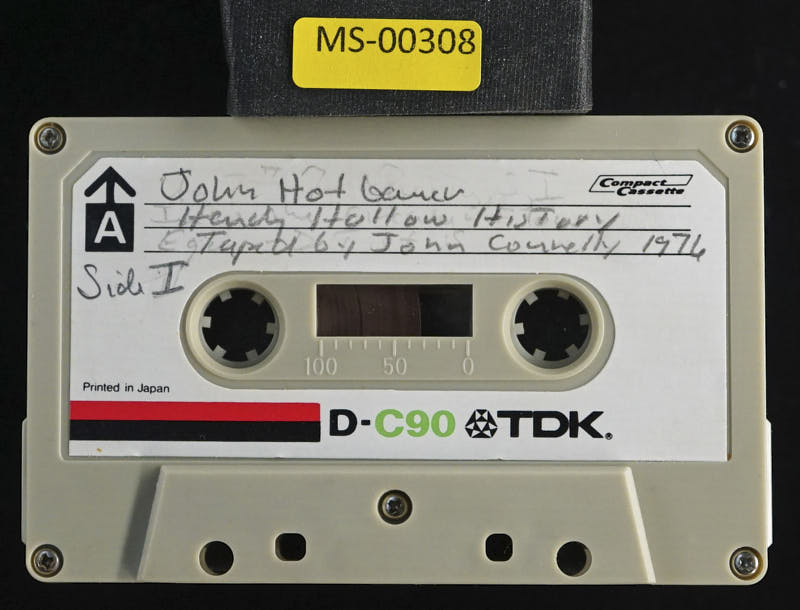
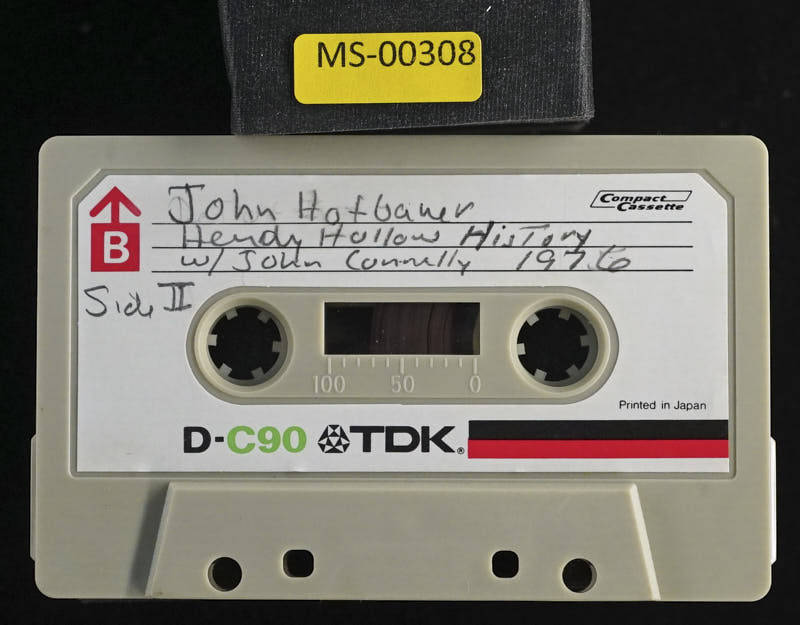
AI Vision - Possible Values from Photos:
Speaker: John Hoffman
Location: Henry Hollow Hitory
Additional text: Taped by John Connelly
@AI-Vision_v002
Okay, tell me about the monastery. The first settler that came in over there was an underground Negro. At Nagel's? He escaped from the south for slavery, and he settled east of the swamp. This is at Nagel's? And the nacre place, that's where the monastery is. And when you plow down in there, you can find these broken up dishes and knives and forts and things. I used to turn them up. Okay, about what year would that have been? Well, that was before 1865. That was when the slavery. And then the settlers began to come in. And I don't know what happened to him. Well, he died, he just moved out. Then the Nagels came up there, and I think they came up there in 1874 or 1878, the year my father was born.
[01:06]
And they cleared the land. About how much did they clear originally? Anybody know? An acre to a time or two acres every year. And they finally cleared it. A hundred acres of tillable soil and a hundred and some acres of forest. Then the Hartmans came down below. That's the place they call St. John's? Yeah, the next place below. How old is that house down there? And all those houses were built in the 70s and the 60s, in 65. And so this is all after the Civil War. And then after that, the Kellers bought it and they took it over. And then they bought the Peterson place over on your side. And that was cleared more or less by the Petersons and on the last end it was taken over by the Rhodes.
[02:17]
She married twice. Then back in the corner Southeast in the corner was the original Neal place. And then they went over on the farm and cleared where you were. And that was the grandfather and the father. And then the grandson, that was Robert. And the granddaughter was Louise. And Pete Munson, the Munsons, bought... That corner down in there, there was a house down in there in the barn. And that's where the Munsons got started. And the boys went for themselves and the old folks died. And the girl went to town and got married. And Pete stayed over there. Well, then in the Depression years, Pete sold out. And Robert Neal bought it back. And you can see where he started to do some work down there. Have you ever been down in there?
[03:17]
where he dug a cellar again and started to lay stones and brick, ginger rocks. And then finally he got sick. Well, the Madigans, they came in here about the same time. Oh, we dare say 1860. Maybe a little earlier in the Nagelstead. Okay. Or a little bit before 1860. Madigans live in the place they call St. James. In the third place down. Yeah. Place down. And the old man's name was Pat. And I forget what his wife's name was, but I remember her. I don't remember Pat. And they were married for ten years before they had any children. And after they had the house built and the barns built and things like that, then they raised a family of three boys and two girls. And...
[04:18]
Pat, he died first, then the mother lived, oh, I dare say, after World War I. I think it got into 1918, 1919, somewhere in there, and she died with a stroke. Well, then the next place down on the end of the road was a Negro moved in there, and he built a little shack in there, and they built... onto this house ever since. And he married a white one. And Charlie Wool, one of the old-timers here, was in here before the Revolutionary War, and he remembers this colored guy, and they had one child. And this child was half white and half black. Down the middle. Don't seem possible. Some people won't believe that if you tell them that. And she was very shy and she died and they buried her across the creek from the house.
[05:27]
There were some apple trees up in there and she's buried in that side. Then the Negro left and the Welshers came in and they farmed it and put more and more addition onto the house. Then the Welshers sold it to Tim Thompson and Sam. They bought the place. And they lived there quite a few years. They lived there until 1912 or 1911. They sold out. And they were great fox owners. And they were farmers. And when they sold, they sold to the Hartmans. And the Hartman stayed there until he died, and they sold out to, I think, in 1936 to the Boasers.
[06:28]
You heard of Boasers, haven't you? Charlie Boas and Bill Boas and all this. This is right at the base of the room. And the Boasers kept it until here recently. They sold it out to Spritz now. That's the way that place changed hands. That's the way that one... And then the Nagels, they built, they were two brothers. The one brother had the western half of the farm, and the other brother had the eastern half of the farm. And the eastern half of the farm was oak land, and the western half was pine. And the pine soil plows easier, and it's easier to work than the oak soil. The oak soil is black on both. And it's hard to plow. And they worked together, and they built that big barn. And then... The big barn... Over, over, where it is now. What they call St. Peter's Barn with the... Yeah.
[07:28]
Then they built another barn where Father Plasch's fruit seller is. That was the sheep barn. How big was that barn? Oh, pretty good size. And that other barn was the cow barn. So... One time, I can't tell you the year, in November, we had a big thundershower. In November? And lightning struck that barn and burned it to the ground. And it was full of grain and hay, clear to the peak, and burned it to the ground. About when was that? Well, that was back in the 18-something. I couldn't tell you. It could have been 1890, 1892, or it could have been a little longer. So they rebuilt this barn again, and the Conkrums were good barn builders. They always got a nice shape to the gamble.
[08:29]
You notice that's got a pretty gamble. Well, we are the ones that put the addition on, on the south side of it. We bought that barn down where Finch was. Ed Dickinson moved away, and his mother died, and the house burnt down. So the barn sat there and my father bought the barns for $300. And we tore it down and built the foundation up there and moved it up there. Well then in 1940, in the 20th of August, lightning hit the barn where Father Plash's fruit seller is. Burnt that out. So in order, it was unhandy to have one barn over here and one barn over there and then thrash out of both barns. You had to move the machine. So we decided we'd buy this Dickerson barn and move it up there and have all the barns together. And then we had places to keep the straw and everything and didn't have to have a straw stack outdoors anymore.
[09:36]
So the Madigan business down there, they, Mike, built that milk house there, that stone house there, you know. And the barn used to set up the lane. Now, when you say the stone house, you mean the... That little small stone milk house. Right behind the house. Yeah, up this way from the house. That was a milk house. Then the barn used to set up there. And when you say milk house, what did they do with that? They had the creamery in there. To separate milk. To store milk in there. Then Mike moved the barn down over across the road where it is now. Yeah. And he built... And then he finally built a saddle, too. Then he built a nice tool shed, and that's gone now, where Hayes put this milk house in there, and the nuns use it now, you know. The nuns use it now. Then... Now, when the monastery bought St. John's and St. James, who did they buy it from?
[10:38]
The monastery bought the... Keller Place off of Ned Surestead, the florist. He lives in Santa Falls. That's St. John's? That's the Red House. And John Harding bought the place off of Mike Madigan and farmed it there two or three years and the monks bought it off of John Harding. How about St. Gertrude's up there on the hill? That was the old Armstead Park. Armstead was the first one to... Old man, Armstead, was the first man more or less in here. And that was before 1865. And he built that hip roof house up there. That house is... That's up there now. It was built before 1865? First he lived in a log cabin. Where was that cabin? Right south of the house. You can still see some remains of it. And he had four boys.
[11:40]
When do you figure he built that house? Charlie was next to the oldest one, and he was six or seven years old, and he remembers the Civil War. And they started to build the house right after the Civil War, 1865. That's how long that house had been up there. The ones with the hip roots. That old man Darmstadt built a big barn and a big tool shed. They had a blacksmith shop in it, and the boys didn't get along. This was right up there on the hill, up by the... Yeah, and they let everything rock down. The barns? There were barns up there. Oh, yeah, they fell down, and the tubes had fell down, and the house was ready to fall down. And John and Charlie inherited the price, but they never got along. One lived upstairs, one lived downstairs. And Jake went to Penny Ann. And he was the engineer in the Glenn Tylee powerhouse.
[12:44]
And they built a streetcar. And the Glenn Tylees run the streetcar from Penny Ann to Branchport. And carted the grapes back and forth. And had passenger service, too. So John went up there and worked one year in the powerhouse. And they wanted to put him in for motor gun on the streetcar. They tried it. They didn't like it. And he stayed one year, and he came back home here on the farm. But they wouldn't do no farming because they didn't get along. So the Glen Tylees were crooks. They sold stocks. And after the business got to going, then they wanted more money. And these farmers didn't have it, and they said, well, we'll buy it. Brought the whole works out. These damn crooks were to go. They bought this place down here. Huh? They bought this place down here. I'm talking about Penny Ann now, the Darkstead boy. I'm talking about the Darkstead family now. So Jake stayed in Penny Ann and raised two children. And Frank was the oldest.
[13:48]
And he married a Snyder girl. And they lived right across from the monastery where some of the mucks stay now. That was the old Snyder boy. You know what I mean now? No, where you say... You know, you know where... They call it the Lochner House. Yeah, they call it the Lochner House. Yeah, okay. And he married one of those girls. And Lucy is still alive yet. Now, that Lochner House, who built that to begin with? The Snyders. The barn the monks tore down. Yeah. Yeah, the Snyders. That was a heck of a big barn. Yeah, I know. And then it went over into the herds. They were related into the Snyders. So Frank Brownett, he worked for the Reynolds down on the lower Maple Avenue on a farm. At the last end, it was called the Brees Farm.
[14:52]
Mamat Brees. He got killed with a bull. And the 1889 flood was, and Sealy Crick came up, And they told him not to go across the creek and get the cows. It was banked full, but he wouldn't listen. He a little bit shined up. And he went across for the boat, and the boat tipped over. And they found him down the mouth of Sealy Creek when the flood was over. So that left Lucy. She was a small girl, and her mother a widow. For she and her mother, they stayed together. And Lucy... after working and worked for bread and butter and took care of her mother, and now she's retired. And she suffered heavy again out of this 72 problem. So all that was left then was Charlie. He was next to the oldest. He never got married. That's Charlie Snyder. And the next one was John. He was the third oldest. He never got married.
[15:53]
And Jake was the youngest. He was the engineer in the dynamo house. for the Glentilees when they were on the streetcar. And he died in the end, and his wife's name was Nora. And she died in the end. She was a redhead. And she had one daughter by the name of Freda and one boy by the name of Earl. Freda is dead and gone, but Earl is still alive. And he was the caretaker of the Cougar College until he retired. How about the... So that was the Darmstadt farm. The first two settlers in here, way back in 1790, were the Dalits. Where did they go? They lived on top of the hill at a house and barn, two barns up there. When you go down to Buckler's and you look up this way... And they were the ones who sold a big share of the land around here to the neighbors.
[17:03]
They bought the land off in the government for three cents an acre. That's all it cost. And Daley had a great big family and he had no education. And he couldn't read or write. But he did work. And one time the newspaper came to the place. And he couldn't tell if it was upside down or right side up. And he looked at it and he says a big storm on the Atlantic Ocean ship upside down. But it wasn't upside down. He had the newspaper upside down. So some of the Daly boys got to be bumps. And some of them turned out good. So this greenhouse down here Butler got is one of the old Daly homesteads. And his name was John. And he died... 834. And the Lochner farm over there where Horning is now was all daily property. And that was bought, I can't tell you for sure.
[18:08]
How old is that place? Oh, all back around 1860-65. And that, I forget who the first owner was there, and then Ferdinand Keller bought it. Well, that's a pretty big barn down there. Yeah. And then the rule took over. It was the Coward Place, and he had one boy and four girls. There was Malia, Annie, Gertie, and Kerry, and one boy. He had five children. He had five children. And they were good farmers. And then my old man got old. I remember when the mother died. And then they had the Lochner came in there. He took over. And he was a good farmer. He took good care of the land. Now, the monks call the house up on top of the hill there. What house on top of the hill? Up where they tore down the barn.
[19:08]
That was the old Schneider farm. They call that the Lochner house. That is no Lochner house. That was the Schneider and the herds. And Lochner owned the house that Old Maynard Heard married a Snyder. And then one of the Darmstadt boys married a Snyder. And the Heards took the place over. And I remember when they lived there. And then they sold out. Now when they sold out, they sold out to a guy in Corning by the name of Lapshear. And he tried to farm it and was a city farmer and he quit. So... He sold it to Gus Nowitz. And the Gus Nowitz place that the monks owned, that is... The place where Wagner lives now. That is the oldest... Let's see. Where Wagner lives now, Bumgardner. That is the old Bumgardner farm.
[20:09]
Otis and his wife settled in there. And... Old Gus married the daughter. And from that time on, it was called an olive farm. And then when he died and the mother died, the mother died with uranic poisoning. And he lived there alone for quite a while, and the boys, and they farmed it. Then when he died, Gus inherited it. And Fritz went for himself. And Aggie lived down here in the hollow. She married a Dickerson. She married a Dickerson's brother, Fritz. And she raised a family of two boys and one girl. So when Gus got an old, he sold his place to the monks, you know. And Gus married a Keller girl, Gertie, Franklin Keller's daughter, as we just talking about.
[21:13]
We're horny, see. Now, how about Peterson? Remember... They came over from Sweden, and they settled over there. Were they the first one to build there? Just about the first ones there, and they were poor, and they had a pretty good-sized family, not too big, and they went to town by a second-handed bag. And it was planted with scarlet fever. That was an awful epidemic through it, and that little Clara, died. She's buried in the corner down there. You know where she is. She was the same age as my father and I think she was 12 or 14 years old when she died. It's on the tombstone. She was born in January and my father was born in March. They were both the same age. I can remember when there was a picket fence around there and it was taken care of.
[22:19]
Then there's so many more places around here. The gardener places over here, the gardens. The gardeners was a big relative ship up here that was plastered with gardens. Then there was the cones. Where were these gardeners? What did they locate? Well, the gate crease place up here, where all of our owns was a gardener place. Then the backside of Gus Knowledge, when you go down, were mold. That was the old Gardner homestead right there. How about the place Squire's own on the corner down there? That was the old original Hypes. They built that, the Hypes. They were one of the first settlers in here, or not really the first, but they were one of the first that was buried up here on the Dutch Hill Summertime. That house is about how old do you figure that one is? Oh, that was way back the same age.
[23:19]
Some of them go back to 50. How old is 18 mean here? Then, the butler place down here was the Ull place. And before the Ulls had it, Gus Fritsch had it. He was a coal dealer in the Heights. And they bought it off of the storms. There was J. Storms and J.C. Storms, and they were two brothers. And I think J.C. Storms built the house in Barnes where Butler is, and J. Storms built the house here where Voorhees has got their house. And that house burnt down. And there's nobody anymore alive that can give you a record of that house. But... Wheeler up here has got the mat. The old atlas. And there's the house and there's the name. Wheeler.
[24:22]
What's his first name? Raymond Wheeler. His wife was a school teacher. And he's the guy that I found out who built that house. And they're buried up in the corner there, where this new house just came up. This way from Bob Butler. And if you go up there, you will find the tombstone. Starnes and Liza. And we called her Aunt Liza. I didn't, but people that was older than I. And if I remember right, they lived, they moved down to the river and lived where Father John's brother owned Old East Cottage. And that was the old stormy place down there. That's right. That's right. Their name is Hans? Yeah.
[25:23]
And her name was Liza. They used to always talk about Aunt Liza. Oh, Aunt Liza. She was a good woman. And they called her Aunt Liza. And I think when they died, they had this plot started up here. And they were brought back up here and were buried. How about Pappy Gillis' place there on... That was originally, they called that the old fisher place. That's where it got the... There could have been somebody there ahead of time. Not too much. See, the places started out small. But the fishers, they were old settlers there too. And the Baumgartners and the Dailers. And the place over there where Shirley was, that is the old daily place too. And his name was Seymour. And he raised one boy, maybe, and maybe a couple of girls.
[26:35]
I don't remember anything of the girl, but I remember the mother. But I don't remember Seymour, his father. And he found it, and he sold it to Jimmy Hunter. And he went to town to work, and he was attorney in the Sloan County Jail. And then he retired. Got a county pension and Social Security. And he built that house. down here, you know where Alvar Daly's boy lives. You know where Paul Tipport lives? Then comes Lou Daly's house, and then comes Alvar over here, the electrician that works for Cali Electric. And the Conquerns had relatives in here. I don't remember their names anymore. And they were buried on the hillside right across the mole. That's all woods now. And I remember a picket fence down in there.
[27:37]
Well, this Wally from New York City was a water road actor. He came up and marries Mae. They're all dead now. There was Mae and Lottie and another girl. She married Phil Smith. I forgot her name. And she married Phil Smith. And Burke Smith, he married a height. And that is Paul Kimport's wife's father, and her mother was a hiker. So this Wally was a radical, and he thought he could farm it, but he didn't. And he plowed up there on that hill, and he took all them tombstones and dragged them over in the fence. And I probably wasn't much over nine, ten years old. I remember these stones, and I forgot about them. They disappeared. I never thought no more of them.
[28:39]
So one night I was over on the Burke Smith place, and I helped the guy sort potatoes in the Depression years. And they were selling for 25 cents a boost, and you couldn't give them. And I came across there with, over that fence, shortcuts, with a gasoline lantern, and I jumped across that fence, and I jumped into these tombstones. And I started to read the names off of them. I thought to myself, where the hell did they come from? Oh, I said to myself, I'm going to ask Charlie Dunstead, that lives up there where St. Churchill is. Yeah, he says, I remember them people, he says, they were related to the conference. He says, I was seven, eight years old, he says, when they died and were buried over there. On that hillside, there's Wally Drake to throw stones in the fence. So, I had that figured out.
[29:42]
Then down below, the Seymour Daily Place, did the Dornses. And the Dornses came in here from Ireland. Oh, down below, where... Yep, where that plate lives now. Where that green light is out there in Aitchi Chines. When you've got the steep hill, that's plate. That's the old Dorn place. All right? He settled in there and cleared that land. He was a small farmer, and I remember him. He sat back in the kitchen stove and smoked his plaque. He got awful old, but the mother died earlier. So he had three daughters and two boys. And Will was the caretaker of the Elmira Arnott art gallery till he died and Johnny was the farmer until he died and then there was nobody left anymore but Mary and eventually she died and they had some cousins came in and they took over on the properties and they sold this place
[30:56]
in a boat, you know, but the land is all grown up in the woods. That was all ploughed clear back over towards the millet farm and the bee wallet farm. And then the bee wallers are old settlers in here, too. And Charlie Rule lived down here where Butler lives. He lived up where that Mrs. Buck lived, where that pond is up there. at one time. They bought that off of the B-Waters. So Charlie Wool had two boys, Henry and Freddie, and the girls all died when they were real small at Pembysites. And his wife was a B-Water, and she was an awful good woman. So John Wool from Scranton was a blacksmith. He bought this place here where Charlie lived, where Butler is, and had a blacksmith shop in there and shot horses and made all kinds of things that farmers needed, door hinges and put on wagon tires.
[32:32]
You know what a blacksmith does. So he sells the place to Charlie Ull. And he went back to Spranton and died. Now old. And Charlie Ull kept the place then until 9, And Freddie was the last one, and he died. And he wrote it to his cousin, Mrs. Guernsey. She was an old one. Her father was a brother to Charlie, and his name was Will. Another brother in Corning, his name was Pete. Another brother lived down in Birmingham, Alabama. His name was Henry. Another brother went west and had never heard anything of it. And another brother drowned in the Susquehanna Creek down here, not too far from here. And what become of the other brothers, I can't tell you. There was 11 or 12 boys in that family.
[33:37]
And they came from Scranton shortly before the Revolutionary War. And they settled over here on this farm over here where Jack Watts is. That is the old, original, old homestead. And Charlie was the oldest one in the family, and he had to work in the coal mines. And they misused them coal miners terribly out there. And he says to his mother, let's go up on the Dychenberg and buy us a farm. He says, let's go up on Dutch Hill and buy us a farm. And they bought this farm over here. And then these boys spread out. There was Fred, too. I forgot Fred. He kept the whole farm over here. How about, you know where Archie Benedict lives? Yeah. What do you know about that place up in there? That there, you've got me over, Carl. I remember who owned that place, whether it was the Pierce's or when it came off of the Roni Fries, where the Redfield place is.
[34:45]
The Redfield place over there has changed hands a good many times. But one of the older... When you say Redfield, that's where Holden was now. That's right across from where you live. Yeah. And Rony Freeze had it the longest. He married a sister, a Charlie Neal. So... And she died. And he sold it. He sold it to the Redfields. And the Redfields... His wife was a Jew. And I think her sister was a Shalansky. She married a Shalansky down here with a greenhouse. They're all related around. He stepped on one toes, he stepped on them all. There were the gardeners and the takerches and let me see, and the bee wallers and
[35:48]
And the Marchmans, they were a pretty big relationship around here. Now, those houses, you know, from Archie's place there, Benedict's across the Neal Road where Burkharts live now. How old is that house? Is that a very old house? Who lives there now? Burkhart lives there now. Burkhart. Over there? Yeah, it's just across the road from it. It sits up on the bank. No, not for me. You know where Archie Benedict is? Right down on the road. Okay, where the big barn sits up on top of the road there. And then you look across Neal Road, there's another little white house that's got a gable roof that's hip just on the edges of it. The bank? Yeah, that sits up in the bank. That was the old Quinnipos. There used to be a big house there, a mammoth house, and a big barn. That's the old Quinnip. The Quinnips and the Arnotts owned all the land in here at one time.
[36:57]
And when these farmers bought this land around here, they bought it off of the Quinnipses and the Arnotts. And the Quinnipses didn't have too much money, but they gambled with Arnotts. And Arnotts lost in a gamble. And he forked over a lot of land to get out of the hole. That's how that happened. And the Arnott's is the ones that built Railroad Avenue in Elmar before the railroad was elevated. Now, you know, moving on up Handy Hollow Road, you know where Wilson lives now in the stone place there with a red trim on it? Used to be old Tony Eeks. You mean all these houses that's built right there below the Eeks place? Well, Eakes, you know where old Mrs. Eakes lived there? Yeah. And then there's the house just towards town from that. On the same side of the road used to be Tony Eakes, I guess.
[37:58]
That's a Madigan property. He sold that to the Baldwins. And the Baldwin built that house. Okay. Now, that's the Baldwin place. And all these other houses right there, they didn't mean a thing. That was all Gwinnip property. And at one time, a fellow by the name of Henry Schmidt owned that. The Gwynnipsets built the house in the barn, and Schmidt bought it. His name was Henry Schmidt. He was a sawmill man. And his sawmill used to sit down in there where Howard Baldwin built the house over across from these right along the bank there. You know the house sits down in there by the creek. Yeah. And that used to be the Howard Baldwin place. He built that in 1921, 22. And that's where the sawmill was. And you know where the sawmill is now? It's over here with Todd Schmidt. He saws no longer with it today yet. That mill, I remember, for 50 or 60 years is still going.
[39:03]
Now, let's see. Once you... Could you talk about the Fix Hollow a little bit? The what? Well, you know, the history of your farm down there on the river, where that started from. Well, that place originally was feared. And built by the Eastons in 1865. Easton is first. And they built that little red house there. Right. And then Pickering built the kitchen up to it this way. Right. That was the site. That was in 1865. And they kept it until they died out and the wolves got in there. Okay, about when would that be? They had a sawmill here, a great big sawmill here in the house. And one of them was a game warden.
[40:06]
And they got into that. That's right, the left one. Then, after the wolves got into it, the Mondays or the Ways had something to do with it. And then there's a fellow lived there by the name of Jerry Tranchell. And he was married to an Indian woman. His wife was an Indian. And he lived his life out there. Then Pickering's sisters, or sister, bought the place in 1899 or somewhere in there. And in 1901, Pick was established there. Okay, now his sisters bought... Huh? Why did they buy that place up there? His sisters? Yeah. Oh, well, he couldn't handle alcohol. He was a boozer. Yeah, well, in a way, he had a college education, though. Picked it. And college education in those days was scarce.
[41:08]
And he worked for Barker, Rose, and Clinton in the wintertime. In the summertime, he'd come to the farm and raise berries and caught eels in the fall. In the winter, he'd go to Barker's and be shipping clerk down there. The Barker, Rose, and Clinton. Oh, he kept the place till 1934. He had it all that time. When I was picked, the guy, you said they had the thing wrong with his throat? Yeah, he's the one trying to commit suicide, yeah. Then? Then, uh... Did you know him very well? Oh, yes. You must have been a kid. I know. I was just a kid. He used to go down and get his boats, and he'd let us ride boat and canoe. He was a good fellow to the kids. He was a hell of a good guy. Was he married to anybody, or did he live there all by himself? At one time, he was married long enough that he had a boy and a daughter. And he had one brother in New York City who was a jeweler. He was a prickling, too. And his grandfather...
[42:11]
His father was sheriff of Chemung County and picked himself, was born in the county jail. They were politicians. And his uncle, or grand-uncle, was a colonel pickering in the Revolutionary War and fought with Washington. That's in the history book, if you get that in the history book. So, when Pick died in 1934, then his daughter lived there for quite a few years. Then she moves out, and the place deteriorates. And there was a mortgage against it then, and taxes in Delbert Rochelle. Delbert Rochelle bought the place, and he kept the place. for quite a few years, and he sold it to us guys in 1939. That's the way the pick went.
[43:15]
I was trying to think about what you told me about pick before. He operated a ferry there, is that right? That's right. What kind of a ferry was it? A raft? I never seen it. My father saw it. I was too small. That was back in 1914. 1915, I didn't get around until about 1819. Then I started traveling out. And the cables is around there yet. Yeah, they're around the tree. And some of the cables are down in Far Ackerway. And I imagine it was just a flat boat. And he brought my father across in the ferry in 1915. I remember that well. Now, when they didn't have the ferry there. Apparently they didn't run the ferry very long. Not too long. And when they didn't have it before they had it. How did they get in and out of there? Easy. The road at that time went over the hill of the big flats.
[44:19]
Along the woods. It's still there yet. Over the? And it came down between Pickering's house and the barn. That's a legal highway at that time. Right down through the valley? Right down the valley off of the creek. On the north side, they had bridges up there, and came down between, and Swan and Kerry and the Seymours all came down, and the Storms all came down this way. They went between Pickery House and Bar. Then they went by the willow tree that tipped over and went down in an incline there where the rifts are that were shallow. Mm-hmm. And there they went across the rifts and went down to the point of Sing Sing Creek and came up along the creek, and that was the legal highway worked by the town of the Big Flats. On which side of the creek? This side. West side. And when the streetcar came through in 1912 or 11, everybody got rid of their horses and their wagons.
[45:28]
And they'd go across the river with the boat and take the streetcar and ride the Alvaro for a nickel. And ride the Alvaro back for a nickel. Didn't pay to keep horses. That's where abandoned that road over there. Now, starting from Pickering's place, going up the river, that next place that was in the gully that burned down there, what was the name of that again? Where the pump is? Oh, that was the Uno Cottage. Uno, and that's where the cat kicked over the... Yeah, that there, that land belonged to Pickering, I guess, and he let somebody build a cottage there. Then the next place was down over the bank was the Dowling. Dowling, and that's the one... He let him have that land, whether he had a right to or not, but he did. Then when you go across the creek was the Castelline. Now, that's the old, what they call the old log cutters shed. The old what? Log cutters cabin or something like that. The log cutters were there in 34, 35, yeah.
[46:29]
Log cutters were there. But that was Pickering that owned that place there. He didn't own the Castelline place. Or Castelline. No, no, no. Castelline's always owned that. Okay. Did they live there or was it just a cottage? They used to live there. They lived right there. Yeah, it was quite a cottage. I remember that one. It was pretty good shape. Then they went from there up and come to the Storms or the roadie places. Storms are the first one to build that? Storms were the first ones at the Rhodey's Place? Yeah, they were the first. That was a little bit of a shackle house, too, and they kept building out. And then Rochelle made it beautiful. You need a beautiful place out. And then, going up there, you know, there's a big gully. Yeah, there used to be a bridge growing there. And Brother John's brother's building right next to the gully. I see. There, there is where... And there is a cable. It goes across? Yeah, it used to break wood across there. That's all that was. That wasn't a bridge.
[47:32]
And then, going up there, you know, there's a big gullet. Yeah, there used to be a bridge crossing there. Brother John's brother built right next to the gullet. I see. There, there is what's... And there is a cable that goes across? Yeah, it used to break wood across there. That's all that was? That wasn't a bridge? That's all. Rochelle put that up, put dragged rocks across. And she brought that all on a tax sale and then rolled it back. And then comes the Seymour's. There was one or two or three cottages in there. I think there are two, as I recall. There are two little stone foundations. Then came the Cary place. Now, tell me all about Cary. Well, Cary... He was an umbrella hospital man in Elmire. He had a sign out, umbrella hospital, and he fixed umbrellas. And that's the way he made his living. Now, did he live up the river at that time?
[48:32]
Uh-uh, uh-uh, lived in town. Then when he got old and couldn't work anymore, he came up here and retired on that place and bought that little place. It was cheap, and he lived there. And he got sick in 1939. The first year of Deerce's, I remember when he got sick, and they took him out, I think in January or sometime, took him to the hospital, and he had kidney trouble, and he died. So Swan paid the taxes on the place. Well, they weren't very far apart where the Swan and Terry places were. There wasn't much there. Of course, it looks wild now, but it was better then. And then Swan, he came in. Swan was a booster too, wasn't he? Now, up above the swan place, I forget who had that before he had it. I've probably heard him say he came in there, oh, 1900 and something, 8, 9, 10, or something like that. And his sisters put him up there to get him away.
[49:35]
He was a very talented carpenter, a fine carpenter, and his sisters got him out. One of them's name was Mrs. Sweppy, and she just died here a while ago. And another sister, she was very nice. The girls was awful nice. And his father, Swan's father, was a contractor in Elmire. And he built the city hall in Elmire. That was his work. And he was a well-to-do man. And he left him just so much a month up there. And the sisters took care of all the rest. So he was moved in there in 1910 or something. Oh, could be 1908, 1910. The streetcar was still running. When did the streetcar quit running? In 1929. It was put up in 1911 and stopped in 1929. And that was a Corning, Painted Post, Corning Waverly streetcar. Now, Swan, you knew Swan pretty well.
[50:39]
Oh yeah, I knew him real well. He built a lot of boats and stuff. Oh, yeah. He was a good carpenter. I tell you, he could do fine work. What did he do with himself up there? Did he just sit around and read? He was well-educated. Did he farm that up in there? Yeah, he used to have peaches up there and asparagus spread in the garden and stuff. Then after he got up towards the 80s, he stopped all that. He didn't do that. Did he trap? Did he trap up in there? Yeah, great fisherman and great trapper he was at this time. You like trapping, you like fishing. Let's see, you said he died in what, 49? 1949 in July, in August. You took him out, didn't he? We took him out. He came down and stayed with us. The front was in 46.
[51:40]
He lived one year more up there in 47, and then he came down in 40. I think we took him out in 48. That's when we took him out, yeah. He came down and lived with you. I didn't live down. He lived with Teddy that lived down there. Teddy? Spring. And he stayed there. He come there in March in the spring. And he stayed there until the 4th of July. We took him out on the 4th of July and took him to the hospital. And we were down there a couple of weeks and then they took him to Breesport. And in Breesport, he died in August. And when he died in August, he was buried out of the Barrett Civil Home. And all he had left was about $600. And Barrett took it all. He was a very intelligent man.
[52:41]
But he was a little bit on the cranky side. Was there anybody that you know lived on that side of the river there above Sloan's place? No more. I don't remember. Any more cottages up there. No place to put them. Right next to the river. No. And no solid, no foundation, no nothing. No. Now, let's see. Going down there, huh? Going down there from your place, there wasn't any other place down there until you got down to... Until you got down to Far Rock. That was the first one up there. What Phil had, Mertz or whatever his name was. All those cottages in Far Rock away was well kept and beautiful places. And finally, the cheaper class got in there, and the 46th Flood took quite a few of them out. And the 72 took more. Yeah.
[53:47]
And at 46 foot, did your place get underwater in that 46 foot? He got about four feet in the house. Inside the house. He got into the roadie cottage, too. Yeah. About four or four and a half feet. And he got into the roadie cottage, too. And it was, oh, probably, well, four seats. Three and a half, four seats deep in there. And the 1889 cottage never got into a roadie cottage at all. But he got into the Pickering Cottage about that deep. But there was four foot of water in the cottage in the 46th floor. What's that? There was four foot of water in there. Oh, yeah, about that up the roadie. Must have made a heck of a mess then, didn't it? Yes, it did, but not so bad. Did you clean it out? Well, I just washed it out. It wasn't too bad. It took a couple, two, three days. And the 1889 was about like that.
[54:51]
And I found all the holes where they cut holes in the corners in the rooms and swept them down through the mud down. Yep, up and down through the mud. Wrecked it out. They're easy to wash out if you catch them before the river goes down too far. Then you can swish. There's never nobody there. That's a hell of it. If you get in there when the water's about that peak, the river starts going before you swish them, the water takes the mud with it and carries it out again. Did you know Professor Stevens at all? Oh, yeah. He went real well and knew his daughters, too. Uh-huh. How did you get to know him? Well, in the Depression years, and the beginning of the war, and all through the 40s and 50s, I used to go down here every Sunday, down to the river. Oh, yeah.
[55:52]
And I'd go up to Rody Cottage, and I'd like the girls would come over, and Professor Stevens would come over, and He'd done quite a little fishing, and I knew him real well. I knew his wife, too. Then they'd come up in the wintertime and skate. On the river? On the coves. The last time the river froze over was in 1942. It froze over in the fall, the ice got three feet thick. And on the 1st of February, it went out. And in the middle of February, it was back again, crazy thick. And the river never freezes over twice, I think, but it did that through. And that was the last time there ever was any more ice in the Shemong River. The Shemong River never froze over anymore since. Whether it's the sewage or what happened, I don't know.
[56:54]
Never froze over anymore. And they used to, everybody used to have ice houses down there, carnites. On the river? In the river. Keep there, there was an ice house on the picnic place, too. In fact, like sawdust. Yeah, in fact, the sawdust, though. Everybody put ice in. And down here, at the mouth of this Berry Bridge, was a big ice house. Commercial. Shell's. Nell's Ice House. You need to put ice in there. The farmers would go down in the summer. In the winter, I mean, and make a little money up in ice. Then down on Chemung Street, down around below Roy Strand, was another big ice house. And they cut ice out a little too. And after 42, couldn't buy any more ice. The world didn't break it. I can remember when the skaters would come from Corning and skate, grew up on the streetcar and skate from Corning to Elmira for sports.
[58:05]
No worries, that's gone too. See how things change, you know. When, you said that deer hunting started in 1939? 1939 was the first deer. When was it? before that, that they allowed hunting? No. Did you say that one time that you, that some people came into that howl over there were dogs and shot the last deer out of there or something? That there was before the laws of the past. That was back in the wolves, when they were over the big green woods. And they had dogs. And that was back in the 18, 1890, 95. And, uh, They came up to the Darkstitch farm. And they went down there and hunted. And had dogs and run the last deer challenge. And that was the end of the deer. And nobody saw any deer again? And no more deer came back until 1921. And they came back out of the Andorondack Mouth.
[59:09]
And then they mauled it quite fast. And they were so tame and so bold. When did you remember seeing your first deer? In 1921. in august we hear all of them off of the cockley talking back in the house right up on the hill yeah and my father had it put in the paper that was a big curiosity and in 1939 they were so thick around here that they were different than they are now and boy what beautiful racks and horns bucks that were six, seven, eight, nine years old they had racks on 24 points Right, big spreads. You used to hunt deer yourself, didn't you? Years ago, yeah. Did you hunt the first when they started? I hunted the first year. I hunted deer up to 19... 50 or 51. What did everybody hunt with that then?
[60:12]
Did they have rifles? All shotguns. It was all shotguns. There never was a rifle allowed, no. The last deer hunting I found was in 1951 in the fall of the year. What was the biggest deer you ever shot up here? Oh gosh, I couldn't tell you that no more. Can't remember. I had some beautiful horns. I remember a pretty big rack down in your place down there. Did you shoot that deer? I had that down here on this other house there. You shot that deer? Yeah, and then I shot that deer. Then I gave racks away to people in New York City. that wanted it. Mary had some beautiful rats, I'll tell you that. Yep. And those deer tasted different, and they were better than the deer we got now, and they were bigger and nicer, and they had different habits and different runways. They were all together different. They weren't as hard to get as they are now.
[61:14]
They're easier to hunt. Easier to hunt? Oh, yeah. They're a lot easier to hunt. Well, I guess they've got new to be hunting. Oh, yeah. They're wild. They're foxy. There used to be a lot of quail around here, too. When the rail fences were, we had an enormous amount of quails around here. That was sport, to hunt quail. And then when the farmers begin to clean the hedgerows and begin to take the real fences down, then Aquarius died out. Then we used to have a lot of ongoing infestations here. But they didn't come here by themselves. They were raised by the farmers. I know one farmer around here. He used to get 100 to 150 chicks. And they were brought to him by the conservation. And all summer long, they'd stay there, and nights they'd used up in the crab, not to play.
[62:17]
That tree was just covered there. Then when the fall comes, they're all dissipated. They scattered around here and made good fessants, huh? Good hunting. Now nobody raises them anymore. About the only place that I see fessants once in a while, it's over the monastery. Yeah, they're stuck. Nobody bothers them too much. They're stuck in there. What were they again? What kind of... Hungarian fascists. Particists. Particists. They were a little bird. Then back in 1890, they timbered off all the timber over there. And when you go down the roads in the monastery, there's a snow on them.
[63:21]
You can still see the skidmerds they had over there, them street stuff. That's where they put sewer and poured water on. And then they pull the logs to the top and give them a push and they go themselves down to the creek on the sawmill. And at one time there was nine source piles up that creek where they cut timber. Then the Nagels had a hundred acres. And a money man, an oil man from Texas came up there and wanted to invest in land. And he bought a hundred acres off of it. And that was beautiful of pine timber out there. But he paid out more in taxes than what he got for the price of the timber. You know, timber was cheap. And if he'd been alive and kept it till now, or he made a fortune. So his name was George Calvin.
[64:21]
And he came up from Texas once and made us a visit over there on the farm. And he wanted to sell us that land down in there. We wasn't interested. After Wheaton took a million borger feet of timber off of there. And after Wheaton took the timber off, what good was it? But Father Burns, when they brought the monastery, he wanted to get it back. the property, and he bought it. But I know he paid more for it, but he asked us. How about the Steggy place? The Steggy place? The Steggy's, they cleared that place. There was two places over there, the Hullets place and the Steggy. Neither one of them is standing now, is there? Well, the Hullets' house is drawn, that burnt down in 1917. The barn fell down. I remember that. I used to play in it.
[65:25]
And the old staggy house down there crumbled down. And the two big barns first announced that. And the staggies came in there. Oh, way back in the 1880s. And she was a widow. And she had 14 children. 14. And she had lots of boys. And she bought that barn. And, uh... Made it both. And they always had the best thrice in the two. They were workers. All of them but three was in centers. They were wrong in their minds. And the three managed. And then they bought the Hollis farm to it. And I think they owned around 400 acres. And the nymphs farm was on this other side in there. The nymphs was old settlers up there, too. They settled up there.
[66:26]
You know where the nymphs farm is, where you're in back at Kennedy's. It's up that road. It's blocked off. And there's nothing up there but a foundation up there now. Oh, I thought that was the sticky place. Oh, no, no, no. That's the nymphs place. That's the nymphs. Well, where is the sticky place then? off this way towards the north part there, and down below. The stagy, the mince road comes out where the Kennedy's flower is, flowers. Then you go quite a ways, and then goes the road back up in there for the stagy farm. So they're quite a ways apart, the two farms. So you can still see the remains of the foundation? Oh yeah, you can see the remains of the foundation of the house, And you can see where the stagy barns were. They were beautiful barns, big barns. And then you can see the foundation of the Hollis Place. That cellar was built like a red cross, like this, square.
[67:33]
And hermits say he lived there, and he was too bright. And his brother Otto wasn't any brighter, and the rest of them weren't any brighter. And another one, and one girl. They were all right. And as long as August was alive, everything went, August died, everything went to hell. So, Herman lived up on the Hollett's place. And he brought a big flash fire in the throat one morning, and the chimney went into it, and I guess he went out to buy him new chores. When he came back, the thing was up in smoke. We've gone too far. I remember that fire real well. Yes, sir. That was back in 1914, 1915 when that Hollitz house broke down. And I remember a little of the old Hollitzes. They were an old couple.
[68:36]
And the Nimses, they had a family of around 14 children. And some of the boys, some of the children are still alive in Elmire. And Taline was my schoolteacher. And she's still alive. And she lives up on the Bentley farm, if I remember right. She married a Bentley. Where did you go to school when you lived up there? Down here on district number 14. Right, at the foot of Leech Hill? That's where Salbego lives. Is that the schoolhouse there? Yeah, where he lives, Bob Butler. That's District 14, and this was District Robin. And the one down the aisle was District 12. They all went in districts. And this one up on the hill here, I forget what district that was. So you were in the one right by Leach Hill? Is that the one you went to? That was District 12. And you went to District... And I went to District 14.
[69:39]
Which was... Yeah, the one down on the leech here is still there, and the one down here is still there. I guess I don't know where that one is. Above Bob Butler's. You know where Bob Butler is? Yeah. That building up there, that school. You mean that White House up there? Sure, sure. That was the schoolhouse. No, I didn't know that. Yeah, hell yeah, that's where I went to school. And that land was donated by the huts. They were the first settlers. And when Fisher bought the place... How many grades did you go to? How many grades did they have up there? Eight. And from there, the kids went to high school. Did you go to high school down at home? No, they had to walk. Those days, there were no buses. Anybody that went to high school, they hitchhiked a ride, and they hitchhiked a ride home. How did they... Where was the high school? On Elmari? Southside. Southside. Yeah, Southside. Yeah. Then the Hatches donated that land, and when the fishers bought the farm, the schoolhouse was there.
[70:50]
When Gillis bought the farm, the schoolhouse was abandoned. So this Salbego comes up there and buys his schoolhouse. He didn't know what the hell he was doing. Gillis thought he owed it. Well, I guess you know it went back to the Hatches quicker. And Paul Kiphor's wife down there, she's a high. And Paul is pretty shrewd. I guess you know, they went to work. And they bought something that they didn't own. I guess you know, they had to come across with a lot of money before they got full possession and got a beat to that schoolhouse. This schoolhouse down here comes off of the Gardner property. Where my brother lives, that's a gardener farm. And old Dan Gardner built that farm. That was a hotel.
[71:50]
Where my brother lives down there, that's a hotel. They sold wine, beer, whiskey, and cigars and tobacco there. That was a hotel. And he go there. Why would they have a hotel way up here? I don't know. It was used. Then they went at it and gave that land to the school down here in the corner. When my brother bought that farm, he was smart. He had that straightened up in the deed. If that schoolhouse was ever abandoned, the land was his. And nobody was by the schoolhouse because they had no way to get in, they had no way to get out, and they couldn't take it off of the foundations. So he was the first bidder and the last bidder in the schoolhouse. That works. Well, that's his now, isn't it? Yep. So, this guy paid twice for this schoolhouse down here. He took number 11 down here. That guy's really smart.
[72:51]
He paid an hour of the price, too. $1,500, $1,800, I think. Well, he doesn't use it for anything. Yeah, he keeps tractors in there. Oh, yeah, just to the garage. Yeah. That guy's the guy that owns the little greenhouse up there, isn't he? Yep. And I'll tell you, a lot of people got in trouble buying these schoolhouses. They didn't know that when these people donated this land, there was no lease, no nothing. They just let them use it. One of them schoolhouses where the bandit was burnt down, wasn't dug back. That was their land, you know. They bought it and they paid for it. And it was on the deed, you know. What do you know about this place right here? This here is the old coon place. There were two coons up here.
[73:53]
They weren't related. This place over here were that old elaborated house sets up above Jack Watts, the old part. There was also a fissure place up here, but there were no relation to the fissures over here. And this place down here was the old rosary. And this has always been the bower place down here. And there was a Catholic church here. And that Catholic church sat right up on the low, close to the road where that pond is. And the lumber in that Catholic church was taken out by the oolves And that red barn that Butler got down there is the lumber out of the Catholic Church from Dutch Hill. All the pictures and statues and everything went to St. John's Church in Elmira on Corner Lake and Cyprus. And they burned up on the fire.
[74:54]
Not too much. Some of them. Some of them they changed and gave away. And all those beautiful stations that they had down there came out of the church too. All the ones to something like that. Well, it was really warm now. And it comes out there and I don't know what the hell happened. Nighty was up there, that's where he's right in there. Yeah, it was just pretty warm. I'm going to open the door up. Down the hill here, down Clark Hollow, I guess it is, right in front of your brother's place. As you come up the hill, there's an old shack. Oh, that don't mean a damn thing. That don't mean. Brother Dan said that thing was just put there in 1951, so his brother would live there. That place below my brother is the old Duttenhaver. And the Duttenhavers has got their names in the history books.
[75:55]
They were the first settlers on Dutch Hill. And I knew Jake Duttenhaver just like I know you, and I knew his boy and his daughter. And his father is buried over on the Dutch Hill Cemetery here, and he sent me up there once to straighten up the tombstone. And Jake got to be 96 years old before he died. He kept it off by himself, he died. But that little place on the side of the hill was just recent then? That there was built in 1950. And who lived there? Father by the name of Kenny Jackson. Earl Jackson bought the Dutonhaver Place. The Dutonhaver Place stayed in their hands up to the third generation. And then Carl sold it to Jackson. And Jackson had his brother. He wasn't too bright.
[76:57]
He was right for me. He let them build that little shack down there and they lived in there. That don't mean a bad man. And when you get down... To where Voorhees built the place on the left-hand side, that is the Hamburg Molders. That's the Molders. They were the first settlers there. And then Will Kekertz's father and his wife lived there with Robert. And Robert was an eccentric. He was not very bright. Then they sold it to a party by the name of Ward. John Ward. And they run the Ward's Foundry. You know, ever hear of the Ward's Foundry? No. And they kept it. And then they sold it to somebody else that was a barber. And I went down and had my hair part. And then they sold it to a bunch of people.
[78:00]
There was nice people. Their name was Miller. Brian Miller. And his wife. And he had two daughters, and they were single, they were home. And one of them married Edmund Daly, from the first settlers here. That was the fourth generation. And the other one married a Kutrek. And the other one was the youngest one. She came late in life. She married a father named Evans. He is a welder up in the... That's right, there's aircraft. Oh, that's the way that's history goes. Then you go up the hour. Now, you know where Squires is there? Yeah. And then there's a place that was owned by the brothers. That was dope there. That don't mean a damn thing. That all was heights. That was all heights property.
[79:04]
After old man tech bought the high place. He had a son, and his son wanted a house, and they moved an old barn up there to make a house up. Well, that isn't made out of stone, then. This is stucco or something. The house itself is stoned down here, the old house. The new house is stucco. And they were made bricklayers and plastered. As you go on up, you know, till you get to Cleveland Hall. Yeah. And you look up Cleveland Hollow, there's a big old place that looks like it's made out of the same kind of construction as... Old? Yeah, it looks like... That, that was the old Petzl place. Petzl? Yeah. They're buried, they're buried where, where, where Danny Squires lives. There's a crucifix. I wrote a crucifix on the knoll there in the cemetery. And when you run up, they have a little farther... where that Mobile Hole was in there now, that was the old Cleveland boys.
[80:05]
That's all Roddicktown was called. That's all Roddicktown. That was the Cleveland boys. That's why they called Cleveland Hill Road. Then you went on through where Drake lives, you know, that is a Petzl place. Those two boys are alive yet. That was a Petzl place. Then you went on through And you came to the Wheeler place where Elston lives. Who owned the Wheeler place? Most likely they settled there. Because I remember Raymond Wheeler's father real well. That was back in the teens. And they lived there then. So no doubt Raymond Wheeler's father built that place and Raymond's there until he sold it to Bob Elston. Then you come up up the road this way, where that old Sal is and them two barns, that was all one farm.
[81:07]
Toby lives in there. That was the old Joe Kern farm. Who built that before the Kerns did, I couldn't tell you. That big stone house there in Cleveland Hill, that Petzl, I think he said it was. How old would that one be? Is that a real old... It was right back to the Hype House. 1860s or before, 1850s. Who owns that now, do you know? Chapman. Chapman. I don't know him. Do you know anything about him? Oh, sure. His wife was with their factory here in Elmire. They called her Kirch's. Kirch's Furniture Factory. They're a lot of new, eh, Elmire? Well, she comes from a real well-to-do planet. And that Chapman, he marries her, they've ripped up their house since 1950... Oh, 54, 65, something like that.
[82:12]
And that other little white house right across there in the corner, that was built in 1933, 34. Henry built that. That's a new spring house. That's a new new spring. Remember you said there were some people that died of, I don't know, a plague or something, that were buried somewhere on the foot of Neal Road someplace? Where were they buried? Oh, down here in the Angie Creek? Yeah. Oh, yeah. Well, where is that that they were buried, you know? Police Chief Wienwer's grandfather came in here and dug all these cellars here with horses. Now you don't remember Priest Chief Wheeler. Now why Priest Chief Wheeler? You don't remember him. His grandfather dug the cellar for the natal farm, dug the cellar for the next farm, and dug the cellar for the Madigan farm.
[83:19]
This is his business with Deacon Suggs. And John Dickinson that lives there were Finchlands. Now, he was a well-breaker. He dug all these dug wells around here and stole them out for water. All right. When Chief Weaver's grandfather died, they had the smallpox in here, and they called them pests. So they buried Chief Police Weaver's grandfather Well, the more he just got their house, a bank worked down like this. Then there's the crypt. And they buried him in there on the second bank. And they buried the two pests alongside. And John Dickerson was a Civil War soldier. Now, they laid in that house. Where did... Which house did they die in? The one where old warriors lived?
[84:20]
We don't know where they died. I don't know where Chief Priest Weaver's grandfather died. I don't know where the press died. But John Dickerson buried them. And he was a roughshod character. He was a soldier in the Civil War. The dog was drunk. He said, I'll bury him. He took him off the dirt. He buried John Dallard, the grandfather Weaver first. Then later came these pests along, and he dug another grave and another grave. And that's unmarked. I wouldn't even know what was there if it wasn't for Charlie Owe remembering it. And when Charlie Owe came in here from Scranton with his mother, the father is buried up here on the Dutch Hill Cemetery, and I think she was buried in 1865. on the tombstone. So she was a widow.
[85:21]
And they came up here, and he was 12 or 14 years old when they came up here. And he worked in a coal mine until he was 12 years old. Then people were poor. And he was the breadwinner up here. And he took action and a stone bow and hauled wood to the barracks on Water Street. where they had the son and soldiers there for prisoners. And he said they died like rats. Again, they wasn't set proper, they wasn't used to this cold climate, and to a certain extent, they were misused and weren't treated by it. I tried these old times with Carl Bigfield. When I raised him, I remember him too. And I've got the pictures of the Civil War barracks down here on Water Street. You got pictures of that?
[86:24]
Yes, sir. And I've got the pictures of the mountain house over here where that cross is up on the hill that the Frenchman put up. When you go from the restricted bridge up the river, you see that cross? Tell me about that cross. Tell me about everything you know about that cross. Right, right, right in the corner. Where the streetcar came around in the corner. Now, was that underneath the bridge? You know where the creek comes down through there? The creek comes down through there. And there's a bridge there. And on the other side the creek was the mountain house. And that mountain house was there before the streetcar went through. And if you want to dig around up there, you can find a damn lot of scoutings where they've rolled him and knocked him in the head and buried him. That was a tough old boy, I'll tell you. That was a tough place, and finally it worked down. For the Frenchman, the Frenchman, he came in here, oh, probably in 1860, 1870.
[87:30]
Now, which side of Route 17 was this house on? On the right-hand side, where you go towards Corley. Okay, it was up on the bank then. Up on the bank there, yeah. Did it set up and back? Was it to the north of the streetcar track? I imagine it was a little on the northeast corner there. I can't tell you. You can go up in there. I think you can find the foundation here. So the Frenchman, he came over from France. Does everybody remember what his name was? There was no lantern around there, and he goes into New York City. And he couldn't talk English. And he boards the train for up here. When they got in Elmira, the conductor hired Elmira, Elmira. He understood Elmira, Elmira. And he gets off. And gets acquainted around here and settles down in that corner.
[88:34]
And he was a truck partner. Do you remember what his name was? Jean Berthaudt. Berthaudt. You heard of Paul Berthaudt, haven't you, the house mover? And she's born. Jean, Jean Berthaudt. He was the guy that they called the Frenchman? He's the guy they called the Frenchman. Okay, now, how about the cross? How did... Well, I'll tell you all about that. Then, he and I took that island, put me fine. The river didn't come up then like it did now. The war sure became the hell, because there was woods. And he was a successful truck driver, and he got to be Waldo. Waldo, he took pay, and he raised a family of 12 or 14 children. The biggest sheriff turned out to be bums. Trash. He had one boy who was a cripple. He worked for the laundry here. I think it was a K&C laundry in Elmira, and he walked to it for it. He couldn't ever straighten up. And, uh...
[89:36]
Well, the Frenchman, he would refute. Well, that little point right there, where you drive up from Route 17, you look up there, you think that's a lot of ways up there. Well, I've walked up there. You go to that point, and it don't take you three minutes, and you're up there. Now, there's a little cliff up there, and he goes at it and puts that white cross there. And somebody got the story going around. What year would you figure that was? Oh, probably back in the 1800s. And somebody, late, maybe 1900, and somebody got the story going around that an Indian maiden jumped off of there to commit suicide and death before the white man was trying to force her for sex relations. It's just a story. Well, Virginia Dare is the same story in Hammond's Point. Same damn story.
[90:37]
You've seen the wine bottles with a woman on to it, a pretty girl. They call her Virginia Dare. I just said there was a miraculous story. So, he always kept his cross up there, always kept it painted, kept it repaired. And there was a curiosity. People from all over the world has traveled here, talk about that cross. Want to know what the mystery is. So, Paul... He's a contractor. He keeps it up now. And it's still painted up there and still neat and fair. That's your prostate, though. Nobody knows why he put it up there. Just for the hell. Because it looks good. It looks nice. It's very awesome, that's all. That's good. Because I've heard that rumor from... That... legend about the Indians in several different regions and several different people. So when you go, when you go over on Leach Hill, where the schoolhouse is down there.
[91:43]
Yeah, what do you know about that Leach Hill up there? All right, no plenty about it. The Thomassons were the first settlers up in there, and the Hungryfords. They owned the house first. And one of the Hungryfords was by tenant in Elmire. And he's an old man, and he's still alive. And he told me a lot about the Hungerford. The Hungerford settled up there. That was his grandmother. And you go up in back of that house and you find the Hungerford Cemetery up there. Or the Tombstones. Where they were buried. Which place is the Hungerford's? The last one up where Jimmy Walker was. The last one. The last one up. Where the barn is turning down, and there was a kind of a swamp there, and that swamp runs down over the rocks. You can take that and go down the far right away.
[92:45]
Now, where is the cemetery in relationship to that? Right in back of the house, southwest. Right back in there. Now, what's the place right below? That was the Thomas. And then there was the leech place. They were the old settlers. Where is the leech place? Well, quite a ways down. Third place down. Then, after that, everybody got stickin' in. Buildin' here, buildin' there. Now, there is a place up there that's abandoned. That's the leech place. Down towards the bottom. An old abandoned house and barns that's up there. Yeah. So that is the least person. That's the old Kenny Rick Jones out there today. He's alive. And they never learn anything about it.
[94:14]
On the other hand, we continue in probably the place where we should start teaching. Because there's going to be one quarter of people going to finish high school, and half of them are going to go to college and accommodate them to take up the wrong side of the world. In order to pass a ballot and pick an election and do it with any sense, you have to do something about it. Meanwhile, we continue to teach people what went on down in Mexico, down in the Isle, river, river, civilization, and teaching about river, philosophy, and so forth. I learned how to speak in Latin and German when I was in high school. I can just remember a little bit of how to help now, both of you. Now, if you learn a damn thing about it, I can't remember. But you have had me used a lot. Too bad. But since the public is in that condition of ignorance, .
[95:27]
@Transcribed_UNK
@Text_v005
@Score_89.3