You are currently logged-out. You can log-in or create an account to save favorites and more. more info
Divine Love and Self-Transformation
AI Suggested Keywords:
The talk explores the transformative power of seeing oneself through the lens of divine love, focusing on biblical imagery and teachings. It highlights the notion from the Song of Songs, "I am black, but beautiful," suggesting the integration of one's dark and light sides into a full sense of self, loved by God. The story of Jacob is used to illustrate how God's blessing transcends human frailty, supporting the idea that self-acceptance begins by acknowledging both our strengths and flaws within God's view.
Referenced Works & Their Relevance:
-
Song of Songs: Used to emphasize the theme "I am black, but beautiful," reflecting the spiritual teaching that self-acceptance and beauty emerge from divine love and understanding, not human perception.
-
"Spiritual Canticle" by John of the Cross: Provides a perspective on divine transformation, illustrating how God's glance bestows grace and beauty, resonating with the talk's focus on divine perception altering human self-view.
-
Genesis - Story of Jacob: Jacob's encounters with God underscore the talk's message that divine blessings are not dependent on human perfection, and wrestling with God can lead to spiritual growth and blessing.
-
St. Augustine's commentary on Jacob: Referenced indirectly to discuss how attempts to rationalize biblical stories, like Jacob's deceptive nature, add depth to understanding divine grace and human imperfection.
-
Psalms 138 and 16: Suggested for further meditation on self-view through divine love, aligning with the spiritual journey outlined in the talk.
-
Bernard of Clairvaux's Levels of Truth: Mentioned as a framework for the progression from self-knowledge to compassion for others, and finally to the contemplation of divine truth.
Themes & Concepts:
-
Benedictine, Cistercian Spirituality: Emphasizes recognizing personal flaws while accepting divine love, as fundamental to spiritual growth.
-
Self-Knowledge in Divine Perspective: Discussed as vital for developing a compassionate view of oneself, overcoming harsh self-judgment through God's mercy.
-
Transformation through Struggle: Exemplified by Jacob, illustrating that wrestling with life's difficulties can lead to profound spiritual blessings and insights.
-
Integration of Psychospiritual Growth: The conversation touches on understanding one's temperament and personal challenges as avenues for deepening self-awareness and spiritual maturity.
AI Suggested Title: Divine Love and Self-Transformation
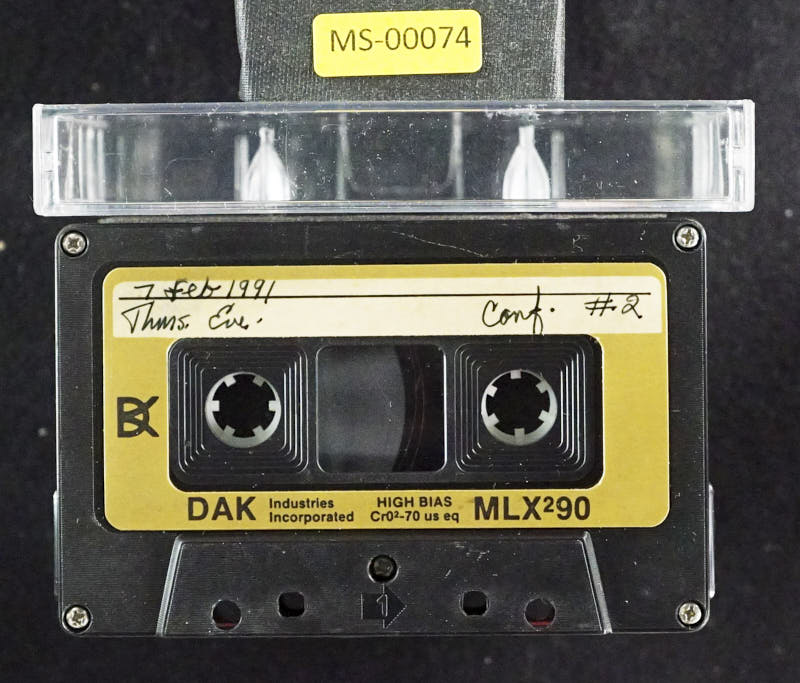
AI Vision - Possible Values from Photos:
Possible Title: Cont. #2
Additional text:
@AI-Vision_v002
Well, this morning we spoke about allowing Christ to see us and look upon us with that look of love. And so I thought this evening we would carry that thought further and how this can help us in our own looking on ourselves. And it happened that as I was preparing the thoughts for this morning's conference, I read a very fine commentary, at least I think it's very fine, on the Song of Songs by Father Blaise Arminjan. And I was amazed when I came across these words. The darkened face of the bride does not repulse the one she loves and does not prevent her from being loved. Yes, marred as I am, If I am willing to expose my face to the eyes of the bridegroom, his look does change me.
[01:04]
The bridegroom necessarily transforms what he sees. So this is another aspect of the look of Christ. The look of the bridegroom transforms. It changes the one that he loves. God contemplates his creature, and in this look, there is a new creation. I've always thought that that verse in the Song of Songs, I am my beloved, excuse me, I'm so distracted. The bridegroom's coming. Maybe we could wait for the bridegroom. And there's a verse in that song that I've always felt is very profound. At least for me, it's perhaps one of the most profound in all of scripture.
[02:07]
I am black, but beautiful. And John of the Cross in his spiritual canticle writes, Before you had looked at me, you saw in me ugliness of sin, imperfection, ever since you looked at me taking away this dark and ugly complexion that made me unworthy of being seen now you can look well now you can well look at me your first glance left in me grace and beauty and I think of Our Lady in her Magnificat. He looked on his handmaid in her nothingness. Henceforth all ages will call me blessed. So this is our true identity.
[03:11]
I am black, but beautiful. We are good because God, who is good, called us into being. And his look creates in us beauty and grace. And the Lord revealed to St. Catherine of Siena, When I created man, I looked into myself and was seized with love for the beauty of my creature. Of course, there's another side to us, the dark side, the shadow. And we need to look at that too, but with God's vision. This way of seeing ourselves black but beautiful, weak, sinful, but utterly beloved of the Son of God and totally redeemed by his love.
[04:18]
This to me is the very foundation of Benedictine. Cistercian spirituality. In one way or another, the Spirit of God will draw us into the truth of self-knowledge. But always that self-knowledge has to be tempered by the mercy of God. I think we can be harder on ourselves than God is toward us. And that's why I think it helps to see ourselves first from God's vantage point. And when we in some way can know or experience God's look of love, then we have the courage to look on ourselves with love. When self-knowledge begins with God's knowledge of oneself, it has a sure foundation.
[05:24]
I'd like to carry these thoughts back into the Old Testament and to a person who appeals to me very much, and I'm not exactly sure why, but this person is the patriarch Jacob. You don't hear a lot about Jacob, and I've never seen very much written just about him, but I think he may be a sign of hope for me. Jacob is definitely not a plastic saint. In fact, when you read about him, his virtue is not very obvious. One has difficulty in justifying some of his dealings in spite of St. Augustine's attempt. And yet, Jacob is beloved of God. He's blessed by God. Not only... once in the blessing of his father, which he contrived to receive.
[06:31]
But at least three other times in the book of Genesis, God blessed Jacob. And one thing I think this shows us is that God's blessing isn't determined by the goodness of the one receiving it. But God's blessing creates goodness. I think I could also say, you may not agree with me, but I'll say it anyways, I think, that Jacob is something of a mystic. There's something mystical in the two very well-known encounters of Jacob and Yahweh. Jacob meets Yahweh in a dream and in a struggle. and he recognizes him as the Holy One, and he worships Yahweh.
[07:39]
He himself experiences the presence, the holiness of God, and there's only one response possible. He builds an altar, and he worships. In both meetings, between Jacob and God. Jacob is alone, and it's at night, and he is fearful. In the first encounter, Jacob is fleeing from his country to find a wife from among his mother's family, but also to put some distance between himself and Esau, whom he has just cheated out of his blessing as the firstborn. And he lies down to sleep during his journey to Haran. And then he has a dream. And we know this dream well.
[08:41]
And it's often commented on and interpreted even by our Father St. Benedict. But maybe we could listen to this dream again. And as we can, enter into the heart of Jacob as he experiences this visitation of Yahweh. Jacob left Beersheba and set out for Haran. When he had reached a certain place, he passed the night there since the sun had set. Taking one of the stones to be found at that place, he made it his pillow. and lay down where he was. He had a dream. A ladder was there, standing on the ground, with its top reaching to heaven. And there were angels of God going up it and coming down. And Yahweh was there, standing over him, saying, I am Yahweh, the God of Abraham, your father, and the God of Isaac.
[09:52]
I will give to you and your descendants the land on which you are lying. And so in this dream, there's a ladder touching ground, rooted in earth and reaching to heaven. The ladder of Jacob's dream is firmly rooted on the earth, and yet it reaches to heaven. This point on earth is a place of meeting, of visitation, of intimate communion with the divine. Yahweh is there. And so it is a holy place. This square foot of earth where I rest or eat or walk or speak to my brother or sister God is here in my ordinary existence on this hilltop.
[11:01]
These fields and these stones are holy because this is the house of God, the gate of heaven, as we sing in the beautiful office for the dedication of a church. The ladder stretching to heaven is firmly planted on this earth. And this says to me that nothing is too earthy, too mundane. There's nothing that cannot hold the potential for meeting with the divine. For the very angels of God dance on this point of earth. And this is a tremendous revelation. When Yahweh entered into Jacob's life, he touched him at a very personal level. And he revealed to him the sacredness and the beauty within his own existence.
[12:10]
And then he gave Jacob a promise of continuity with the covenant which he had made with his father and his grandfather. and he promised to keep him safe on his journey. Be assured that I am with you, and I will give you this land, and I will keep you safe. These words would be to a fearful man what bread would be to a starving man. And Jacob exclaims, truly Yahweh is in this place, and I did not know it. How awe-inspiring this place is. And so Jacob continues his journey. I suspect a new man, fortified with this blessing of Yahweh. He enters Haran, and there by the side of a well, he meets Rachel, his future wife.
[13:21]
the woman for whom he would work seven years, and they seemed to him like a few days because he loved her so much. This is Jacob's beautiful side, his true self showing. To be able to love with so much faithfulness and self-sacrifice, This is truly human goodness. Now, what he goes on to do with his Uncle Laban's goats and sheep is something else. And I have to confess that I don't understand it at all. But I'm sure you all do, being sheep growers. So maybe you could explain it to me later on. But anyway, at best it was crafty. At worst it was Jacob's dark side taking over. Because for all Jacob's mystical visions, he remains very human.
[14:29]
And maybe that's part of why I like him. And then we come to the last scene of Jacob's life that I'd like to mention. And perhaps it's the most important. Because Jacob wrestles with God. And he demands a blessing. from the one who wounds him. I sense that the tone of this visitation of Yahweh was terrifying, not consoling or even awe-inspiring as previously, but very frightening. Again, Jacob is alone at night. sent his wife and wives and children across the stream for safety. And he stays behind. And a very mysterious being comes to him and wrestles with him until daybreak.
[15:35]
He cannot prevail. And so he strikes Jacob on his hip. And Jacob bears the wound for the rest of his life. This is a very great mystery to me, and the scene holds more questions than answers. But if I go beneath the surface, meaning I find myself, and perhaps you would also, because sometimes I struggle with God. I struggle against what seems to me too difficult. too painful. At times, God's actions in our lives may seem that way, too demanding, too wrenching from all that we are or have been.
[16:38]
And so we struggle. We wrestle against God. We try to make things different, or at least We think they ought to be different. And there's a story in the Gospel that captures this human dilemma. Two disciples of Jesus are walking away. The turn of events wasn't what they expected. Things weren't supposed to turn out this way. And they say, but we had thought. We had thought it would be different. I think this desolation in the face of suffering or disillusionment still happens to us today. And probably all of us have met disciples of Emmaus in our lives.
[17:49]
a sister in Dubuque. She's the major superior of a very small diocesan congregation. And the congregation has not received any vocations for over 30 years. And there's just a few sisters left. And whenever I meet this superior, I can see the pain etched in her face a little more deeply. And when I ask her how she's doing, she usually says something like, I'm just living each day, and I don't know the future. But I'm sure there are moments when she thinks, I didn't think it would be like this. And I have a friend who was sent to a treatment center for alcoholism, and she For over a year, she denied that she was alcoholic.
[18:54]
In fact, she broke the record for this particular treatment center for such a long period of denial. But when she finally could say, I am alcoholic, I'm sure she must have felt in her heart. But I thought, I thought it would be different. And I know that she struggled hard with God. I also know that in the days and months that followed, she came to a new life. There was resurrection. But haven't we all experienced something like this in our own lives? We may not have expected certain things in our lives to go the way they went. And we can experience desolation.
[19:57]
We see things in ourselves that seem insurmountable. And everything in us wants to cry out. But I thought, like the disciples, we thought he was the one. We thought it was his will. We thought he would be with us all the time and that we would experience that presence. And now it's the third day or the third month or the third year. And if someone asks us why we feel despondent or downcast, we might say, are you the only one around? who does not see that everything's going wrong, maybe in the church or in the world or in the community or in my life. And so the struggle to accept God and ourselves on his terms and to accept all the conditions of our life is very real.
[21:08]
But this can be. a moment of our visitation, this very moment when we find ourselves wrestling with God. And we can do what Jacob did. He didn't run away. He called out and begged a blessing. And we may be wounded in the struggle and have to bear the wound, the failure, disappointment, or the weakness for the rest of our lives. But if we stay with it, we also emerge blessed by God. So often suffering, especially the suffering that comes from accepting God's will in our lives, is an opening, a prelude to
[22:13]
a new way of knowing God. And this deeper knowledge is the blessing. I heard about a man once, this was in Germany, and the man was very prosperous and had a beautiful wife and home. And for some reason, which I don't know, he lost his job. so he lost his security. And within a year or two, he lost his wife to his best friend. And the man was almost near despair. But one evening, he turned to God, as he had many times. But in this turning to God, He found God in a way that he never had before.
[23:17]
And he has become a man of very deep prayer. And prayer has become for him his whole life. Jacob was a man thrice blessed by God. His story is dark but beautiful. In him, perhaps, you and I can find ourselves, and in him we can look on ourselves and see the beauty of God's image and the dark shadow of our unlikeness to God. But in it all, I think there is the beam of hope. God looks on us with love and mercy. And we also can and really must look on ourselves with love and mercy.
[24:20]
I would suggest Psalms 138 and 16. So if there'd be any... Is there time for... Comments? Pardon? Oh, there's lots of time. The final phrase was, we also must look at ourselves with love and... Mercy. Mercy. Be merciful to ourselves. In the sense of being able to see ourselves as God sees us.
[25:37]
Yes. And believing in the love of God, the mercy that God has towards us, we can be merciful to ourselves. We can not judge ourselves so harshly or just be so down on ourselves as we often are carrying so much guilt around. But give ourselves that same kind of mercy. Does that make sense to you? Do you think it's possible? There is a strange phenomenon of denial. It's even a bad name because we don't consciously deny anything about ourselves. I mean, occasionally we do. But I remember a woman saying to me about a situation called depression because she didn't feel depression without loss. Recognize it. Denial always has, again, It's time to get judgment that you're deliberately doing something that's clear.
[26:43]
But it's just this natural defense, which we all need. I mean, even with the talk here now, we have to deny. We have to keep certain thoughts out of our head. And they're just the way they slide under the rug. And some of us have a marvelous tunnel system. It disappears, and there's no, you don't have any access to it. Except somehow, differently, some of it doesn't. it can get through is not. It's a real strange, and it's awfully hard to know how to, well, you know, to be, that we have that sound about, you know, my hidden faults, and so forth, and also help other people. You're referring to a denial of my own negative qualities, or my faults. Oh, yeah. Well, when I was saying the love and the mercy, it was having recognized and faced those dark sides of myself.
[27:46]
I think that has to come first. So I think we do have to take them in hand in some way. Were you going to say something, Greg? I was not aware that Jacob left his family across the river and I knew he was alone, but you never put the two together. Purposefully, one side. And that's often when you do get your dark moments. The thing that I was most struck by, it seemed like we were trying to emphasize the wound that is permanent. That's not just permanent in Well, are you going to elaborate? But in any case, what I was seeing was, in Jacob's case, that wound goes on to build something.
[28:56]
The wound being taking the rib out. I don't know about that. I don't take the rib out. Well, I'm not taking the rip out, but I mean... What was it? The socket? The socket, yeah. The socket. Well, I get my... But what... That ends up being... It was a mystery, huh? Right. I guess not too many people can today, Father.
[30:06]
We all carry wounds, particularly. the wound is transformed. It's that very thing that we thought was a curse. And it was actually the thing that God was trying to work with us on. That becomes the strength. And it goes where the rest comes in contact with us. That's what struck me when you say that. Is it because I said that we can carry the wound? or the weakness, or the disappointment, or whatever, as Jacob was wounded and had to carry that for the rest of his life. Be a springboard for new growth, yeah. I think you're right. That's what it meant. I was saying to myself so often, you almost insisted to live in this darkness or this wound, half wound, and not really look at it as a springboard to something else.
[31:12]
Grace in itself. I got this pimple on my left cheek, you know. That's my wound, you know. But it also could be the thing that might transform you to see myself in another. I'll save myself. up in his temple, possibly, you know, be a blessing for him. I think that's a good point. Yeah. To me, I see God as being infinite, and all these little things that happen to us are kind of, to us, they're chaos. But to someone, it's infinite. There's no chaos. Everything happens. So it's part of him naturally. He wants to hear you. I was saying that I see God as being infinite.
[32:20]
And to him, the things that appear to us to be chaotic and tactful and confusing and that type of thing, to him, they're not. They're very plain to him. In his infinite being, all things happen. He doesn't see it as we would say. He couldn't possibly see it that way. It's part of a whole. Maybe that's what we mean when we say God is holy. You just have to respect it. Our body is so small. Narrow. I think that's what happens when we don't forgive ourselves. We take the shot, the shot view, and the small point of view, and everything, that kind of thing. I know for myself, that's what usually appears. When I suddenly realize that I've done that, then it opens up a whole new perspective, a different view that's so much greater than what I planned
[33:32]
Like the promise that Jacob has renewed, so much smaller than escaping, running away from his brother, that type of thing. Here he goes and he has the street, and God promises in the whole earth, in a way. From the structure of your thought, I think you're saying that to get to that experience of being able to look at ourselves with the law of mercy, the way God does, it is essential to go through the type of difficulties and sufferings that you're referring to. Would I be listening to that properly? Yes, in a sense. I don't think that we need to look for them or seek them out.
[34:39]
I think life is going to bring them to us. And it's how we live through those moments of suffering, of disillusionment with life, with ourselves, with events, because all of us are going to experience some kind of painful, disillusionment in our lives. It's how we live through those that makes the difference. And in coming to know and to accept ourselves through those kinds of events. I wasn't really setting up that we have to have an absolutely traumatic experience. That's right, yeah. because they will come and they will be part of our personal lives and our communal lives, the life of the church. I just really believe that. It's part of reality. It seems in that sense that, you know, it's always, it boils down to self-knowledge.
[35:51]
And one thing that was very helpful to me, you know, is when we studied this thing with Briggs Meyer. Virus breaks, yeah. And what happened there, really, is that, you know, of course, if I'm one way, if I'm extrovert or introvert, let's say, and somebody is extrovert, and what happens is that one thinks that the other is bad, I'm right. But at the same time, what's happening is that with the extrovert, you know, kind of misbehavior and all that, that can bother the introvert. And this is one of those natural crosses in history. And even, because in all those, those have really good points and it might be judging them. Well, it can be very helpful in your hockey referee to be a judge, you know, because
[36:55]
You know, the whole game is on your shoulder. And if you're just the type of, you know, OK, it's OK, the game won't work too well. But at the same time, when you're aware of, it's a cross to have that character, so to speak. It's a character. Also, it can be called a gift. Because in certain instances, it's very helpful to have those characteristics. But while in other circumstances, it's a real good to have those. And I think it's very important to accept the limitations and the assets of every character. But if we don't know it, then that's another problem. Or if the other person doesn't know it, that's what we are. You think self-knowledge about yourself and about other people.
[37:58]
Yeah, that's what I found very helpful. At some point, we got to know what was the temperament of the other person in the community. And then this eliminates a lot of expectations. Because if we expect everybody to be average in this and average in that and average in that, It's very difficult. People are not just average, you know, extrovert or extrovert. Extrovert or introvert. It's one of the other most things. And I found that very helpful. But if we don't know... Could it reduce your level of suffering relative to you? No, what's happening is that we make our... We make ourselves suffer a lot by expecting so much from so many. I think that's... From ourselves and others.
[38:59]
Expecting things to be peaceful and just copacetic all the time. If we reduce our level of expectation, we're better off. I think it reduces the level of pain. We don't want to reduce them too far. No. No, I understand what you're saying. I think it's very true. Our community experienced the same thing when we did the Myers-Briggs. It really did help us, because in dialogue sometimes you just wouldn't know what was going on. And to realize that some people speak very spontaneously, very quickly, and others who are a little bit more introverted and slow thinkers think that these people are saying things that they mean absolutely. They'll never change their minds. And Caroline and I are about at opposite poles on this. So it really does help a lot to know ourselves and to know others.
[40:11]
Saying pain is highly different if you have two different hypnosis. You're on the subject of, well, I was just thinking that on the subject of Myers, my break is Often we like to live in the conscious side of ourselves. But that's the same, you know best. But as you've been talking so far today, at least tonight, on that dark side, there's that shadow side that we don't know so much of, which is the side that really completes the whole person. If you're always living in the conscious side, in a way, I think you could say that conscious sign could also be your permanent movement.
[41:22]
Even though we look at the shadow sign and think that's, no, I don't want to deal with that, you know. You know, that's my downfall every time I try to do it, I trip, you know. And yet, I don't know, it's trying to learn more about ourselves in that shadow sign. If I can, you come to a greater fullness of yourself. I mean, in my case, intuition is my weak side. When I want to do it to it, every time I do it, it always seems to be right. But I'm too scared to go there. I've got to do it in another fashion. And that's kind of... I think that's what Brother Michael mentioned this morning about taking the risk of allowing others to know us.
[42:32]
That's very risky for some people, and that would be what you're saying, to go into an area that's not so comfortable, that's not so easy. I think that's the wound. That's the... And then you end up on the permanent, you know, you never get out of there. You're a really correct person. You're all the time. You live in just this pool. And that would really break forth. So many years ago, excuse me, I think it was in the early 70s, or in the late 60s, we had a long-term guest, a Jewish rabbi in the Hungary. He was a chief rabbi of the Hungarian army at one time. But during the war, he was incarcerated in Tachau.
[43:36]
But during the time he was here, he disclosed the fact that when he was a student at one of the yeshivas, And they spoke about Jake stealing the blessing. And he said, well, why is he trying to get us to admire and revere this liar and this chief? Well, he saw a wonderful, manly character, the hunter. Why should we revere him? And he said, what he got in the lie was a slap across the face. He said, I guess the teacher wasn't ready to resolve it. So this was one of the things that I don't think he ever got to the point that he felt that it was, again, God's selection, I guess. But certainly, he's a hard man to admire. But I guess with the passage of time, he became a better person.
[44:39]
Father John Hughes had an interpretation of this passage. It was more the passage of the wrestling. And if I can remember it, and please correct me if you know what I'm referring to, because it was what I remember of Father John Hughes saying. It was that in this wrestling, God was, in a sense, getting back at Jacob for the deceit of his life. And that he was wounded. and would carry for the rest of his life his own guilt or the effects of his deceit. But it didn't make him less able to be blessed by God. He's crazy about it.
[45:46]
He's 42 years old, so he's taking a shot at everybody. Now, do any of you want to explain to me about the sheep? Oh, it's just superstitious? Oh, I see. Oh, I see. I thought it really was true. Oh, I see. Okay. Okay, well, that's good to know. You can apply some sort of magical power in Jacob's part, because what it did make no sense. Uh-huh. It fits the story well. Yeah, yeah. Once he had stuff across the blue-faced lectures, where they begin with spots, and they know where spots just appear.
[46:59]
Yeah. I always thought that he was using a run that would transmit those characters, and that the old man didn't know what he was doing to me, but I was going to go around more than I'm sure right. I don't know, they have. As I understand it from the Song of Songs, I don't know about the rest of Scripture.
[48:00]
And this is subject to correction. The black isn't strictly black. It's tanned or swarthy by exposure to the sun. It's in a pastoral setting and the person has been exposed to the sun and become dark complexioned. And whether or not at that time... a fair complexion was considered more beautiful. I don't know that. Yeah. I suspect it means that, yeah. Well, that's the way I was using it, yes. What commentary I read, particularly on that point, said that the sunburn usually meant to be an outside agricultural work. In those Today it would have a different meaning and we probably wouldn't use it, but in that context, yeah.
[49:25]
I keep coming back to your final thought. We must look at ourselves. It's almost a cliche these days. When I was in high school, seeing everybody I knew with generic problems, I hope it's still popular. It was a cliche in secular circles, in fewer circles, in Catholic circles, in occasional circles, double up yourself. And even having it be a cliche doesn't seem to make it any easier to do. So, just why is it so difficult? I was reading a book on a family system, and the guy was talking about impredictability of human actions. He said that if you have, if there's someone who needs to have an experience of love, it's very hard to say what it exactly did if it will break through the defense of the name of the person who experiences it. If they have too much liberty to do what they want, it creates a feeling of chaos, and that's the opposite.
[50:45]
If there's too much structure and discipline, it can be crushing. Then people respond to identical things in an opposite way. If there's too much structure, somebody can either be very rigid or liberty. Perhaps it could help, Nathan, if I mention that what I'm doing here is, and it'll come out more tomorrow and the next day, is basing this on Bernard's levels of truth. Now, he doesn't use the first one. but in God look at us with love. But his levels of truth are that we know ourselves.
[51:46]
It begins with self-knowledge. And from knowing ourselves and having compassion, learning compassion from our own weakness, we move on to be able to be compassionate to others. And so it's knowing others with compassion. And that moves on to the knowledge of God. to the truth in God. These are the three levels of truth. So it's the truth in ourselves, the truth in our neighbor, and then the truth in God, which is contemplation. So that's in the back of my mind as I'm doing this. And so I think that we can only know the truth in ourselves and accept that truth, love that, love the way we are because we come from the hand of God. if we also in some way know that God knows and accepts and loves us. I think it's only possible that way. So that's the structure that I'm using.
[52:50]
It doesn't answer your question of why is it so difficult. I think that we did talk about it this morning, and it's just a reality that it's difficult. Kathleen had a thought about it later that she might want to bring up now. you know afterwards but for me in a way it posed a practical question um either of these what how do i now given the situation of my past or whatever happened to me how do i now as an adult come to um come to know that god loves me you know whatever my situation is the happy past or whatever give him whatever it is, why do I come? What lies within my power to do about the situation? And that was for me, where in a way, the one scripture saying, I mentioned to Gail, when Jesus was beginning to preach the good news, which of course, a part of the good news, the good news of God's love for us, was repent and believe the good news.
[53:58]
It's about the only thing, it seems to me, that we rise in our, we can't, get others to love ourselves if we're not getting well from others there's really nothing we can do about that about the only thing we can come to some knowledge of our past and that can be helpful but we can't change that path and there's lots of things even in our present that we can't change the only thing we do have power some power to change in the case of the grace of God for ourselves and that's why for me that the thought of repentance and forgiveness for ourselves seems to me that the only thing that doesn't like my power to do to make me more up there to the love of God. Would that make a picture? As we were just talking now, too, well, talking about Vernon's degrees of love. Degrees of truth. Degrees of truth. I'm also a little familiar. For me, one of the things that encapsulates Vernon's birth
[55:01]
the truth in oneself, is humility. But of course, for Bernard, very much also. Humility is never just being down on yourself. It's a knowledge of one's loneliness, but following very much in the eyes of God, how God sees it. And always the understanding of that real forgiveness. But it's very difficult. It's pride, in a sense. To hate oneself, it's pride. is a form of pride and never a form of humility. And I was just struck as you were talking to, for any of you who have read The Diary of the Country, but not too many of you have read it. There's a beautiful line at the end, right at the last, the very last paragraph of the fictional priest himself was writing. And he said something like, how easy it is to hate oneself. It's just to say, true pride is to forget. But excuse me, true love, I guess, is what we could look at.
[56:03]
But if ever pride could die enough, the perfect grace would be to love oneself in all sympathy, as well as any of those who have suffered and loved their pride. And that's always struck me how much self-hate ignominulates a matter of pride. This wouldn't account for the universal phenomenon, which it does seem to be in our culture, at least Western culture. But I think our trapping notion of original sin is no help. And we start out as black as coal. And it seems like if I, when I go back to my roots, that's what it's going to be evil to start with. But let's say that, that doesn't explain the fact that it's in it. You used to see it there. But the other thing is that, you know, people write today about reparenting oneself. And I think it's a good image. The kind of child within which didn't get the wrong kind of parenting now that I'm an adult.
[57:07]
You know, although I tend to parent myself with my parents' parent and me, that's also part of the conversion of repentance. It changes. I can be different to myself now, the clearer than the patterns of my parents and so forth. This is about the child within. I think it is a good... For me, at least, it's a good image to get at those things. It is a little changeable. And there is an attitude I take to it myself. Again, as you would towards a child, you know, you have a lot of hopes and expectations of which you know, well, then it seems to have a cushion. That's another thing. I can, there is a, well, there's a child in the sense that needs to be repaired. And for Benedict that too, you know, we return to him. But I think that it points up the relationship between the psychological and the spiritual, that we
[58:28]
being in touch with ourselves and knowing something of our inner wounds, and listening to the word of the gospel, to repent, to forgive, and to go on. I think that's a good balancing of the two, because we are human beings. I'd like the 12-step approach to start off in the beginning. admitting that you actually have a problem. And you end up realizing that the admission itself is a religious experience. And you go around the circle, regardless of what kind of situation you're in. First you have to admit that there's a problem that you have some kind of fault. There's no possible way for you to get out of it yourself.
[59:34]
And then you get through the whole cross steps, right at the end, saying, if this, in fact, was an experience, let me get back. I wish you had a higher power. I think, for me, one of the key things, regardless of how you talk about it, whether it's acceptance of oneself or whether it's reparenting or whether it's repentance, it's coming to take responsibility as opposed to, you know, well, mama didn't love me and that's the end of my life. Or we're called the truth. God's truth and God himself. And that has to start with the truth in us and the truth about ourselves or else we never get past that point. That's right. Truth is hard, and it needs to be tempered with mercy. That's what Bernard says. You can never face the truth of yourself without the mercy of God.
[60:39]
That's probably where I got it, because he says that very strongly. And Bernard's a favorite of mine, so that's probably what inspired that. I wasn't conscious of it. When we face the truth in ourselves, we must always face that with the mercy of God. of God, because that's how God is towards us. We cannot face the truth of ourselves without that mercy, because it's too hard. It's too difficult. In a sense, it's unredeemed without the mercy of God. What you're saying about responsibility is that you have your free will and how you really free to change or at least don't. It's frustrating when you think, well, take responsibility for who we are and move on. If we just say, I'm stuck because of my miserable past or whatever, that's what we're asking for.
[61:41]
It's frustrating if we really believe that we're free agents and that we have the power of choice, then taking responsibility must, in some measure, connect with that. Yeah, and I would suppose that just to come to where one can take responsibility We may not be able to change our situation, but we certainly change our attitudes about that situation. We may be very strong in a certain way, and we really don't have a lot of control over the being, but our attitudes toward those I will. A line that I recall when we were thinking about the I am black but beautiful.
[62:46]
He used the word ugly. He said I am ugly because I have sinned and I'm beautiful. That's Christ loves me. Okay. Yes, good, good. There's also... When dealing with those sorts of difficult experiences in one's past, the act of remembering something, I think, calls something very creative. When we do it, the president said that when she was here. She started off the top of a story. One of the things that always astounds her is that she's known a couple, married couples, who had 10 to 20 years old, that was an ideal marriage, no one had her.
[63:51]
And suddenly, it will explode, and all this stuff will come up. Seeing that the marriage was an absolute disaster from the first. And she had a contrary experience of people with whom she'd never gotten married, and it looked like a disaster from the first. And after 10 or 12 years, finally settled down, and she finally got something straightened out. But constantly, it's like a classic marriage all the way along. And she said she finally realized remembering something is a very creative experience. And that the experience of God That experience of life, even in the divine, can cause us to remember and sort of recreate our path in such a way that completely changes. What was formerly seen as catastrophic and pointless in the past, and pretty soon as it is structurally leading to something very popular. So how we stick it in the memory banks makes a difference.
[64:58]
In other words, it's not just sticking it in there. It's constantly being recrossed as we go along. Yeah, I'm talking about the journal writing. I used to just write things four times a year. They read back, and I was found that I wrote that back. or feelings that I had at that time. I wonder how I was able to get through certain times and things like that. But I didn't understand. It's a revelation that I think that there was really some power, you know, to get me through that. Thanksgiving was wonderful. Also, depending on the temperament, for many people to be an opportunist seems to be a fault.
[66:07]
But at the same time, it can be very creative because it's a surprise when the ceiling is falling apart. And all of a sudden, you get this inspiration to modify the ceiling or patch it in a way that, you know, you... It's more beautiful. When you force this, it forces your imagination. You didn't want the thing to start thinking. But, you know, very often, those surprises can be another form of, you know, God's... encounter. It's a blessing that brings. That's right.
[67:02]
@Transcribed_UNK
@Text_v005
@Score_88.68