You are currently logged-out. You can log-in or create an account to save favorites and more. more info
Celebrating Life Through Communal Prayer
AI Suggested Keywords:
The talk explores the nature of prayer, emphasizing it as an expression of faith rather than a mere verbal or mental exercise. It suggests that prayer arises naturally from the recognition of life's goodness and is essentially celebratory. The role of blessings in recognizing and appreciating experiences, even those that are challenging or ambiguous, is highlighted as a means to cultivate a prayerful spirit. Prayer is discussed as a communal activity that strengthens shared vision and faith, particularly through formal and informal blessings consistent with the traditions seen in the Hebrew practice of the "berakot."
Referenced Works and Concepts:
-
The Hebrew "berakot" (blessing): Described as a model for prayer that embraces all aspects of life, even the ambiguous, suggesting a method to deepen awareness and gratitude.
-
The Psalms and King David's Legacy: While acknowledging that David didn't write all of the Psalms, they are ascribed to him due to their reflection of his spirit and faith, underscoring the ideal of a life expressed through constant blessing and thanksgiving.
-
Eucharist as the Great Thanksgiving: The talk references the Eucharist as the ultimate expression of gratitude, aligning personal blessings with the larger communal act of thanksgiving.
-
Communal Prayer: Highlighted as essential among those sharing a vision, reinforcing the importance of joining together in collective expression of faith and celebration.
These elements collectively emphasize the transformative power of prayer in appreciating life's complexities and nurturing a compassionate community.
AI Suggested Title: Celebrating Life Through Communal Prayer
AI Vision - Possible Values from Photos:
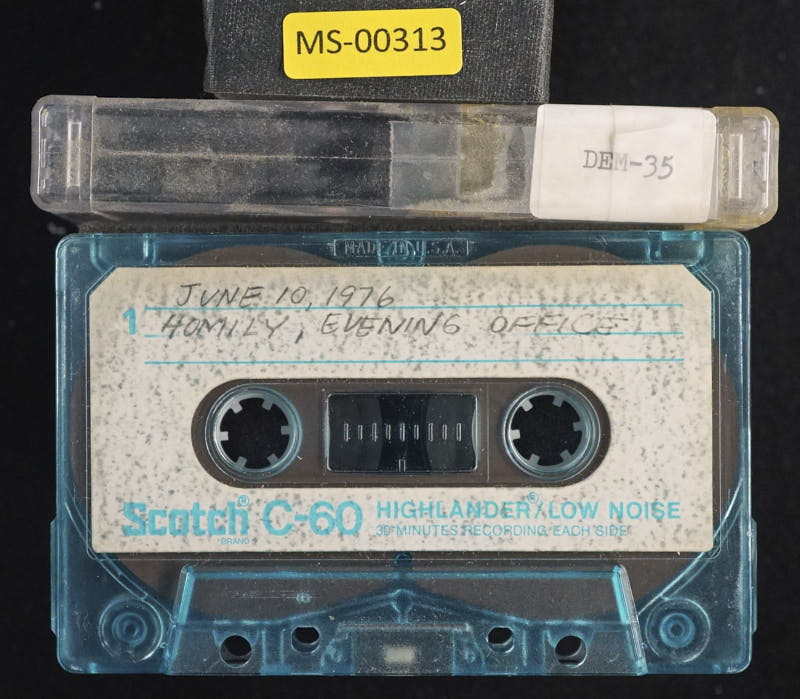
Possible Title: Homily, Evening Office
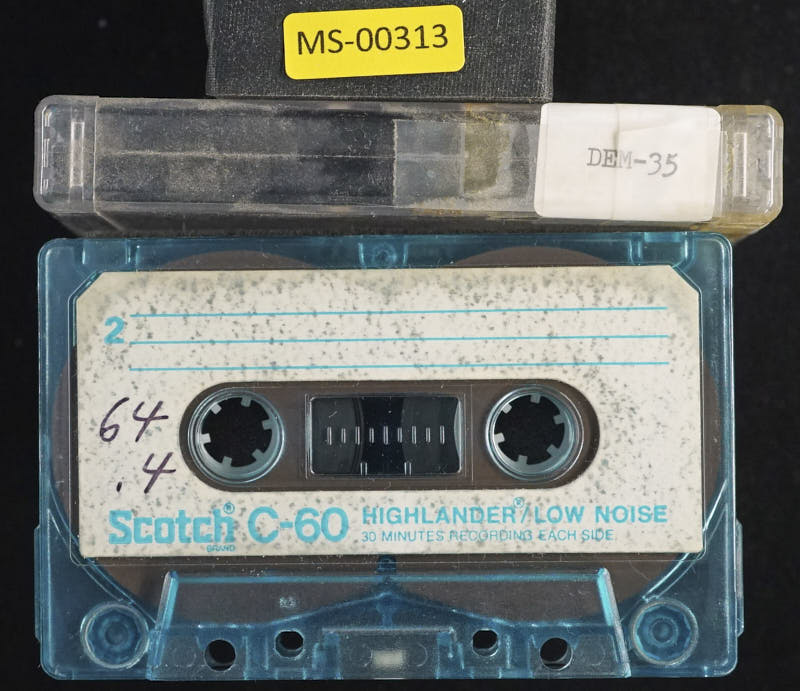
Additional text: 64, 4
@AI-Vision_v002
But it seems to me that it's something much deeper than that. And if we're not careful, we can begin to say words and never bother with the attitude out of which those words should come. And then prayer becomes a kind of burden. some verbal expression, or at least some silent verbal expression of request or gratitude or whatever. But it seems to me that it's something much deeper than that. And if we're not careful, we can begin to say words and never bother with the
[01:11]
attitude out of which those words should come. And then prayer becomes a kind of burden, a dull and lifeless thing, a duty. I'm convinced that prayer will necessarily follow wherever there is faith. That prayer is not something that we should work at and tinker with and experiment with beyond a certain point, that we should consider more the nature and quality of our faith. That is, if I have the proper attitude toward life, if I have begun to see how good life is, then it is almost necessary, inevitable, that I will begin to celebrate that, to announce that, to proclaim it, to sing it, and that is prayer.
[02:19]
And if there is no goodness in life that I can see, it's going to be very difficult for me to pray. So I think the first thing is to look for the goodness, to count the blessings, And one can pray a little, at least, for help in finding the goodness. But ultimately prayer is a celebration. It's a proclamation, an announcement. And I think that sometimes when things are not going well, it is important not only to count one's blessings mentally, But even to take a piece of paper and pencil and write them down, this is kind of a last resort. But I have recommended this already and I think it's good advice.
[03:22]
Sometimes we get so immersed in the sense of misfortune, of bad luck, that it becomes almost impossible to see the goodness that is there. clouds close in. And I think it's really worthwhile at times to take a pencil and put down, I can see. I can hear. I can walk. And this is what I mean by that attitude. One begins to take note of all the good things which we take for granted. and begin to praise God for them, to be grateful for them. And then gradually it becomes possible to praise God for things that, well, maybe they're good, those ambiguous things.
[04:27]
And I think real prayer occurs when I look at a desert and thank God for the flowers. knowing that they are there. The Hebrews had a very keen understanding of prayer. And you know, of course, that their normal expression of prayer was the barakah, the blessing, the confession of God. And they had barricot for all kinds of occasions. not only for the things for which we pray or for which we praise God, but they are blessings for strange things. A blessing to be said upon hearing a wolf howl. That's certainly not good, but maybe it's not bad either.
[05:32]
Blessing. A blessing upon hearing thunder. A blessing upon hearing a child cry, or that. And so, gradually you see, as one begins to bless these things, and not as a service slave of , and so forth, gradually one becomes aware of things one had not noticed before. Well, I never heard of it. I don't remember hearing a child crying except in church for the last 15 years. And then you begin to hear things that were kind of lost in that general noise. This willingness to bless episodes, just as they come to your consciousness, suddenly begins to sensitize one to experience in life, experience of goodness and all kinds of things which otherwise might not happen.
[06:33]
And some very strange things can happen when one blesses these ambiguous realities. I recall one time, I gave a summer course at Carlin College, it was about 15 years ago at least, and I was saying mass in a little chapel there in one of the dormitories, and there was a group there, three or four people, and I decided that day to talk on prayer, just a brief homilette and I got just about to the point I wanted to make, and a great big hound began to bark outside the window. I mean, it was really loud, but I couldn't be heard hardly. And I was just about to say something like, oh, well, pray always, and then go back to the altar. I mean, you can't fight with a dog or a lawnmower or things like that.
[07:35]
And then it suddenly dawned on me, you know what you're doing. You are contradicting everything you've been saying so far." So in a moment of grace, I seized this opportunity and so I said, instead of pray all, I said, bless even barking dogs. Do you know? I don't know. I still don't understand it, but that dog stopped barking at that moment. And it didn't bark once more during that mess. I will not guarantee that this will always have that result. But actually, you see, what happened was that by blessing that dog and bringing it into my sermon, it ceased to be a distraction and an annoyance. It became my ally. It became the illustration of my point. Bless barking dog. So much so that I could have said, thank God that dog came along.
[08:39]
Well, you'd be surprised how often this will happen. Something annoying occurs, something that you want to screen out. Bring it in. Bless it. Sit it down. Make it part of whatever you're doing. It just might be the very thing you need most to effect what you are trying to do. So, before one goes to fire, or before one prays privately, it is very important, I think, to learn to pray in general, to have a prayerful spirit, to be a prayerful person, and that is to have acquired the habit of blessing things, not cursing them. And blessing things when one is not even thinking of grace at the most unexpected moment, the most unrehearsed way, just takes a second.
[09:48]
Incidentally, most of the really important things don't take much time. Maybe sometimes Say, well, I would like to be very personal with everybody, but that takes too much time. I can only be personal with a certain number of people, that's it. I'm sorry, you just won over the number. I don't think that's true. It does not take a lot of time to be personal. Have you ever been in a receiving line for some famous person, and they're shaking hands with everybody, and you finally get up there, and he puts his hand out to you and looks at the next one? And you're there. What I wait for. Now, if it's a really famous person, he will take your hands and he'll look into your eyes for like two seconds. And in those two seconds, you're the only person that works. And you walk away and you say he was worthwhile. That one took two seconds. Now, we have to be present to people.
[10:54]
Just for a moment, if enough. In a way, that is blessing them. And what often happens is we're thinking about the next one, and then when we get to him, we're thinking about the next one, and so we are continually distracted, and of course then there's no time for anybody. And so, this business of prayer, as I say, long before it becomes formal, it's got to be a part of one's spirit, one's attitude. And I think this is why All the Psalms are attributed to David. We know David didn't write them all. It's doubtful if he wrote more than 10% of the Psalms. And yet they're all ascribed to him. Why? Because the Bible understood very clearly. Whoever wrote the Psalms were men like David. They were David's fakers. who expected good things to happen, who saw the positive and optimistic side of life, who allowed faith to triumph over cynicism and despair.
[12:05]
And of course, the son of David knew this better than anyone. And his whole life is summed up in the Eucharist, where he says, the great Baraka, the great thanksgiving Eucharistia is a literal translation of Barakah. Thanking his Father for everything. And our conviction is that after we have made all our little Barakahs here and there and everywhere, we bring them together and we say them together with him, Father, we praise you. We join together and praise you. And this joining together is important too. I don't see how it's possible for people to share a vision and yet never pray together. I think common prayer is essential, inevitable, for those who share a vision.
[13:11]
This doesn't mean that one has to be together every time there is public prayer. But it does mean, I think, that one has to want to be together. And that will mean that frequently it will happen. After all, there are days when I can hardly pray. That is, when there doesn't seem to be much to celebrate. Then it's good to go and listen to Contreras celebrating. Then it becomes possible to believe again that, wow, now that I hear this, things look pretty good again. And I would think that if the day should ever come, when everybody finds it hard to celebrate, then the superior must call upon the Holy Spirit and take the initiative and celebrate whether he feels like it or not. I think this is every hundred years or so. So I think this is really one of the jobs of the superior, is to celebrate when like nobody else is able to do so.
[14:17]
In the meantime, he just kind of like, you know, joins in. So, where there is this kind of praying, there will be an expression of that discovery of the goodness in the mystery of life, in the mystery which is in creation, in people, in God. And this discovery will grow and develop, and the mood of the prayer will be, ideally, joyful expectation. Joyously expectant. Some days it will be a little poignant, maybe even plaintive, because they're a hard day. But even then, they'll be laughing in the tears. And on good days, joyful expectation.
[15:21]
Oh, it's too bad you had to miss the conference. I knew you only came because you wanted something. Go ahead and say it. Father, help us to think and act rightly.
[20:45]
so that we will live as you would have us live. This we ask through Christ our Lord. Amen.
[20:51]
@Transcribed_UNK
@Text_v005
@Score_84.17