You are currently logged-out. You can log-in or create an account to save favorites and more. more info
2001.08.10-serial.00082
The talk centers on Dogen's teachings from "Tenzo Kyokun," focusing on the Three Minds: joyful mind, parental mind, and magnanimous mind, also known as San Shin. The discussion emphasizes applying these principles in daily life and spiritual practice, aligning with Uchiyama Roshi's interpretation that these teachings should permeate everyday actions to fulfill the Buddha's purpose or great cause for appearing in the world. The Lotus Sutra's concept of Buddha's knowledge is explored as central to understanding and practicing Dogen's teachings.
Referenced Works:
- Tenzo Kyokun by Dogen: Discussed in the context of applying Zen principles to daily life, emphasizing the Three Minds as a practical guide.
- Opening the Hand of Thought by Kosho Uchiyama Roshi: Highlights Uchiyama's interpretation of Dogen's Three Minds and its significance in spiritual practice.
- The Lotus Sutra: Cited as a foundational text underlying Dogen's understanding of the Buddha's teaching, particularly the purpose of Buddha's appearance in the world, which shapes the practice of the Three Minds.
- Shobogenzo by Dogen: Mentioned as central to the presenter's own practice, illustrating the comprehensive study of Zen teachings.
Names and Contributions:
- Shohaku Okamura: Mentioned as a translator and educator of Dogen's work, specifically highlighting the translation of Tenzo Kyokun.
- Uchiyama Roshi: Referenced for emphasizing the importance of the Three Minds within Zen practice and in daily living.
- Taigen Dan Leighton: Collaborator in translating Dogen's Tenzo Kyokun, focusing on preserving the original Japanese nuances in the text.
- Tom Wright: Noted for his translation approach to Tenzo Kyokun as striving towards readability and understandability in English, contrasting with efforts to maintain the original linguistic style.
Concepts and Terms:
- San Shin (Three Minds): Essential attitudes for practitioners delineated by Dogen as joyful mind, parental mind, and magnanimous mind, forming the basis of the presenter's explanation.
- Buddha Knowledge (Buddha Darshanan): Explored as Buddha's insight or view beyond human perspectives, intended to guide practitioners to enlightenment.
- Vow and Repentance: Concepts from Uchiyama Roshi’s teachings, emphasizing continual practice and acknowledgment of the inherent limitations and imperfections in fulfilling bodhisattva vows.
AI Suggested Title: Embodying Zen: Three Minds Practice
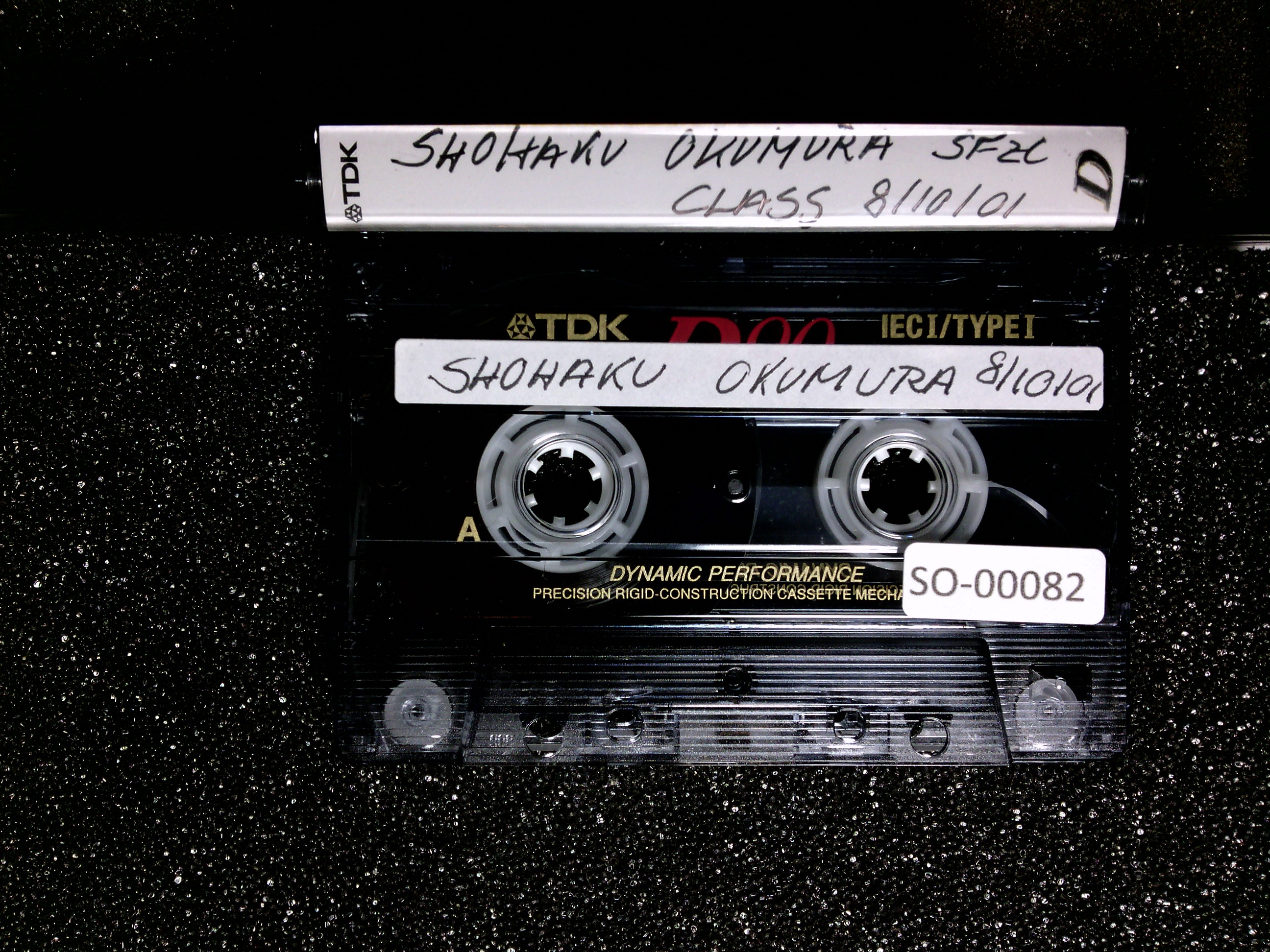
Should I just start? Good morning everyone. Shohaku Okamura has been teaching in this country now for nine years and before he was a student came and helped in the early days of the Valley Zando in Western Massachusetts, was here for some years, then he went back to Japan, and he taught and translated there for some years, and then nine years ago, he came back to this country who's been teaching here since. First in Minnesota, and now as the director of the Soto Shu Education Center. He is the translator of Dogen's Pure Standards for the Zen community, which is one of the versions of .
[01:17]
Okay. So, have you been studying Tenzo Kyokun? Yes. And Branson asked me to talk on the Three Minds or San Shin, So, have all of you read until this part of Tenzo Kyokun? So, you know everything. I'm not sure. No, if we could get it closer to your throat, I think. Yeah, yeah. It's closer to the throat. Okay. So this morning I'm going to talk on the three minds or joyful mind, parental or nurturing mind, and magnanimous mind or great mind.
[02:17]
In Japanese, kishin, roshin, and daishin. My teacher Uchiha Maroshi put very much emphasis on this teaching, Dogen's teaching on Three Minds or San Shin. And in this book, Opening the Hand of Thought, if you have read this, part of this is a transcription and translation of his last lecture. at Antaeji, right before he retired from Antaeji. That was 1975. And right after that, I came to this country and started to practice at Varejendo. And in his last lecture at Antaeji, he brought up seven points
[03:27]
he had in his mind when he was that teacher, our Avot Atan Taiji, and he wanted to transmit those seven points to his disciples. And, well... One of those seven points is as follows. This is the third one, third of the seven. Uchamro said, Zazen must work concretely in our daily lives.
[04:34]
as the two practices, vow and repentance, the three minds, magnanimous mind, parental mind, and joyful mind, and as the realization of the saying, gaining is delusion, losing is enlightenment. So according to Uchiyama Roshi, these three minds is our way of life or our activities according to or based on those three minds is how our Zazen in Zazendo works in our daily lives. Since this was a kind of my teacher's will, I mean, last teaching, it has been very important to my own practice.
[05:44]
So for me, to practice Dogen's teaching or to practice Buddha Dharma means to sit, practice Shikantaza, just sitting and study, in my case, Shobo Genzo. Dogen's writing, and in order to study Shobogen, though, I have to study, you know, entire Buddhist teaching. And live my own daily lives with three minds, those three attitudes, a joyful mind, parental mind, and magnanimous mind, is, I think, my practice And after I finished my tenure as a head teacher of MZMC, Minnesota Zen Meditation Center, I formed my own Zen community and I named it Sanxin Zen Community because to live with this Sanxin or Sly Mind is most important.
[06:57]
at least one of the most important points in our practice. So first, I'd like to talk on the significance of these three minds or San Shin. In the context of entire teaching of Tenzo Kyokun and also in the context of Buddhist teachings, and Bransan asked me to talk on Dogenzen's teachings on this applied to everyday life, so how we can apply this teaching to our own everyday life, if I have enough time. Well, I finished 10.15. 55? I'm 45? Okay.
[07:59]
This morning, I'm going to use this translation in this book, Togen's Pure Standards for the Zen Community. This translation is made by Taigen Dan Reiton, one of the Zen center priests, and myself. In the very beginning of Tenzo Kyokun, Dogenzenji said, if you have this book, page 33, it says, or if we have Defining Your Life, page 3, These two translations are kind of different. I helped Tom Wright when he made this translation.
[09:07]
Tom Wright is a very sincere person. His attitude towards translation is, unless it's really readable and understandable in English, as English literature, translation has no value. My attitude is I wanted to keep a Japanese flavor even though it might be strange in English. So when we worked together, we already had a conflict. This is a fruit of our conflict. When I worked on this translation with Taigen, we tried to keep as literal as possible. So it might be interesting for you to compare these two translations. For example, this very first sentence of Tenzo Kyokun.
[10:11]
Maybe it's interesting for you, so I read both. In this translation it says, From the beginning in Buddha's family, there have been six temple administrators, They are all Buddha's children, and together they carry out Buddha's work. Among them, the Tenzo Chief Kuku has the job of taking care of the preparation of food for the community. And in this translation, from ancient times, in communities practicing the Buddha's way, there have been six offices established to oversee the affairs of the community. The monks holding each office are all disciples of the Buddha and all carry out the activities of our Buddha through their respective offices.
[11:16]
Among these officers is the Tenzo, who carries the responsibility of preparing the community's meals. I think meaning is the same. But, you know, in this translation, we use a Buddhist family instead of community or Buddhist community practicing the Buddha's way. Buddha's family is very literal translation. Buddha family. So in China, people called Buddhist community or monastery called Buddha's family. Their idea, I mean, the basic unit of society is family system in China, also in Japan. So to be a family is very important. So Buddhists are called Buddha's family, and Confucianists are called Confucius family, and Taoists are called Taoist family.
[12:26]
And Dogen used the word Buddha's children or Bushi. Bushi, Buddha's children, means bodhisattva. You know, bodhisattvas are people who allow the vow, bodhisattva vows. And then, you know, we are not matured enough, we are still a child. But when we become really matured, we become a Buddha. At least we have a direction toward becoming Buddha. That is our goal, although it takes almost forever. But that is our direction to become Buddha. And Uthiam Roy said to become Buddha means to be a really matured person, to be a real adult. which Amrashi often said, many of us, almost all of us, are fake adult, not really adult.
[13:40]
Physically, we are adult. Fake. But spiritually, we are really childish. So to become really matured or adult person is to become Buddha. and it takes a very long time. So we are in the Buddha's family, if we are within a Buddhist community or Sangha, and each one of us is Buddha's children, still childish, but when we become mature, we will be a Buddha. And this Buddha's family has a family business. That is Buddha's work. So we should understand what is Buddha's family business. The original word for Buddha's work is Buddha's affair or Buddha's work or Buddha's business.
[14:55]
I go to the last part, very last part of Tenzo Kyokun, where Dogen discuss about the three minds, and especially the magnanimous mind. In this translation, page 49, and in this translation, page 8, After Dogen pointed out those three examples of three great masters, Dogen says, you should know 1, 2, 3, 4, 5, 6, 7, 8, 9, 10, 11 from the bottom. you should know that former great mentors all have been studying the great word and right now freely make the great sound, expound the great meaning, clarify the great matter, guide a great person, and fulfill this one great cause for Buddhas appearing in the world.
[16:27]
How could abbots, temple administrators, heads of monastic departments, and monks ever forget these three kinds of minds? Here Dogen used the word, fulfill this one great cause. Or before that he said, the great matter, this great matter, is a translation of Daiji. Ji is the same ji with Butsu ji, Buddha's matter or Buddha's work. So great work means Buddha's work. And the final expression, fulfill this one great cause, one great cause came from the Lotus Sutra that says Ichi Daiji in Nen, one great matter, cause and conditions in Nen. That means the reason why Buddha appear in this world.
[17:34]
So in the very beginning of Tenzo Kyokun, Dogen said, we have in the Buddhist Sangha or Zen community, we have six administrators or six chiji, not only six, but there are many other offices or positions or functions, and all of us are Buddha's children, and we carry out Buddha's work. And what is Buddha's work, or what is Buddha's family business? And that is according to Dogen, that is to fulfill the one great cause for Buddha's appearing in the world. So for what Buddha appeared in this world? And we have to carry out the same thing. Why Buddha appeared in this world?
[18:38]
Through our practice and work, you know, we do every day. So we need to study what is this great matter or great cause, why Buddha appeared in this world. And this is mentioned in the Rotas Sutra, the second chapter of Rotas Sutra. It says, for Dogen, in order to understand Dogen's teaching, study the Lotus Sutra is very important. He often quote from the Lotus Sutra and his basic understanding of Buddha's teaching or Mahayana Buddhist teaching is based on the Lotus Sutra because originally he was ordained as a Tendai monk and the basic teaching of Tendai school.
[19:51]
is based on the teaching of the Lotus Sutra. So the Lotus Sutra is really important to understand Dogen. So if you want, I recommend to read this. Any translation is okay. This is not particularly good translation. I think there are three or four English translations, so anyone is okay. I mean, there's no perfect translation. Anyway, in this translation it says about the one great matter or cause for what Buddha appeared in this world. It said, these laws, laws in this translation means dharma, this dharma, cannot be understood by powers of thought or discrimination. Only the Buddhas can discern them.
[20:54]
Fearful because the Buddhas, the world-honored ones, only on account of the one very great cause, this is our Dogen quote, appear in the world. Shariputra, why do I say that the Buddhas, the world-honored ones, only on account of the one very great cause appear in the world. Because the Buddhas, the world-honored ones, desire to cause all living beings, to cause all living beings to open, to open their eyes to the Buddha knowledge so that they may gain the pure mind. Therefore, they appear in the world. Because they desire to show all living beings the Buddha knowledge, they appear in the world.
[21:58]
Because they desire to cause all living beings to apprehend the Buddha knowledge, they appear in the world. Because they desire to cause all living beings to enter the way of the Buddha knowledge. they appear in the world. Shariputra, this is why it is only on account of the one very great cause that Buddhas appear in the world. So this is the one great cause Dogen mentioned when he discussed about the great or magnanimous mind. What we should aim at through our day-to-day activity is how we can fulfill this one great cause.
[23:03]
And according to this Lotus Sutra, the purpose or reason why Buddha appear, all Buddhas, not only Shakyamuni, but all Buddhas, in the ten directions, past, present, and the future, appears in this world to open, allow all beings, or cause all beings to open their eyes to the Buddha knowledge. I don't like the expression, translation, Buddha knowledge. This is a translation of Sanskrit word Buddha Darshanan. Our Chinese translation, Buddha's qi ken, qi is to know, and ken is to see or view. So I don't like knowledge, maybe insight is better, Buddha's insight, Buddha's view, Buddha's way to see or view things.
[24:10]
Not human way, but Buddha's way. show all living beings the Buddha knowledge and apprehend and cause all living beings to apprehend the Buddha knowledge and allow them to enter the way of Buddha knowledge so this is what Buddha wanted to do show and make us understand and Enter means to practice, really deep within or based on this Buddha knowledge or Buddha's insight. Then next problem is Fattu Buddha's insight. Buddha's insight. Yeah, that's a problem. Because what Buddha means as a Chinese character, the Chinese character for Buddha has two parts.
[25:15]
The right side part is human beings. Left hand side part means not. So Buddha means not human. So Buddha's knowledge means not human knowledge. That means we view things with human knowledge, human insight, human way of doing things. Human ways means our view or our understanding, our system of value is limited or created by our karma. Karma means the experiences we had since our birth or even before our birth. I am a Japanese. I was born in Japan 1948, that is three years after World War II is over.
[26:24]
So Japan was very poor. So my way of doing things or my system of values or picture of the world is greatly influenced in that condition. or situation of Japanese society when I was born and grown up. And later, I didn't like how the Japanese society is working, or people in the Japanese society are working. So I wanted to escape from that system of value. And that's why I started to practice Buddhism and Zen. That was about 1970. So I became a Buddhist and I was ordained as a priest.
[27:29]
So basically I'm a Japanese Buddhist or Japanese Buddhist priest. That is my karma. So I cannot see things as Americans do, and I cannot view things as Christians do, and I cannot view things as women do. So my view is very limited, and all human views are limited. Limited means kind of one-sided or biased. backward, I can only see this part of the world. So now I know what's there, behind me. But I know that because of my memory, even though I don't really see the reality of my backward, but I know what's there.
[28:35]
That is my memory, and memory is not reality. But using memory, I create a kind of a picture of the world, memory or knowledge that I attained through my experiences and studies. So Buddhist priests view things from the Buddhist priest's point of view, and doctors view things from the doctor's point of view, and lawyers view things from doctors, I mean lawyers' point of view. So we, as human beings, we need to take a point, point of view, to see things and to make judgment. And based on our karma or experiences or what we studied, basically, or what we inherited from our culture or society, our view is limited.
[29:40]
And my point of view and your point of view, or Japanese point of view, and American point of view, or Buddhist point of view, and Christian or Islam point of view are often different. I think that's the reason we have so many problems. For me, to live in this country is really difficult. So in order to live with, not only live, but practice with American people, I have to do some kind of compromise. That makes me a little bit American. So when I go back to Japan, I feel they are strange. I'm pretty sure they think I'm strange. American people think I'm strange. So, all people are stunned from any point of view, I think.
[30:48]
So, it's very difficult. I think it's very natural for us to have difficulty to live together with other people. So, to live in a community, especially where we you know, spend 24 hours together. It's really difficult. And that is what we do in Buddhist monastery. It's really difficult. But somehow by having such difficulty or hardship, we understand that my point of view is not necessarily where necessarily or absolutely right or true and we see started to see there are many other point of view I think that is one of the way we go beyond our discrimination or that allow us to start to listen
[32:04]
to others' point of view. I think that is one of the ways we study Buddha's knowledge or Buddha's insight, how this world can be seen from different point of view or different cultural or spiritual background. I think that is the way we started to see Buddha's darshanam or Buddha's insight. That is kind of beyond or being free from my personal karmic way of viewing things or judgment or discrimination. I don't think it's possible for us to completely eliminate our karmic view. And I don't think it's necessary. But if we too much cling to my own cultural background, or even religious or spiritual faith or practice, we create problems.
[33:19]
So that, at least in our zazen, we, instead of clinging or grasping, we open our hand. Let go of our thought means let go of our personal, karmic way of doing things. And according to Dogen, this sitting and sitting upright posture and breathing deeply from our abdomen and keep our eyes open and let go of our thought is itself Buddha's wisdom, that means Buddha's darshanam or Buddha's knowledge. So in our practice, according to Dogen's teaching, our sitting and letting go, or letting go of any thought came from our consciousness. Thought came from our consciousness means our karmic view, whatever coming, you know.
[34:25]
when we sit facing the wall, there's no object. But still, so many things come up from our consciousness. As a reality of right now, right here, there's no object, so nothing should be happened. But somehow it happens. Those coming up from our consciousness is really clearly illusion. because it's not reality right now, right here. But still they come up. So, how can I say, almost always. And since we are sitting in the zendo, a very quiet place, we feel our mind is much more busier than we are walking outside of the zendo. So we often feel, you know, what's the use of this sitting?
[35:28]
It doesn't make me calm. But I think that is the most important point in our practice. Just let anything come up freely and let them go away freely. We don't grasp, we open our hand. This is a way we become free from, it's there. I mean, any thought come up from our deep consciousness, you know, coming up, so it's there. But if we don't grasp it, open our hand, we don't think. Thought is there, but we don't think. This is a strange thing to say, but I think you understand this through your experience. Thought is coming up from our consciousness, but we don't grasp, we open our hand. In that case, the thought is just empty coming and going like clouds in the sky.
[36:29]
It appears and stays for a while, transforming the shapes and disappears. Our thought is like this. So once we grasp it and take action based on this thought, I think and I take action based on my thinking. This is what we usually do in our daily lives. But in our Zazen, in Zazendo, we are free from our thought. We can let go. And it's really revelation, I think. It's really, you know, freedom from our own karmic self. And according to Dogen, that is Buddha's darshan. So basically, sitting in Shikantaza is Buddha's knowledge or Buddha's insight. It's not a matter of I attain, I study or learn some skillful way to see the reality and attain some kind of wisdom.
[37:34]
But when we sit and letting go and just be calm, calm down, is Buddha's insight in which we are really free from our human knowledge or human insight. And the problem is how we live based on that Buddha's knowledge or Buddha's insight when we stand up from sitting and go out and do something. When we do things or even when we just walk on the street, it's very dangerous to let God open our hand. When we do something, we have to think. And we have to make choice. And in order to make choice, we need to make discrimination. That is better than another thing. So we need to use our discriminating mind.
[38:36]
But how can we express or manifest this Buddha's darshan or Buddha's knowledge or insight? in our day-to-day lives using our discriminating mind. That is the koan we have to work until the end of our life, I think. There's no time we finish this koan. Dogen's teaching in Tenzo Kyokun is how we can manifest this, you know, that Darshanan. That means, according to Dogen, the great mind or magnanimous mind. Magnanimous mind is, as Dogen said, in page 49.
[39:44]
It said in this book, page 49, it said, As for what is called magnanimous mind, this mind is like the great mountains or like the great ocean. It is not biased or contentious mind. So he said, this mind is like mountains. huge mountains and great ocean. This huge or great means . Same Chinese character. If you go to Kyoto, you will see a Chinese character on the mountain in the east side of Kyoto. That is Dai or called Dai Monji. That is the Chinese character for great or big or magnanimous.
[40:49]
Daimonji is, how can I say, people make fire on that Daimonji soon, August 16th. And August 16th means in lunar calendar, July 16th. And July 16th is the next day, the summer practice period is over. Summer practice period end usually July 15th. And July 16th, they burn this big Daimonji. So it has something to do with the practice period. And in our practice, we study this Dai, Daimonji, or character for great or magnanimous.
[42:01]
And, you know, great mountain means the, you know, big mountain does it move. It's immovable. It's very stable. And yet, on the mountains, there are so many living beings. Living. You know, huge trees or short grasses or big animals and short insects, small insects. All living beings are living. And the great mountain doesn't make choice. the Great Mountain allows all living beings to live together. That is the idea of the mind, the magnanimous mind, that it's stable and allows all beings living vividly. And the Great Ocean is often used as a symbol of analogy of Buddhist Sangha.
[43:10]
The Great Ocean accepts all water from any different rivers and there's no discrimination. Any water from different rivers become one ocean, there's no separation. So acceptance, accept everything, all people coming from any background and become one ocean. That is the idea of a great mind or a magnanimous mind. And it's very difficult, actually almost impossible, I think, for each one of us. But in our Zen, we can do it by letting go of our own yardstick of measuring or judging things.
[44:12]
And we need to apply this mind of the Zen in our day-to-day lives, in which we have to make discrimination. How can we make discrimination based on non-discriminating mind? It's very difficult. And this is, I think, this is the endless goal. There's no fixed answer. So we have to always think, how can I be free from my personal judgment? And still, I have to make judgment. And how I can make my personal judgment not based on my own preference, but based on this magnanimous mind? You know, it's almost contradictive.
[45:15]
But somehow that is our life, if we are a Buddhist or a Buddhist children. How we can manifest the, how can I say, Buddha's compassion, which accept everything equally, all beings equally, and try to help without any discrimination, using our limited capability. It's a very difficult thing, but somehow we try to do, and there's no way to accomplish. That's why Uchaimuroshi said, as a bodhisattva practice, we need a vow and repentance, because we cannot be complete. And yet, as a bodhisattva who takes this vow, we have to
[46:16]
try to do it. So always we need to awake to the incompleteness of our practice based on our vow. You know, when we chant the four bodhisattva vows, you know, almost every day, and we need to understand the contradiction. between the first half of each sentence and second half of each sentence. Sentence beings are numbers. We vow to save them all. If sentence beings are numbers, we cannot save them all. Repentance is a very loaded word in day of Christian culture where you're talking repent for your sin.
[47:17]
Mission to admit that this is what you've done and this is what you've vowed and that they're different or inventory or something. Well, I try to use this word with Buddhist definition. So we must be careful. Dependence in When Japanese people accept Christianity and translate Christian scriptures into Japanese, they use Buddhist word Sange as a translation of repentance. So I use repentance as a translation of Buddhist term Sange. In Buddhism, there's sanghe. So please don't forget about the Christian meaning of repentance.
[48:20]
So let me use the word sanghe. Well, I heard you say repent for our incompleteness in fulfilling our vow. And that's different than sin, which means wrongdoing. But what I heard him say is to repent that we cannot fulfill the vow, although it is our deep intention to it. which is different to me than sin. Yes. I just mean, like, should we feel bad? You know, repent sort of implies we're feeling badly about what we've done. I don't think that's so... I think a feeling of, you know, being bad or incomplete, sadness, all are included. You know, the original meaning of Sange in Buddhism is, you know, After each practice period, they had Fusatsu, or I think you practice here, Ryaku Fusatsu.
[49:23]
That is a kind of a ceremony of repentance. In Indian Sangha, the leader of the Sangha recites the precept, and if someone thinks they did something against that precept, they make a kind of confession. That is the original meaning of Sanghe in Buddhism. So it's a kind of, you know, I'm sorry I did such and such mistake and I try not to do it again. So that is the beginning or origin of the meaning of Sanghe or practice of Sanghe in Buddhism. But later, especially in Mahayana Buddhism, Sangye has much broader and deeper meaning. And Sangye is not simply saying, I'm sorry, I made such and such mistake and I try not to do it again.
[50:25]
That is one form of Sangye. But in one Buddhist Mahayana Sutra, it said, if you want to practice Sangye, you have to sit upright and see the reality of all beings. So in that sense, Fen Dogen then uses, I mean, not Dogen, but Uche Amuroch uses vow and repentance. This repentance is Zazen itself. Vow, so what he is saying, our Zazen is a practice of vow, and our Zazen is a practice of Sange. In our Zazen, we take those four vows to fulfill Buddha's family business. And yet we awake to incompleteness of our practice. So our Zazen in which we see the reality of all beings is itself repentance or sanke.
[51:36]
That is the Mahayana idea of sanghe or repentance. So in this case, repentance or sanghe is not simply saying, I'm sorry, I made such and such mistakes and I try not to do it again. But this sanghe is awakening to the reality of our What can I say? A calming self. That means we cannot be free from our individuality. Even I have a vow to save all beings. For me it's difficult even to take care of my children, really. It's very difficult to save even my children.
[52:40]
So then I feel that side of myself, I feel taking a Bodhisattva vow to save all living beings seems kind of delusion or telling a lie. And I think that is true. But somehow we cannot help taking such a vow, otherwise we cannot live in this world. So I think vow and dependence in Japanese, Seigan and Sange, is two sides of our life. It's not simply a matter of feeling of guilty or sin. Please. Well, I think vow is trying
[53:42]
capture a spirit, and it's kind of what you were talking about with this non-discriminative mind. I'm going to say all beings because to say one less than all beings, I'm already discriminating. Yes. So the spirit of what I'm trying to do is in a practical day-to-day way, every being that I happen to encounter in my life, I'm going to take care of them in the way that I vow to do so. That's the practical implementation of it. The spirit has to be non-discriminative. Yeah. Otherwise, it kind of defeated purpose. Please. I just wanted to add that in the original Aramaic translation was said was to Mr. Mark. And repentance was more at a turning apart. So I think it's at the heart of much less antagonistic, judgmental, or guilty. it you see since then it has been translated through Western European still.
[54:49]
Well, anyway, we don't have much time. But what I want to say in this Tenzo Kyokun is doing practice each and everything in our daily lives based on those three minds is the way we carry out our for bodhisattva vows using this concrete body and mind which is limited in many ways so for example at Tenzo if I cook I cook you know in Japanese ways and it might be not good for you but somehow I have to use my karma to serve some concrete person or people. So how can I work in each and every situation using my limited capability, experiences, understanding, knowledge for even one person now I am meeting or encountering?
[56:02]
So I can do, I can serve or help one person or one thing each moment. So as a manifestation of our four vows, right now, right here, we have to put our entire energy into what we are doing. In the case of Tenzo, we have to just cut chopping vegetables to offer to in Dogen's expression, to offer to three treasures, not to satisfy our personal desire. I think that is the point. We have to think and find how we can do in the best way. in each situation or condition.
[57:08]
I think that is what I can say, I have to say this morning. That's okay? Okay.
[57:17]
@Transcribed_UNK
@Text_v005
@Score_95.27