You are currently logged-out. You can log-in or create an account to save favorites and more. more info
Eternal Communion Through Prayer
AI Suggested Keywords:
Conferences in Vina
The talk discusses the concept of prayer and contemplation both in historical and scriptural contexts. Key themes include the distinction between prayer forms in the Old and New Testaments, emphasizing communal prayer as opposed to solitary prayer, and the theological significance of Eucharistic celebration. The discussion also includes reflections on the nature of time from a biblical perspective, highlighting the ongoing continuity of existence as a fundamental principle.
- Biblical Texts and References:
- Old Testament: Discusses the forms of prayer and the conceptualization of time, regarding "generations" and their importance.
-
New Testament: Emphasizes the command of Jesus to engage in communal prayer and Eucharistic celebration, highlighting how this distinguishes the new covenant.
-
Key Theological Concepts:
- Prayer in Spirit (Last Repurah) versus prayers bound by time and space.
-
Communion Prayer and the phrase "Do this in memory of me," reflecting the unity and transcendence offered in community and the Eucharist.
-
Theological Discussions:
- Importance of time as a non-mechanical, relational construct within contemporary and traditional theological frameworks.
- The role of the Holy Spirit in fostering community and charity through shared worship experiences.
These references form the foundation for understanding the integration of communal prayer practices within theological discourses on time and spiritual existence.
AI Suggested Title: Eternal Communion Through Prayer
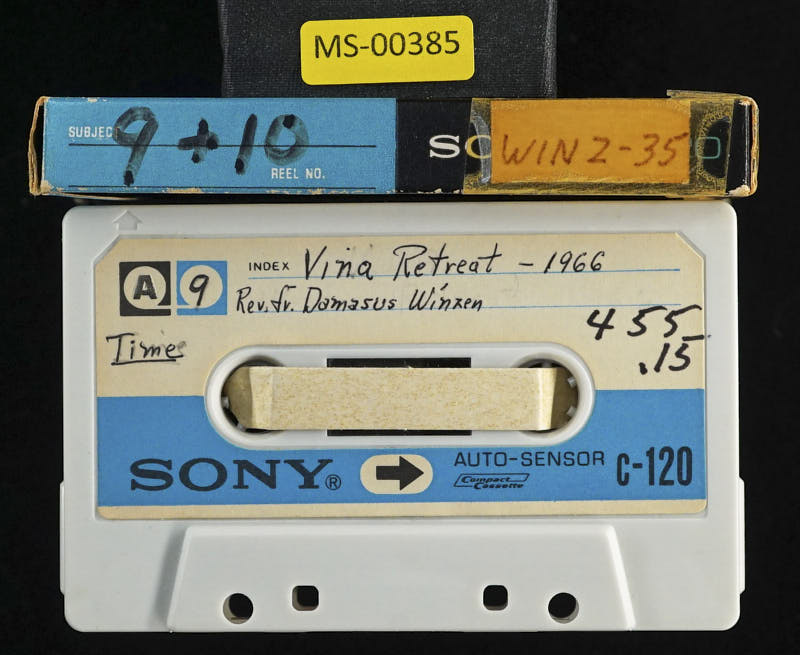
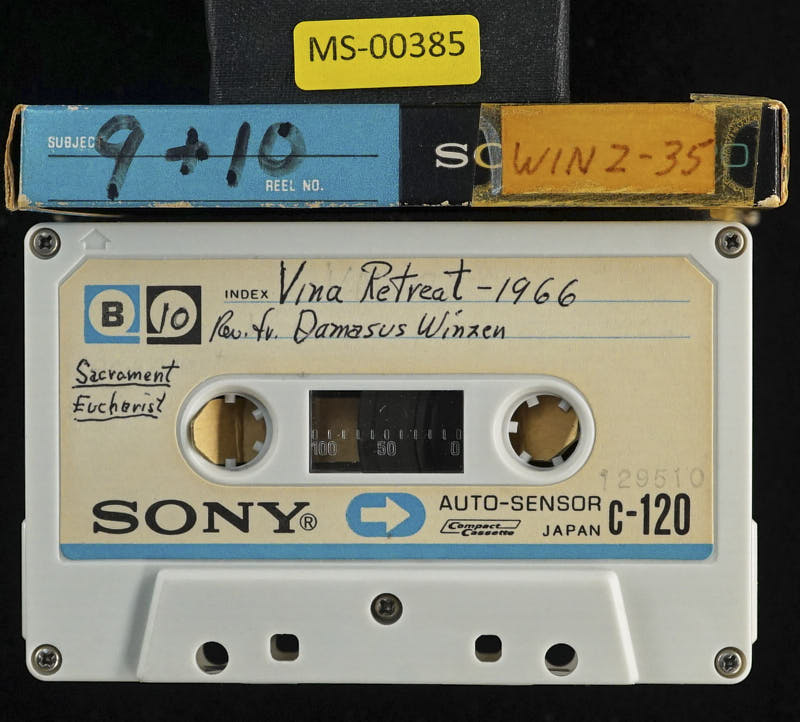
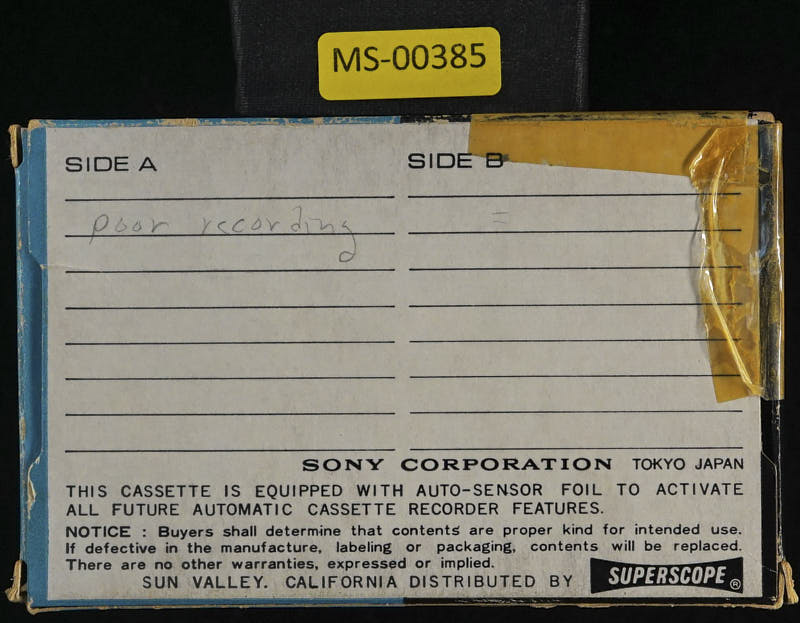
AI Vision - Possible Values from Photos:
Speaker: Rev. Fr. Damasus Winzen
Location: Vina, California
Possible Title: Vina Retreat
Additional text: poor recording, Sacrament Eucharist, 9+10, WIN2-35, 455 /15, Sony, A9, B10, Index: Vina Retreat - 1966, Time:
@AI-Vision_v002
It might be a good problem, even though. because of the cultural elevation to the debate on the concept of time and the order. The order of power would also be the general idea of the monastic order of power. Because there we have, again, many applications of the concept of power and translation that are I try to explain to you and to call you for your consideration.
[01:12]
As we saw this morning, the idea of contemplation is naturally to be applied to prayer, because prayer is that meeting between the heart and God, and also between the people as a whole, and regarding the covenant. And then I, quite as I'll be thinking of the Old Testament, because I feel actually in Jewish circles, the prayer of the Spirit, we've got to call or ask your Pura, the gifts of the Holy Spirit, not bound to time and space, and the other one, the prayer in which and for which we rise to the Spirit. but which can be started and which is appropriate any time. Out of the depth, I aspire to you, O Lord, to say that doesn't require much of an inner disposition.
[02:21]
The New Testament, of course, continues with general distinctions And as far as the realm of the community prayer is concerned, which also is and has found a classical formula, the Apostles ask our Lord, teach us how to pray. And the answer they do pray, they give us our thoughts. Well, there we have another temple at this prayer day of prayer, which is presented to us By the word of God, into which we dwell, but in the Old Testament we have the song and the concordia, the inner harmony between the mind and the song, and the process then that will be reached in the process later. But it's not only in this way, not only in this way, not only in this way, but in the Old Testament,
[03:30]
exemplar, a certain norm, the other father, but it also is a fundamental form of justice. That form, which again, is given by our Lord in the command, Do this in memory of me. Do this in memory of me. So there is again a divine temple, which is, as it were, handed over to the church, that the church may celebrate it. To it, therefore, and make it in this way our own. Now, indeed, if we come to the prayer in common, I still also wanted to mention that here, too, we have to consider another aspect of this more comprehensive concept of contemplation. Because if you try to take contemplation in the and contemplative life, in the at the present traditional form, in the more, let's say, technological world, bringing, may I say, you land up with the idea of the triple Christian, that the value of the prayer depends on the degree of spirituality.
[04:59]
So that, for example, automatically the mental player is higher than all the players. And then, of course, God composes all kinds of problems. Remember that in the St. 26 book, the prior to the world, maybe after the day of the liturgical life, it was stated that the common player of the church and the continuation of private prayer here on earth is still, now I don't know exactly the term that he used there, but of higher importance than private prayer. There is another principle which comes an essential in the Christian order of things which our Lord has expressed in these words where two or three are gathered together in my name, they are actually in their name.
[06:02]
For this, therefore, the liberty we can see here, that the gathering of two or three, from the name of Christ, that means again, you know, in the, I can say, in this act of contemplation in which the community here is united to the kingdom, to the name of Christ, The first community and the player of the community has a special promise, has the statement of Christ. And therefore, the spirit of charity evidently involves the player of the Christian. Where two or three are gathered together in my name, that may just mean that each individual in some way is interested in Christ, And they are happy to get together. But it means that the character of Christ binds them actually together, makes them a community, and in this spirit, they are heard by the Heavenly Father because this is the prayer which is the prayer, child with the presence of the son.
[07:16]
But very clearly, this is an act of what we call concentration. Work for the advanced awesome element that you should not forget. You look across the area that always stresses. The way to be playing together in some way can be in many ways, accidentally, not of course, essentially, but accidental way can be, as well as then, Father. So, we try to live in the past when we're in the corridor. We're in the corridor, we're [...] in the corridor. And then Father John pulls the other direction, pulls back, you know, and all that. And there's always this thing, which we know from the daily experience in our soul world. And all that, you know, cause it's not to take certain distraction. But one can see here, too, that these distractions at church are not in fun with by all means of your body.
[08:20]
You see, if you enter, you approach prayer with a certain spirit and a certain idea of contemplation, then the distraction is the end. Then it's been the day. And therefore, if prayer together is true, you cannot avoid distraction. Therefore, avoid praying together. But that is there. It's not theological. You have a question or other things that's not right. Then our Lord, you know, simply would have advised, you know, if you go to play, you know, then everybody go, I mean, on a mountain and do the play of it. But that is not true. Two or three gather together in my name. Then ask the Father, you see, and he will answer you and he will put you and answer your mother. So it was the same. Basic idea that you ought to have an inspire in the, in the Old Testament concept of prayer.
[09:26]
You know, I told you, the gathering of prayer, it's in that way a community friendship. Well, Israel as a whole, now, of course, there's again the law, now in Israel today, you know, if you have a courtroom, it's all you have to have empty, but if not, you ought to have two or three, you know, and that's Behind that, it's not one. It's not him. It's just two or three or four. So in that way, you see, there's a different attitude. It's not the rabbinic attitude. It would dominate, you know, at least those ordinances are unfair that our law has given itself. Now the other idea which is therefore that won't, if you let us know, let us think of the, let us say, the value of prayer between God.
[10:27]
Let us know that we look in the theological value of community, and in the prayer of the church. The difficulty that we have today Controlling the prayer of the church, you know, coming from an idea with an exaggeration in various directions of the idea of prayer of the church, of Christian prayer of the church. That idea of a crucial prayer of the church has been totally in those times when you can ignore, you know, put over and invaded also the idea of prayer and the life of prayer. which he said, of course, you know. Well, on the thought, you know, I do remember the hot day we used to have a comment, you know, with certain canonists, you know, famous canonists of the Order, who, he said, we only complain, you know, concerning the truth that he has, that there is nothing, not canon law in the church.
[11:33]
Oh, oh, [...] oh. In other words, you know, he found that there are still too many fields, you know, without penal law. Now, I have been to Calibri, the Second Vatican Council, and I have been to that, you know, at least we hope. And so therefore, which is, you know, there is, of course, there is the official player of the church. And then, with all kinds of abstractions, The church becomes in that tradition, see? To me, our people, for example, you do a room, you know, in it, in it, you know, going up and down and having it as a book, you know, and then waiting. Because if you're pushing it, you have to be done, you have to move, you know? It doesn't have to have any talent, you know?
[12:34]
But the next part to you, you know, that's the canon law policy. That is because that is canon, canonical belief, you know, the minimum of publicity that the player can have, you know, or should have. So I got a great, great thing, and I was the monastery, too, labialitari, you know, how labialitari is not. So there's that, you know. Then there is now, there was this individual, of course, it's a priest, there's a castle, and so on, and this, and it goes up and down, and it, in the, I feel, sort of, it's like to read, that's maybe also, you know, it's a place, you know, and there he says, labiality, the prayer of the church, you know. Why? The congregation, congregation. You know, it's in awe, you know, but you know, it's really the same, you know, that, [...] uh, that in your message, you know, that, [...] uh, in your message, you know, that, [...] that
[13:59]
They all get together in the church in the evening for evening devotion, but this evening was not the official prayer of the church. So that is, of course, our terrific confusion of things, you know, and we have to think about it. One of the big things, again, you know, today is, and that is what I said this morning, first of all, the wrong thing is that the official prayer of the church is not connected with the idea of official, the idea of absolute uniformity. And then Benedict, certainly in his movement, doing an order of prayer in spirit, is absolutely convinced, you know, that this order he uses, you know, is the prayer of the church to his community. But I thought the canonists of today, that would be private prayer. the developments have taken place, you know, always to the, let's say, for the book, you know, also to develop a prayer.
[15:06]
And of course, especially today, in the carriages to my mind, it was both, you know, of the laundry for the secular clergy. Most laundry for the secular clergy was the conceit in such a way that it can become and, in fact, ill in the regular ordinary case, the prayer of the community, the prayer of this congregation. That's the last solution. I mean, the diocesan prayer is again, you know, a wrong concept or content of his life. He won't process, you know, the monastic children of official prayer of the church, all the priests, all the secular priests, who then, at the same time, on top of all the official prayer of the church, still have every day of the Novena with the congregation. It's all kind of there. There are many other kind of tithes like that. Well, therefore, there should be really honest to bring the idea of the diocese to bring that he is from neither of the people in prayer.
[16:16]
But he is who the leader of the people in prayer, because he is the occasional prayer of the church in him. I mean, it's apologetic without anybody knowing how to do it. That's my thing. So, work-wise, it's part of the other stuff. You know, it's really, it's not necessary in any way that we will not do it. It's true, you know, I mean, it can be a general player for all because that's the official player of the church. we can have, let's say, a spiritual prayer of the church and the part of the congregation of, no, after all, a community of no, which is then the church, you know, and therefore this kind of dreamlining and uniformity is an idea which is annoying, you think of the very nature, you know, of the community prayer, because
[17:17]
But if community fair, for women fair, it's not in that way. The fair that's been put, you know, by a child that the church, but in some way it's an act like that. If it comes down really deep to that, but they draft that, you know, then what is considered by a future sayers here in the way, is the fair of the church of Rome. But then later on, when we go to the town of Cymor, we can't find it. We [...] can find it. The bishop, in that way, will not lie to your boss. The world is just... There is no... That is an absolute partitioning concept.
[18:23]
And, of course, it is also true that then... ...in one country and put it in a certain context. Now, you can lay together... ...in one form of the patriarchy. For example, the West Point patriarchy, too. If it's also not to leave it up to the end at these various APRKs, you know, we need a real kid to do it. But I'm not going to take this to Bishop of Rome. But, I mean, the Bishop of Rome, you know, celebrate that Bishop of Rome. But by the part that the Pope, you know, celebrate. The liturgy of Rome does not mean that the liturgy of Rome is we of the liturgy of the end of our film. That can be a confusion in our country. Because they have come, it was never to just be. The bishop of Rome celebrates the liturgy, the old Roman cathedral, and the bishop of Rome according to the right of the figure of Rome.
[19:27]
That is not to denote it. But as broke in your party have, what is it? Some should ask those. The cross function as co-wintertings in the Orient, the church is always quite out to be the protector of all the various traditions and also the prayer of the church's traditions all over the world in the world of Christianity. That is the universal memory of the co-winterting church, not to make this particular literacy vulnerable to the entire church. But you're the one who watches all the little kids, you know, all the little girls do that. And first of all, can depend on the little protection. At least that is in the act of character. So, therefore, you can go, if the book will never be, if we read the literature, the official player of the church, therefore, it comes from the works of artfully bound, that's what I want to say,
[20:30]
to start to call with rules of people, and that they perish, and that they die, and that they are monastery, and we're calling through these various limitations, if you want, of a natural and ethical way, or a local way, geographical way, or through and naturally, one word is the way, in which the liberty is very, say, then they get up to the And for that kind of you can go, wait, uh, want, you know, to say, now, I put this order of player here, but even other average, rather living under other circumstances, prove that for this congregation, then a particular player should be difficult. Fine, then, you see, let them do it and let them order the child in a different way. Then they wouldn't have to. But what this other avenue is not a fickle, therefore it's just private, they won't just private, they won't.
[21:33]
That's coming to his mind. It's a completely different way of thinking. But, I mean, I don't want him that way to accept the certain avenue. You know, I mean, I'll be sure to go. Although he's vacant, of course, no. But I mean, there are certain ideas which coming more and more clearly into the poor, everything has to keep in mind. You know, to become kind of regular and not to produce in the physical chaos of God. But I mean, for any kind of reunion, reunion, construction, reunion, government of the ministry, those basic ideas have to become clear to us. And then we are able, maybe, also to find the right solution. Now, therefore, what I say tonight, you know, I will say I'm nervous, because what I try to do And this art was proven, for example, of the order of the hour here tonight in Italy. And it's on the same level. You know, we have to realize that where it's been in the most important act of this yellow cotton plaster that we are kind of tribal after, that we are looking forward to, you know, if you consider it, you know, then you have
[22:51]
In all, I mean, alongside, you know, you have this, what I thought said, but the possibility and the liberty of local law, of local customs, you know, of application of the time in which you have entered. But on the other hand, we have, of course, the upper temporal, and what temporal is now, first of all, let's say, for the literacy as a whole, for example, this coming Monday, you know, coming from you on your first Sunday of, uh, of a purpose. And we say, I mean, the intro, you know, adore God, adore God, adore you, angels. Which is one. The other half of the verse is, try and hear it, and you enjoy it. So there are two of us, you see. There are all of you angels, adore us, this army, that is in heaven, that is the devil, we conclude. And then, of course, coming to the earth, we can't do it.
[23:54]
Time with the Holy Spirit, time with the air, the quiet of the air, that means, and rejoicing. And rejoicing is a fact. The rejoicing is the rejoicing of the response. So in that way, our energy here on earth It is, on the other hand, an echo on the true, what we may call the heavenly, heavenlyness. Now, there is, and it's very important, too, if we then take into account, feel into more, you know, that prayer, when we, when we now pray on this plane, on this earth, and on this time, that then this prayer, which is a prayer in some way, this prayer from above, is only equal to the, what we call, the fire without seizing of the angelic cross, the fire of the glory of God. Tower on earth, this unplayed fire without human, a fire without human, and ill-immuncated, it's equal, in a way, which will take time and space, you know, truly, with the production of the vitality of the eternal spirit, you know,
[25:14]
Now then, for the first time, a little, you know, to turn into a little more structure. How and what ways, you know, are those, remember, our earthly time? What is it? What ways does earthly time? There was a lot of time to invest, to be eternal. And there, we have to go, and what do we know is to, What time will we do it? Now, it might be this is too uncomfortable, but at the same time, very practical, because we are only in covenant, you know, and it's important what we do with our time. And what we do with our time, again, we change in the way what our time is and how we understand our time. I first give you a few biblical Old Testament, you know, I do as a prophet about it. You know, there we have, as you know, we say, You should glory a party, glory be to the Father, and through the Son, and through the Holy Spirit, and the world from the Lord [...]
[26:37]
An epoch, you know, what is an epoch? An epoch is in the idea of culture. You see, time is in real, even in general. But there are different things. And I think there's a problem of, you know, that I was into America. But everything else is what we have to do in mind, you know, here. That time is not a mechanical nature. It's not the kind of thing that's on. Watchers, you know, and watchers to drop in there. And the hand of the truck going around. And moving in certain, in certain, not to do with the same business. And so then one hour is doing good all around. That every hour is the same. What kind of mechanical time is how we are mechanical time is, you know, very well, you'd rather want to.
[27:43]
And it was good, you know, as far as you consider time as a matter. But what you already pull out technology says, that time as a matter is only a relationship. It's only a relationship. It was not something that, let us say, objectively is it. It was not enough. It was something made up by the mind, but not without the fundamentals. But what is the fundamentals? The fundamentals is what we call it. The duration. The duration, what is duration? Today, when all these people don't know about that, I'm not going to be convinced, you know, like that from the United States of York and time, but time really from the political world. But Mr. Lackett said, I would make clearly this distinction, time as collation.
[28:48]
What is collation? Collation is existence. It's existence. That has been thought before. Collation is executive continually. It's a certain way of existence. continued, in a way that they fall a certain species upon, what kind of what we call temple, to do everything, to continue, of a corrupted or material being. What we call, you know, in the medieval language at least, there is the existence, continued of an angel. That's why, you know, in corrupt temple, they still put up, you know, And therefore, what is there for me? You told me, you know, the essence of your ratio, of the pain, of the existence, of the kind of a whistle, which is there, and which is being continued.
[29:54]
And there is a product who has applied, you know, to the idea of time, and it is totally very clearly. What makes the network? Even we, in our own language, we speak, for example, of the age of Napoleon. Why we speak about the age of Napoleon? Why? Because in our European outlook, there is Napoleon has a certain language that is spirit, and this spirit goes over, and goes over to say we evoke. Well, you know what the historical model up now? A rare growth of time, and it's under human influence. And therefore, whatever has happened under influence, constitutes an era of Napoleon. And in the same way, of course, in a much people way, that is in the old pectinum, you know, they're only the ages, you know, and how are the elders characterized?
[31:00]
They are characterized as generation. Most people are generation. If you want to speak about the various units of historical time, they are generation. The generation got to know about it. The generation got to know about it. So what is it? You know, it was there for a father. And this father determined, you know, in other states, you know, the spirit of the age. So it was a certain, a range of a certain powerful, which, you know, indeterminately. We talk all this time, and that is what he was called after. Therefore, we think today, in a much better sense, in a definite sense, we talk to them, we say, when was you were of the Lord, 1966? Now, what does that mean? You haven't been here of the Lord, my anything.
[32:03]
You see, the word here is there simply taken from the entire point of the most general game, which is what we now live in, is the year of the Lord, what we call the almost done, the year of the earth. But this year of the Lord, you know, is not unique, you know, to dwell in here in the little thing, in the sense of So therefore you see right away, the accent, you know, is in this denomination, is in this thing, is the year of the Lord. Therefore, who makes the time now? It was the Lord who makes the time in which we live.
[33:04]
What is it? The spirit of the earth. This here is what we call the Christian era, the era of what, or whom it can make it. Now that is also that is one concept of time. When you have to consider to... Another concept, which in this connection is very important, is that history within the epoch can have been, as I said, just a program for two years. You don't have only the year, but you have also more than you have month. Within this month, you have week. Within that week, you have boy. How about this kind of thing coming about? It will be tantrum in our own world as long as this hell and the crop will go down.
[34:06]
It's not the case. But none will be there. And today, you know, it's the terminal network by we, they say, the uncle, or the uncle, with the sun has on this. Cycled by, turned by, by the earth. Therefore, that constitutes the way. The way, in that way, the tribe of Islam. But then naturally we have not all. We have no more. [...] We wonder sometimes, you know, I mean, why we can't sleep at this time. You know, one wants to move. Contest with wonder. For example, you know, in the life of the community, you all know that they are up and they are down, you know.
[35:10]
The life of the community is sometimes... And I'm told, you know, with the world, you know, just feeling the same nightly and happily... going along, and then suddenly the wind gets out of the tail, you know, and the tails are kind of cloudy, okay, and then the boat is kind of clowned away, you see, clowned. Yeah, after all, what about the moon? He is behind it all. So that, that, you know, what, I mean, there you have another, actually, there's no doubt about it, the moon, in what way the moon has, what is that to say, the time, which the moon determines, or... I would better say what the moon feels. We all know that it's simply what we call the moon. Because we don't call it exactly the moon, but the origin of the moon, you know, is a plot in the way of the moon. That, you know, you know very well that this way is from the moon to the moon to turn by the sun.
[36:10]
The moon, you know, is the one that is important and that is coming through. and then it's decoding, and then it's vanishing, and then it's rising again. You have the, well, from the vanishing to the first appearance, you know, the first quarter of the moon, before you know it, yeah, of course, whatever you have is weak, you know, you know, they take seven days, you know. Then another one will be the half moon. Then the next day, two weeks, and four weeks, until the point of the moon, vanishes again. So therefore, you have another order of things. You know, you have a month and a week. And then you come into another April of the moon, and that is the moon. And again, the moon will depend on the power of the sun. It's an exercise here on earth.
[37:11]
Before you know it, you have the time of men on the moon, and that is the water, and then you have the time of the rising, and then it's the pouring, and then you come to the summer, and the pouring is the first evening. And if you look at it, then you use the kettle pour, you know, the prayer of the church, you know, the prayer of the church, you know, the prayer of the church, you know, they work for the prayer of the church, you know, they have to talk, talk. And then, you see, if you look at the day, then you realize, oh, yeah, it's the hour in the day. Now, there are these four lines. These four lines are always looking forward to the antiquity, the hour, stuff you call hour, you make a four line. These are always in the antiquity, the world, completely as the rehening world of the God. in directing the culture of now. And I don't want to modify him in a case of it, not necessarily, but the work of the old world out of the reality, which in fact will end always the same.
[38:22]
So the other two are certain languages, and what other they are, the worldmen, which really vividly makes the day. A living thing, and we'll go all the little one can say. If I'm late for doing anything, in which man or others will do in this course of the day. Now, if it comes down, the antiquity was originally straight. There's good night. The night was the time when the man just came on with her. Good. I mean, the time of sleep. Whether be, or ever have a clear day. Oh, no, no. And somebody could sound 1003, you know, make that up to be clear. Almost the night, you know, and he would work for that, you know, the line clap, you know, kind of, kind of the daily way. We're in every time of darkness. We'll come out, you know, on his dreams, you know, on his tape.
[39:25]
All these beasts of darkness with their eyes and out of the lines, you know, the leopards and... And I don't know what it ought to bring it, you know, I don't think, you know. But, you know, you're too heavy, you know, all of it. Well, look then, you know, going into the shack house, you know, all these various things. I mean, you know, go around and so on. So that is, therefore, the natural is good time for the repulsive need, you know. And that is what I have to knock on the door, you know, to protect oneself, you know, against it. When comes the day, and in Psalm 103, it says, you know, that the term rises, and when comes the time, the author, where man goes to his work, and he will do the work, the legal work, to go to his border, to go to his service, to his border, to his service, man from his border, the day, that can be too wide awake at the night of the day.
[40:26]
The day of the week, Vomination of the tongue. And it is, man is intentionally a week of the day. And the sun rises, and the man will rise up, and then he goes for his service. The sun goes with him. The sun goes with him. And that means, that means charity. That means, therefore, the communication of the good things of this world, service. Therefore, our God is with service. You know, there is the greeting. That is the time of giving man wisely. That is the time for man to turn, to turn, from doubtful strut, the light. And it is the time to duet the light. It is the time when man fear. That is what we call law. But that is not yet right away the beginning also of his work.
[41:28]
The work then starts later, and the work school in the antiquity had two kinds of work. One was the manual work, and that started first. That was around 7 o'clock. And then was another kind of work, and worked out into the label because it always takes a little time for man to kind of mournful and warm up. But when turf comes around, you get there. All there. And therefore, tourists, you know, the kind of tourists in world great time, in all the cities of the Antiquity, while for the beginning, not of the manly labor, you see, the labor to them are always up much earlier than the moon, because they had to take care of the trust of the house, you know, and of the animals, and of the whole thing. And then more around tourists, you know, than in every community. Oh, you know, in the town of creation, marched out on the way, you see, to the office.
[42:30]
You know, broke with the office. And the shorts went on. And he, you know, all the people were involved. That was the reason, you see, that the herald went around the toilet, you know, and from on street, why? Because that is the time when, for example, the lawyer was broke in the office, you know. That is the time in the court. And the judge just slowly started working, you see, and so on. So that is true. And I can wait to on come noon. One time, you know, also, very logical time. That is the time when the world will not become the world. And that is the time you can move. And then you can move. And then you can move. You know, if you can, that you come, I'm not still in your mind if I'm a detective who I tell the world. with the grant of, of, of Oblate, you know, and kidwaves, and the real idea about to get a commission to, to turn North Xavier, but they were out to the Holy Year, and it was a very good occasion, you know, in 1950, so, you know, my name is in Rome, you know, around one o'clock, and we're there, I mean, we got from the airport to Kepta Venetia, and we were scattered there at half part one, and you know, thing, boy, the world shop is open,
[43:50]
No hotel, you know, in action. Don't you try? We try to get together the contract for the peace plan of life. See, it's up. You don't have to be sitting there on our van, it is on the camp of O'Neza. I thought, poor clock. Then we start moving again. And that is usually time of knowing, you see? That was what one called, you know, that is what one called. Remember all quality in the language of the Jewish language, the language of the Old Testament, that is what one calls for first afternoon. One call is the second afternoon, and that is the time, and that is when the birthday, even on the sunset, you see, that is when the, and then one goes home, you know, later on, not company to have it this week. In our order of prayer, that is to speak to you, not all.
[44:52]
The piling and the monster will say that. You didn't do it to say that. It's a shepherd, but take that to the bone. So, we have there the whole thing. I don't know, prime is a little bit today. I succeeded in getting prime into it, you know. Yeah, I was very apologizing for prime. But I mean, I don't think that too, still move on either. But what I wanted to, you know, to make, to show you, see that there is, again, you know, there is articulating. It is not in that way, only for the kind of thing of, I don't know, how many minutes, you know, altogether. Well, there is a thing that is born, you know, that grows, and that goes then back to rest again. See that? And if you want, for example, in the Greek mythology, you have these the 10th May of Zoom, you know, that are the hours, and there we have, then there are three, the two hours of the day, and then we, there is the first hour that means Kaliote, that means Kaliote, that means flower.
[46:02]
Then you have the second hour, and that means tomorrow. And then you have the last hour, and that means two. So flower goes to two, and these ... ... ... In that way, that's true all of the day, and that works for hollowing the beauty of the day. But, of course, in the New Testament, you see all those perceive the completely different thing, because God is, well, you know, stowed, as it were, it was consecrated by the incarnation of the Word of God, for this, one of the time, and for him, his way, the end of the time, you know.
[47:11]
But in order for my hour, my hour. And the hour of Christ is the hour on the cross. To be true pastor, there to be power. And there is the meaning of time. And there is the meaning of time for us. There is the meaning of the time of the church. We don't take the time of that matter from the soul. What do we do? We put it on the break for a while. You see, the habits of John, you know, but we take them from the hands of the Lord. And he has got to name them. He's got to name them. And of course, remember that very well, you see that in his life, and in the whole work of celebration, does mean something. Would he take it from the Holy Spirit? Take mean something, it would be a salvation on the cross. No, no, no, no, no, no, no, no, no, [...] no.
[48:31]
Bring it on when you die, it comes to the work of God, you know, but it comes to the throne, the throne. So it comes to all these figures and ones of it, and of course to us, and I would mention that, but we had a question of it. I think that is very, very important. I'll talk to a whole lot of content about the monasticity. I mean, it was all work going on, but when you see the day of the time of monasticity, it was not... the time of this world, but it is the time stricter to each of the day of Christ. And this day of Christ had its nightfall and its every day of Christ. And it has been that way, it is the very infinite way, and it's set by the pattern of the work of redemption that Christ of the Lord shall work from the time. And therefore, Why don't everywhere we continue with the background, you know, for our divine output? And you realize that, you know, that we should really, you know, propose these things for you because I know how our concepts, you know, are the channel of, you know, full time, you know, the impatience, you know, for the moment, you know, the channel will come down quickly because all the way, you know, and may in some way only be with
[49:55]
... [...] is what they call them. They talk about their own colors. They talk about ideas underlying the, you know, they put on my own teaching prayer, the church performed in the United States. You know, just now, you go to the end, they're looking at anything to the
[50:59]
me to the other parts of our central body of the contemplation, which the church day by day practiced. And it's like when one could work at all the church, and that was kind of in the local, in memory of me. So again, if I understand situation, a cat only had two threats, as it were. And this pattern may have been cannot over for the church that the church may celebrate it, the pattern of the Holy Church. When we approach this mystery of the Holy Church in our celebration, the church is working on the aspect of community celebration, and we rely on it, and we can focus on the new gift that has been given us when we compare it to the Old Testament. From the moment in which God gave to the Ecclesiastes people, no other pattern, the pattern of the Lord, when we went on the top of the mountain, and the Lord would then entabled us from it.
[52:16]
Again, to the same idea of the Catholic Divine Youth, which then was observant, dying people came under forgiveness, and God was rather not the unorganized crowd which approached North Carolina. But at the moment in which the consequences of the street, the world was accepted by the community to say, amen, a son was born to God as the heavenly father. The whole son was the truth of the people of God with all those an organized, the last, as we say, later in we, on which comes the word Roman, and that means we organized a member of the organized, constituted, publicly constituted, people of God, what happened thus?
[53:16]
I mean, the ramble, it turned into a wooden throne, all the words of God, and there then, before it is able to do it. So, therefore, that happens on that time, if you are more under the circumstances in which we separate between God and man, not so much infertile, it was born under thunder and lightning. It was born in a way that clearly indicated that you are the Lord, the Lord, of police, who gave this law of evil people, and the people that kept away from the mountain, was turned around the mountain. Nobody was allowed to touch the mountain of God's presence.
[54:18]
So all that emphasizes, we are important in the contingency of God. While later on, they regret it made flesh with plain changes from Christ. And that is so important again for us to realize that there, the Word of God made flesh, our Lord Jesus Christ, comes and he invites us to prosper until stop working in the upper world and in the intimate atmosphere of the upper world. And there is no strength around it. The apostles would approach the apostles enter into the closest command into which men are able to enter among themselves, and that is the chair of the meeting. And where the apostles not only are invited to enter into the room, but they are also invited to enter.
[55:19]
Join them there to unite in stairs with a corporate group, with a good job of this group. Our love is Christ, who do, and God will do his love. Take this and eat. Join this, because this is the blood of the non-profit. Thank you. [...] the word of the Zenitha, we call it the law. But the law characterizes this different, so, really for me, as you know, in the 12th chapter, we'll put the, to the Hebrews, when you address the scale, the Christian community, the Jewish community, for you are not probably there to a mountain that might be put, and a burning fire, and the world's ending, darkness, and storm, and the sound of a trumpet, On the word of word, which they let forth, that killed themselves, that the word might not be spoken to one, for they did not endure, that with law said, and if someone told the beat, shall cut them all, they shall be stolen.
[56:35]
And so tell us that it was the only word of filth, when frightened and splendid. But you are told to mount God, and you were sick of the living God. They have only to do that. For the company of many fathers of Asia, and to the church, I refer to those who are looking to make heaven. And to God, the judge of all. You see right away in the end, another tip, which is the theory, the idea and the terminology, really, of that fear and that whole conflict of concentration, you know, try to Um, to, uh, to explain. And there is the heavenly children. We have no time. There's the company of many thousands of angels. We respect them. We celebrate the new Israel united in a deeper unity. You know, and even the one who gives his own flesh and blood that those who are going to the covenant between.
[57:44]
to the celebration of the Holy Eucharist, they lived in the life of the Resurrection, along the death that they had covered in the spirit of a love that does not know the world. So therefore, that's it. If I say that, it is the background that put the spirit of the celebration of the Luther, which will offer right away a good celebration, if you later on, not just in action. as you read the first chapters of the Act of the Apostle. Now, we realize that there are good, good, specific, good, no, this is what I'm going to do. Agape is being celebrated. The fact that you parents, the low king of the grave, is being celebrated, not in the temple, but still celebrated in the home. There is the hope. There is that hope that you need, again in between, some way, good, God of worship ought to be permitted there, and the continuation of that poetic idea that Jacob had given first expression to, that the place of worship was on God's own.
[58:54]
God's own and man's own. That God and man meet. How can we say it? We say we don't so. I mean, we could put it, but that God and man meet, not in a way in which the law of the master and the slave meet, but with the way in what God made it from. Yes, our Lord said, during the last supper, you are not driven, but you are, like I call you, pregnant. For that is the moon upon the hundredly moon, bond that unite us with God, and the point for the good of the house. It is the following. The more important thing I want to tell about so now here, It is a movement called the New York chapter yet, having those had to recruit them from, that's why my people, they were because, you know, apparently, he has to do what, you are taking, not fully aware of the victim capital, but the victim capital.
[60:00]
That would be, uh, just, I don't know, like, well, the people, we think that more and more, with television, other than you could, not as aware of the atmosphere of the world. It might also be intimate. It might have been layered around the article, mostly, as it were, reached, actually, by the celebration. You know, we are such a character that both, throughout the department, are really and truly broken into. For that, then, I thought, what celebration of other people can be addressed They come down and take most of that information and that strengthening of the Baldur charity among the people, which was neither than the one-day expression in the daily life. I think that is one of the important elements also in our, to play the new approach that we have. We don't have the approach to talk to our political group.
[61:05]
We have the approach of a spirit deplorable, that means of charity. That is what we call it. And therefore, our total celebration of the world is such a character that it bears, you know, what is the important bodies of unity that binds the minds of people together with the sharing of the world. After the sharing of the world, whole thing was sharing of the sacrifice. But sharing of the sacrifice is all, you know, it's God, and that is again Another example, I wanted to call your attention to Google, something of the old trip is what, not more very well, where the father, especially in Justin, for example, in October, the camel of the land, follow a sacrifice that will offer the updated sacrifice of the actual resurrection. That means they are doing it a spiritual operation, a spiritual work.
[62:08]
There's nothing to do with any kind of energy. [...] There's nothing to do with it. Whatever is, for example, the bullet of death. And everything through is a little bit. And it's true. But the first thing is, it's true. What does it take? What we cannot take? You take the bread and it's not true. This shall is alive. that they've been brought to you. By whom? By those who take place, it will take part in the moon. What does this opera call? Celebration means? Yes, they do it. It's for bringing up material here. But, as the church has already told it, you know that, you know, it's good. It's going on the ship. It's going on the ship. I hope it's going on the ship. Now, in the Eastern Church, it's going to be sold. But normal brings a gift to the author who has not returned in with a piece of his father before he brought to the author.
[63:16]
And therefore, they'll keep their feet at the beginning of the author. Now in our little bit, in our little bit, we have, for example, the authoratory antithom. Why is the authoratory antithom? Can only gives us the reason for it that authoratory antithom is The final why we did this, because there's a jar for dinner, most acceptably including dinner, and it is the jar of the Holy Spirit. In this jar of the Holy Spirit, that means in the spirit, we're praying to you, not there for, for our faith, or our own channel, or to, no matter what, the Ustentators' loan, to others, to the parents, and so on, but then we... but they call themselves completely noisy with collection. Right, my grandpa here is something that he did. My young cat was operating here on the tablet of Zorro, and that was on the youngest bit.
[64:20]
And what I played on the truth, you know, the gift goes through it. And I'll wait there again, you know, all the beautiful women are tumbling in that thing. My husband explained it in such simplicity. for his people, but it's too rubbish in the way. What simply comes about by the gathering together, all the grain, and all over the feet, and putting it all you got, storing it up, then winding it, being rolled into the mirror, and then the shale of the new moon, and all the tales of the isolating, isolating people in which everybody was kind of locked up in his spirit. So, love, pride, whatever we want to call it. And instead, it will move on, so that the inner isn't, you know, of the brain may come out and burn. That is, then, the flower, but the flower is, of course, as it is, there's still dust. You know, so what does it mean?
[65:22]
It needs to work, and it needs to work, and it needs to work, and it needs to convert, and it needs to conversion. From humility, you know, to real conversion, to rebirth. And there, you know, then the door is closed, like all that man was thrown out of dust. And many times, the Holy Spirit, you know, it's put everywhere into the oven of the Spirit and what is said. It's actually not one promotion. If you know what's going to tell, they are in one moment only men, you know, of the mystery body. Right? And when in church, you know, we are, you know, what we call an acceptable sacrifice to God. Because our Lord, not in any way of me, might do it, but we do it, as in there, on a new way. I mean, on the love of proper beauty. The whole day, what God does to his body, as in there, that's right, can detract your families.
[66:26]
When really and truly happens in the process of breaking, breaking the brain, and that is our participation. That's the notice to our interior feeling that we enjoy this, but enjoy into that process of breaking. It's one of the Polish poets, you know, it's a beautiful thing. A man is a person. A Christian would like, like a loaf of bread. And everybody likes to take the slide off, you know, and eat it, you know, and he'll let it happen. He'd have a food. And that it exists in our existence in the American community. Is that great? The more nodes we have in the American community, everybody likes to slide off, you know, and drive to it, the better we are, you know. The more there are, we say, well, no, no, no, I think I should keep her away, you know.
[67:32]
Well, that the biblical situation becomes. But what a beautiful thing, let's say, if it is, you know, and isn't it really a picture for ourselves, you know, what we think that we have, like everybody, you know, kind of have a social image, you know, of himself, you know, he should be, poor brother, brethren. You'll let the sort of inestate and go for brain, you know. They allow them to slide off. That's right. And then, but once you can look to all my mice, try to know a little bit quicker than the other fellow. And I think I'm eaten wholesale. Something like that. Well, that's the rates of the bread. It is there to be eaten. That is our existing monastery, right, too. They're just saying the same thing, you know, and now, of course, it's worth wine. What is wine? There are the grapes. Every grape in his own skin, you know. And then what happened?
[68:35]
All being thrown into the, how do you call that, the wine plate, you know, the wine plate. You understand, in the antiquity, of course, it didn't have these mechanical things, sort of, Waiting with their bare feet, you know. And then we have a down spring on the, on the lake, you know. Even as great as he likes. In the monastery, too, we are a wine place, you know. There we are. Everybody with the lake, and then the other fellas chimes the down. And then the blood is flowing. That is the blood of the globe, you know, and it glows, you know, all the last doors of China, there was old ferment, and there was old process of fermentation, wrong time, wrongly, you know, and there's a lot of common folks in the monastery too, but it leaves in the end, you know, so that all the dirt or whatever can settle, you know, and what is that?
[69:43]
They may not fill out the wine. I don't know, I'm not a chemist, I don't know how it happened, but something happened. Everything that is no good, you know, but all that is left is a novelist. I say that on purpose because on return Christmas I think I hear you out here and there, a little drop of a chew. I thought it was a big observance. It's relaxing. Now, I mean, you understand. And probably, in that way, we celebrate, you know, and therefore it is something that we are really, infinitely, we are united with. I find that very often. I don't know how it is here in this community. I find what they launch there with the younger people. Home into it. Well, then you see the balance of that. Something would do at this town. I mean, something I would do right.
[70:45]
And I hope it will be in a contact, you know, really get into it, you know. And then the challenge, I want to have to do it worse. And I put on both sides. I put on that side. And it will take down. And I ride again. And I was thinking, especially. And all that, you know, it's too much attention. Once you're really... you know, why one is there, you know, by the time we instead of rejoice that one does the own company, that there is this whole load, you know, of the minority community. And there is that unity is concentrated and that unity is good, you know, and it will be identification of our soul to work with both and the ritual of time. Ending all the ending in a new. That is an important thing. We have quotes on top of that matter. Never stop, you know, something.
[71:47]
And only, only penetration. A manual, a pill, are simply, remotely, at the school. And therefore, only an ear is coming from the ear to the ear. And then, of course, the money we ought to, you know, then, too, with other aspects, you know, that are connected with it. Of course, the new humility, the new opportunity that we have to do consideration, but there's the individual participation there, which is invisible to the effect in what we've done. You know, the goal is to build for the earth, the pattern of our contemporary life. And then we have to draw out The light of Christ can go into our daily life. And that is what I spoke, one that we talked a little about. And then it's this, that when we get out, when we come, when we talk, when we talk, into it, we want to stay, build [...] it, build it, build it, build it, build it, build it, build [...] it, build it, build it, build it,
[73:07]
But probably celebration of the year, from this whole, you know, from the, from the joy of the resurrection, after we have gone through the breaking of it. Those two aspects of God belong together. So I say it's more, it's more celebration without this breaking. That is something in our state of foreign nation, absolutely kind of escape it, you know, and... But then you see that when men don't let it, you know, sometimes we don't even think, you know, when I was to live. Don't do, let's say, the law of the world. With all of those stuff in, you see, you notice that every time at Holy Mass, when the priest takes the charge, he takes it. But then he wrote for a moment, and then he says, when I look in for the charge, I've seen that I take the channels of salvation. And I followed the name of the law. So just taking and working with a little statute, whatever is I called you the author.
[74:13]
Wherever I went to this thing, or things, or whatever job I have, instead of jumping into it, you know, make a statute. Remember, now what are you doing? You take the chariots of salvation from where you do it. And therefore, what you do is a continuation of the Holy Eucharist. Therefore, the word of the Lord can all have ill. The Wiley Catholic, our Lady, who can say that his brother has gone down by Christ for us in the Eucharist that we have celebrated. So Christ carries our burden, and therefore his burden is sweet to us because it's really good for him. But because the burden of love drawn to see you, How will you do it? That is from the standard upon the day that we are, as long as that we move. And then, what we will do further, you know, the problem of the commonality law.
[75:17]
Now, when we realize that I look back, you know, all the time when I end up, you know, you laugh, and now what a tremendous change has taken me. How many possibilities have been formed? I was there, I was there. With the general situation, the choir knows that I'm doing the church with the priesthood, with the lame brothers in a different category, completely different background, completely different. If you catch them, we are not. Why are most women like, like, like, uh, like miles in the tree, you know, you know, you know, you talk to me about, you know, the lame brothers, they're the ones, you know, who made that possible for us. But today is the world that fiction has simply not only in the books, but they are real in reality. And that's the kind of thing. There's that tendency that we have together that looks for a long line.
[76:19]
It's so good and so right, you know. I wouldn't, you know, kind of end a great discussion more about numbers. I mean, kind of... spitting hair, you know, in that line, you know, that, that, uh, now how money, you see, I would say that the monastic family in order to remain, if family, has to be as long as, come on, it seems really only to gather together around a family, for those of the, and have the possibility of the state to, to move in personal contact and the possibilities of people. Okay, that must be good women. They cannot even, when they tell me a Muslim, I mean, you know, say, George, all those things, come back, it's the biggest, you know, saying, well, I mean, there are more than 300 priests only. And then what all came was called courage, really.
[77:24]
I'm not. But I know you're too good because you're having two days in college and really, and you've been told don't go by now. But in that way, if we are, you know, we can know that don't we're just, you know, in all that most people as a community and as a group, this group spirit, you know, cannot only be retained. I mean, on a job, I would do even better on a person. I mean, on the level of the Holy Spirit, if it is all in the street, all in the people, and for many real, you know, to drive with tremendous machine. That simply isn't the only, it is across one point of union, I mean, I would say a corporation. But more with others, that works will turn into one another. And if this works will turn into one another,
[78:25]
The problem is, you know, an infinite city. And in that way, you know, it's very important, you know, I thought that I've been there. There are gods very soon wish to do it. For example, as you experience it, as we are through a village, I'm sorry, and I've been on my vocation doing this down. But you know, we are still going to come in those. The feeling is still there, although there are these people. Very honestly, you know, people, the younger people don't want, you know, they are in that way much more, I mean, on the line of the personal, intimate experience. But on the other hand, you know, then the controversy said, you know, how many people, if they see a manipulator, I mean, they don't take it, you know, More of it is the one. It goes down to 20, and then it goes down to 12, the famous number 12, you know.
[79:32]
So worse than that variety, that depends also partly on another factor, you know, and that is simply that that community, I mean, in order of money, in order to operate, you know, money, of course, is certainly dated. Because if you, if you come into it, that's my great, you know, that money that I have about, if you'll say, the spouting up of all I would want, you know, because it always looks very rosy in the beginning. I think that's what I show them. Because we knew we are, and we, and God, we all love one another, and then we, and then we, we have, and we can't pop up to you, and so on, and, and, and all these things to work, and we would keep them up, and [...] keep them up,
[80:39]
I can't tell you. You can't see the monastery, for example, in that place. That's a completely isolated. You know, those days, 10, so pushing the only way. Then, you might go to mode, if not, let us say, you know, 10 people go, yeah? And then, you know, there are a lot of people coming in. You know, I love you only. To be a superior, you know, with me, probably. You just said, well, you know, you can ask me to peer, you know, all the group. So Gary, we shouldn't do the setup. It must be more because that way, I mean, you know, especially in a small community, now riding around in a truck, you know, to get things from the next station or from the A.M.P. This man is a truck, you know. Now what was left is that we're only 11 people, you know. And then there's the days and now what everyone has to do with it. So, you know, it's part of us all... you know, this whole, let's say, poverty scheme, you know, and then, of course, it's kind of difficult because in order to put five or five hours, we're in good, you know, [...]
[82:02]
And so then there might be some novices, you know, but sometimes when novices are very controlled, come to, uh, to Germany, the working team, you know. And it's basically only one commodity, you know. Everybody jumps after Apple latest novice, you know. Consider team that the solution of all its problems. And then, well, the novice knows they live, my gosh, I'm going around in circles. And I wouldn't come to a monitor to do that. And then what I've already done, while you have the possibility to study, when you have the possibility to do politics, you know, ah, lectures and luxuries. They come, come in. They come all the questions. Yeah, now when I want lecture, I also want to have the books, you know, for lecture. Now I know how it is, you know. You start out, I mean, since then we've never probably reached more than 60 scrolls.
[83:06]
You know, you've got to go to the middle of it. You know, a lot of time before you know it. Yeah, you know, a budget for a library. My first one was a non-profit person. When your books grow, you know, I think you have to do the library. A lot of them. Then people don't start it, you know, in their best books. uh, mental ages to the spook, you know, it's great for them, you know. They get old, you know. Once you get into a party, the cookies are not prepared, right? I'm together with the pickles, the 60-pound, you know. And the 70s are there before you know it, and what do you do? You go around with a cartoon in one hand, and with the rolls away and the other, you know. You shuffle around, you know, and expect your next meal to come and prepare from the kitchen.
[84:06]
Who's going to do that? So, I trust you on the planet, yeah, you know. But it is necessary, you know, in this situation, for people to point out for reality is nothing. You know, if you are in the end, you know, there is not only one who is the kind of man or girl. say next, you know, but if you're fully joined by a second one and by a third one, time goes on, you know. On the monastery, I can't say, well, in that way, you probably know it, you've got a whole group there. If you have the whole community kind of where people and six of them are old and can't do a thing, it's not an attractive proposition for the knowledge. It's going over the place. You know, I mean, we have to be reasonable about the court. But, you know, absolutely to one line, not the output hurdle. I mean, as long as you think of an independent territory, there's no thing to think of.
[85:13]
Of course, if you think of it in kind of formalized terms, you know, now the kind of life, you know, through the sickness, you do this kind of thing. But, of course, they, they want to be playing about, you know, And the lady can always count on the compassion of all of the men, all over the place. But men cannot put on the compassion of other men. I don't know how it is in this country, but who have a purse, you know, maybe a wood kind of whatever. But Romanians who are, so... It would all to others, if you are a small group and one man, you know, you're sick, you know. Or you certainly have a little epidemic, you know, as they happen to, with the virus going through the community. And the virus is going through a community of 12 people. And that's the correct way to have it then if the virus goes through a community of 20 or 40 people, you know, appropriately.
[86:17]
Completely different propositions. So... I work, you know, in all these things in the world to be fairly, the world is a habit. You know, I, usually when I started, you know, I went home after that, I said last time, and I asked them to tell their mothers their friends, you know, and we're going to go, and I said, well, they're pretty, because the brothers have me, you know, they're pretty, you know, and that's why it's where I listen. And they also, I could talk, you know, I mean, between 40 and 50, that's about the end of the day. You know, it's a unity that is strong enough. You can only pray, you know, the, uh, the state of work that you've done, that you've done, that you've done. And it is written in the local council, because, uh, Norman Abbott, you know, that's why there's a problem as well, you know, who, uh, who takes care and can die, you know, of, of the court. People, if you have two of them, you know. By the way, the only poor addicts were about the same number of people.
[87:20]
You know, the poor addicts have a kind of a mind, you know, I mean, the cute, like, the, [...] Not the Apostle to see many wise people, many learned people. It's not here anymore. It's that lip out of my mouth without the slightest injection. What? I was thinking of the colors of the Apostle. And it won't be. Of course, you have the same as with the property, right? And as long as you have somebody with an intermarriage, then, you know, as time goes on, we'll have more thick people.
[88:25]
Then you have more thick people. Yeah, I think we should have an infirmary. There's no other population between people who know it, provided it is complete on this kind of scale, you know, of the faith that people want. And apparently, a call for that matter, should be really, I mean, safe, sufficient. But it might have got also a certain gathering to get all important, not just support, you know, but in the case of small community, it's always the fact, you know, that in any kind of, for example, in general, we dust, though, or one can't let the times get there. No, really, even born. And it would be, I think, absolutely curious because it seems, you know, that history would go around here after the United States, every same kind of line, for to become more available.
[89:25]
It's up to the end. In the end, I would say, we're all tested. And then, yeah, there's a lot of them, you know, we've got quality, of course, because I know that about it. They don't have... They're not called with this. They don't have the reserve. They don't live with them. Under those circumstances, many things. For example, in World War, you see, and there may be an emergency. People are being drafted. You see, the community of brothers now not being called before the morning. They have a law that all those who are not supposed to join the army. But, you know, we can only do our charity shop before they want, you know. So, I mean, all those things, we should run a team. And then, you know, other things, also. And then, you know, the age group, and the age relation. The ideal thing for a community is that you have all barriers, so to say, age one gathered together.
[90:29]
That you don't have a big gap, you know, that's running a team. a lot of wrongs, you know, say this, you know, and then the rest, you know, are young people. I can see that in my favor. It's a great difficulty. Well, for young people, what are the young people looking for? Well, they are looking, you see, for older people, much younger people, in order to guide them, in order to heal them, obviously. You know, and then we have a time to, you know, we need it. And then we have it as if we stand in the room of St. Benedictine, delegate, you know, just for example, in a situation of fear. And of course, if you have a stupid lump of people, for which to children, for example, the same thing with the priesthood. If somebody up to divide away, you know, they should be like, you know, and therefore, as many priests as are necessary to serve the sacraments, you know, to kind of connolly people.
[91:34]
But today the priesthood is not only there. Can you let us say to, uh, to, uh, to, uh, to actually keep the, the sacramental life of the community? One thing. But there are no services within the community. And then to my mind, I mean, that's why the arts require. Now, in this thing, I know that our votes, you know, of course, my vote, you know, they may put them in hand, you know, but I think, you know, that we, uh, Today, a monastery, and especially here in the United States, you know, also draws, you know, a certain, a certain relation to outside the world, you know, and it was one kind of part that, you know, also, like a church, you know, a mystical body, a pride, mayor, certainly a monastery, even though to my report, I mean, that felt
[92:59]
You know more probably than I do, but I mean, my impression, my, my, uh, had always been, you see, that people are very objective and they are very eager to kill. And we always, we made it a principle of the problem. First of all, not to start to take too many gifts, but you know, just that you cannot digest. You know, the, it's the, uh, if the monastery, you know, if the smaller group, then also the gifts. you know, for Romania, you know, for three quarters, you know, of a hundred people, you know, and two hundred knights of Columbus, you know, you're going to do it with three quarters, you know, and John and Whitewood, and we and others together, you know. Like we mentioned, that's too much, you know, that's too much to digest, you know, in the community. And let's do that too. I mean, today, the world today, you know, doesn't want the masses, you know. But they went down to small groups, you know what I mean?
[94:02]
A group where people can work together as human beings in the spirit of the heart. In a real kind of inner contact with one another. And our group was there for a group. We all were standing on several group of 25, you know, this. 20, I see. What do you want? What do you want? So in that way, till today we will imagine the type of people that have come from the outside, you know. From the middle ages, you had two kinds of people that come to the monastery. One, you had the ability, and they would throw their way to life, you know.
[95:06]
And they would expect service. And therefore, the most tried their best, you know, to keep them on the toilet. And then you have the other people, and then you have the poor people. And the poor people come to receive help, you know, coming on it. And both cases... That would say the spiritual contact with the people out on the outside, you know, was normal. And of course, it was right, you know, it couldn't be avoided. The power were immature, you know, and the nobility had too much power and never just been beyond, you know, let's just say the level of the moon, you know. So that in that way, a real sharing, for example, of the good treasuries of vice, you know, most people, and other people, today, different, you know. We live in a different age, the age of a common man. But I mean, thank God, this common man, you know, who presents and lives on a higher level than the middle ages that we live. And therefore, without it, the whole thing is much higher, much more articulate.
[96:11]
The people who come today are to go to the monastery. They go to my monastery, you know, and I pay them, and they have to do what I want, you know. And that's it. On the other hand, too, the poor people, you know, the state, you know, the whole sort of weight there and all this kind of thing. But no one was in there. All the poor ones, the others, and every month they experience it. That's what it can help you out, you know, in our own life. But today, you know, the people want spiritual. They want participation in the spiritual. It was a witch. And if you send you cannot live on your... to my mind, a contemplative life. This contemplative life cannot be contained, you know, all the time. It can not only go to the rest of the church, you know, and put, you know, in this, in this, uh, whole post-conclusion. We, the God, we made it, that completely locked.
[97:12]
We made it. Today, this little word is, first, but for the local, where the United States, what do they mean? They are going in school and big in school and big in school, and they're standing to lose a lot of money. But what is needed is to give oil into the epigraphic machine, so that the wheels don't start, you know, kind of, uh, uh, what is going to call it? Uh, singing, you know, not singing, you know, but screeching, you can't do it. Preaching, therefore, when we throw is spiritual, when he's dead, the day, You know, take all that people who called on Catholic colleges, and then come back to repair it, and ask for the average sermon. It's a terrible letdown, you know. They need the monastery, you know, to be reminded that there are other friends in the church, you know. You could preach, you know, and ask to build a church, and he had no time to prepare a sermon.
[98:18]
It's too bad, but I mean, he would be... That is the ordinary administration of souls in the first kind of account. But the monastery is the extraordinary care of those. Thank God, thank God that is there. And the retreat level and people going to the monastery are the extraordinary. And they call in order to share these spiritual riches, you know, at the moment. And their works at Benedictine, as you would, makes it absolutely clear. He tries to find a way to give this clear, the spiritual categories of contemplation with the dead, that we said, you should be wed to end, you see, and so on. And I was saying, I'm keep that naturally after, because I'm already out of the community, the life of the community in all. That was, and therefore, that would attempt to do. And that must be our attempt. And that was clear,
[99:20]
We are told to think, you know, should be really considered a monster. Therefore, you know, in that way, I think, a blind, you know, because we are, through our existence, really through the generality of the people. And therefore, this, you know, service on the extraordinary level, you see, by but loving. The plug there, too, if you then, we put a certain partial there. Listen, understand me. I wouldn't say that, for example, any kind of also consulting with people doing for all eternity is something limited, you know, to please. Don't sit at a monastery or a separate one-off priest. And they go and give content to, you know, if you're on anyway. And they will take part also in woodsharing of the contemplative riches to all the monasteries. But I could go on along I don't know if it was saying, but we can't live in only in order to have their little daughter.
[100:25]
But I think that there was a very good conclusion. I was talking to you, you know, the work of St. Paul, in such a medical way, I want to summarize the theme of community life. There are many other aspects that may still come by. If there be therefore any consolation in Christ, if any comfort of charity, if any communion of the Spirit, if any part of mercy fulfill ye my joy, that you'll be of one nothing, having the same charity, being of one and upward, and only on anything. Let nothing be done to contention, neither by their glory, but to militant.
[101:34]
Let each esteem others better than yourself. Let each will not consider the things that are his own, but those that are others. That is the judicial program. That is, after our molested life, we do this afternoon. We stood in all of them, and that is the new king of religion in all of them certain ways. So I would like to do just to share what you've done at doing what they could have in what direction. But even though all of these things are in the truth, but what we are looking closely, we know from the union of the Holy
[102:12]
@Transcribed_UNK
@Text_v005
@Score_44.36