You are currently logged-out. You can log-in or create an account to save favorites and more. more info
Avatamsaka Sutra - Follow The Way, Drive The Way
AI Suggested Keywords:
The talk explores the concept of entering Buddha's mansion through the door of emptiness, which represents the practice of Zen Buddhism. It underscores the transitory nature of suffering, the seamless integration of self with the universe, and the realization of non-duality in embracing the infinite wisdom and compassion inherent in all beings. This practice, involving the bodhisattva's vows, transcends personal effort, highlighting the interconnectedness and oneness with the Dharma, extending beyond temporal constraints.
- Avatamsaka Sutra: This text is central to the talk, highlighting the concept of interconnectedness and the non-duality of existence, which is a core tenet in Zen practice.
- Shakyamuni Buddha and Dogen Zenji's teachings: These teachings are referenced to illustrate the direct path to realizing emptiness and interconnectedness in daily practice, emphasizing the journey to ultimate compassion and wisdom.
- Bodhisattva vows: The vows are mentioned to demonstrate the continuous, boundless effort required to aid all sentient beings, stressing the perpetual nature of this spiritual commitment.
AI Suggested Title: Entering Emptiness: The Zen Path
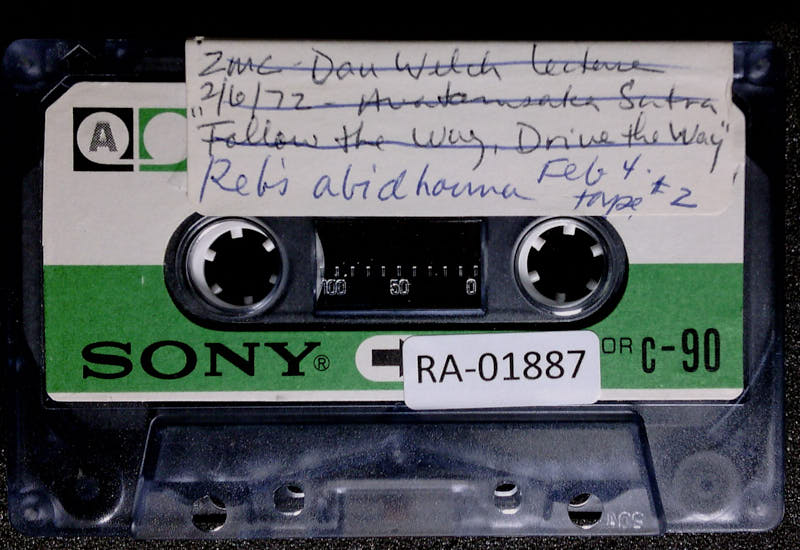
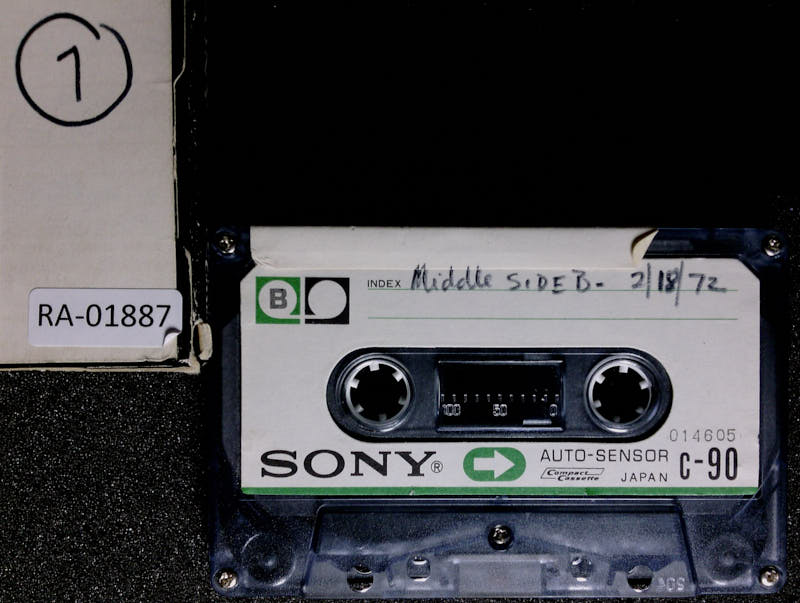
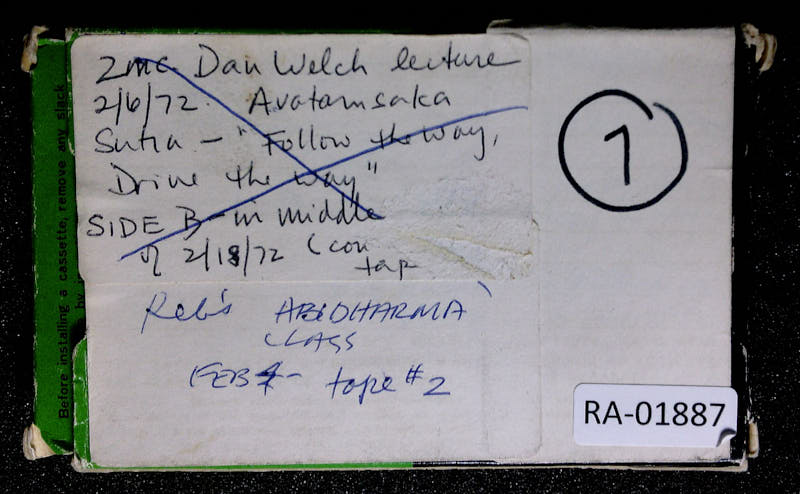
Partial talk after previous talk on this tape
The only entrance to Buddha's mansion of infinite compassion and wisdom is through the door of emptiness. Moment After enrollment, in our practice, this door is wide open. In the teaching, Shakyamuni Buddha, through the patriarchs, Dogen Zenji, point directly how we are able with body and mind to effortlessly freely come and go.
[01:22]
Before we enter that door, it seems as though it may be the end of everything. by entering that door we see careful I notice detail all things, all beings, system in perfect court.
[03:00]
In our careful attention, We forget all about doors, about emptiness itself, about ourselves, about whether sentient beings are many or not at all. Before we enter that door, it seems that we suffer.
[04:34]
And we suffer when we see all sentient beings suffer. In fact, we live in a sea of fire. Moment after moment we are burning up. All sentient beings are burning. But to enter the door, enter Buddha's Mansion, infinite wisdom and compassion.
[05:59]
There are no sentient beings. There are no Buddhas. There's no suffering. Nothing particular that we can call our own on their finger on. or describe or touch or feel or perceive but nothing is thereby destroyed or altered or changed Many things are of themselves taking good care of themselves in all things.
[07:42]
And to see sentient beings, all sentient beings. There's no distinction of someone to save them or someone to be saved. In fact, all sentient beings in doing as they're doing as they are as we perceive them as such are in fact saving oneself in the sea of fire birth and death
[08:51]
There's the sea of light. There's no sea at all. There's a vast stage where many activities of the Dharma, the truth, have been clearly, carefully enacted. It's impossible to distinguish which is this world, my own world, like their world. It seems that our practice here, right now, at Taisama, seems, from one point of view, as though it's calm, peaceful.
[10:12]
Beautiful sound penetrating this universe. Clear waters of the Tussle River Creek. And we may feel that we're very fortunate and that somewhere exactly at this moment there are many beings burning in napalm somewhere else. Actually, this stage, Tassimha, whether we have just come here, or whether we've been here one year, two or three years, five or ten years, a lifetime, Kalpa,
[12:09]
or in eternity, whether we're a new student, just finished tongariyong, or whether we're a doang, work in the kitchen, an officer in a kuchiji, a shuso or a roshi, There are innumerable, vast number of stages. Each one of us alone is perfectly free, independent in our activity of practice. At the same time, each one of us here is sharing what is exactly in one practice.
[13:17]
Neither old or new the vows of a bodhisattva we chant every day to save sentient beings to put an end to normal passions to master and realize boundless dharmas
[14:31]
to realize the Buddha's way, is not something we do a little bit at a time, or we grow more proficient in, or that has a beginning or end. but is our activity of entering this door to Buddha's mansion with body and mind and in each activity moment after moment of our life. It's not that we're trying to do something special or that necessarily this practice in any way can be said to be better than some other practice.
[15:59]
But clearly to miss the opportunity experiencing body and mind coming and going freely through this dark. Anyway, this is why we've come here. This is what is available here.
[17:08]
Otherwise, existence here is like a dream. It's not that we emphasize how special this is, but that on the occasion of each moment we find in our suffering which does not disappear and such with this experience it's hard to
[18:34]
in the framework of this experience to distinguish it from the indescribable feeling the presence of each momentarily new experience. The ocean congregation of innumerable bodhisattvas, goodbye bodhisattva, said that when the revolution is over, clean up the mess.
[20:21]
From Buddhist point of view, The revolution is never over.
[20:38]
@Transcribed_UNK
@Text_v005
@Score_87.26